DEVGAMAN

The year, festival by festival

Festivals of India, month by month

त्योहारों का देश

India keeps two calendars at once, solar and lunar, so most of these dates move every year. Here is where we would be in each month of it — what falls when, the states it lights up, and the town to sleep in while it happens.

Festivals
20
Months
12
States & UTs
21

3 festivals

January

जनवरी

The clearest, coldest weeks of the year: harvest fires in the Tamil south, book crowds on Jaipur's lawns and the river camps of the Magh season.

Jan01 / 20

Jaipur Literature Festival

Five January days when Nobel laureates, Bhojpuri poets, historians and several hundred thousand readers share the same lawns in Jaipur. Free to attend, ferociously crowded, and still the friendliest literary gathering anywhere, with five stages running at once and arguments continuing in the chai queue.

When it falls
Five days in the second half of January, with dates announced each autumn. Entry is free but requires online registration, and Jaipur's winter mornings are cold enough for a shawl.
Where it is most vivid
Be here for it
JaipurRanthamborePushkar

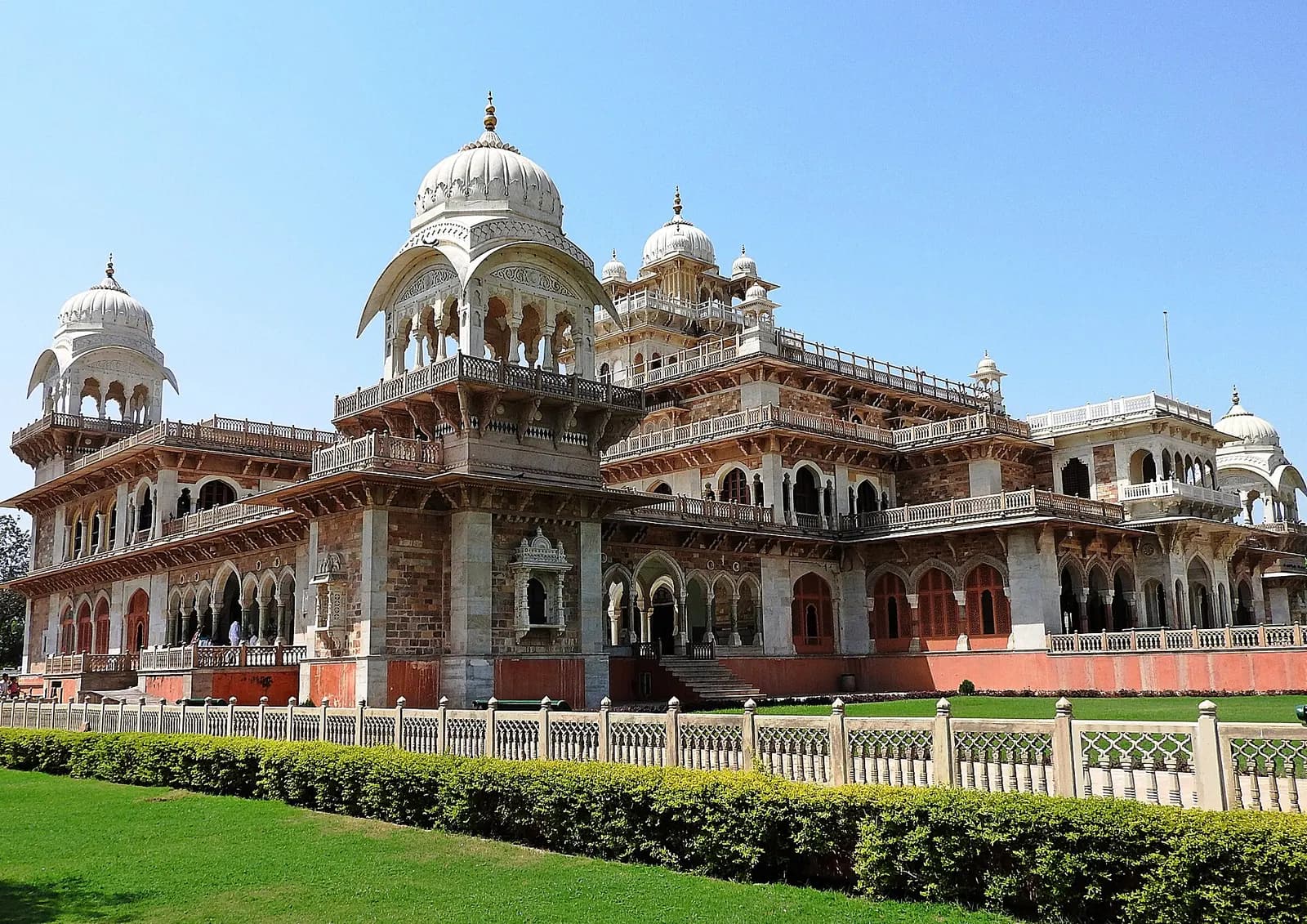
Started in 2006 as a strand of the Jaipur Virasat Festival and now billed as the world's largest free literary festival, it runs parallel stages from mid-morning until the evening music. Novelists, scientists, lyricists, translators and politicians speak in English, Hindi, Urdu, Rajasthani and a dozen other languages, and the signing tent is where readers actually meet them. The festival filled the courtyards of Hotel Diggi Palace for most of its life and has since moved to the larger grounds of Hotel Clarks Amer. Register free online, arrive an hour early for the marquee sessions, and keep the afternoons for Amber Fort and the block printers of Sanganer.
Jan02 / 20

Kumbh Mela

The largest human gathering on earth, held where rivers and astrology meet. Prayagraj, Haridwar, Nashik and Ujjain take turns on a twelve-year cycle. After the 2025 Maha Kumbh on the Prayagraj sands, the Simhastha moves to Nashik in 2027 and Ujjain in 2028.

When it falls
January to March, in the Magh season. The site rotates between Prayagraj, Haridwar, Nashik–Trimbakeshwar and Ujjain on a twelve-year astrological cycle, and dates are set by planetary positions rather than a fixed calendar.
Be here for it
PrayagrajHaridwarNashikUjjain

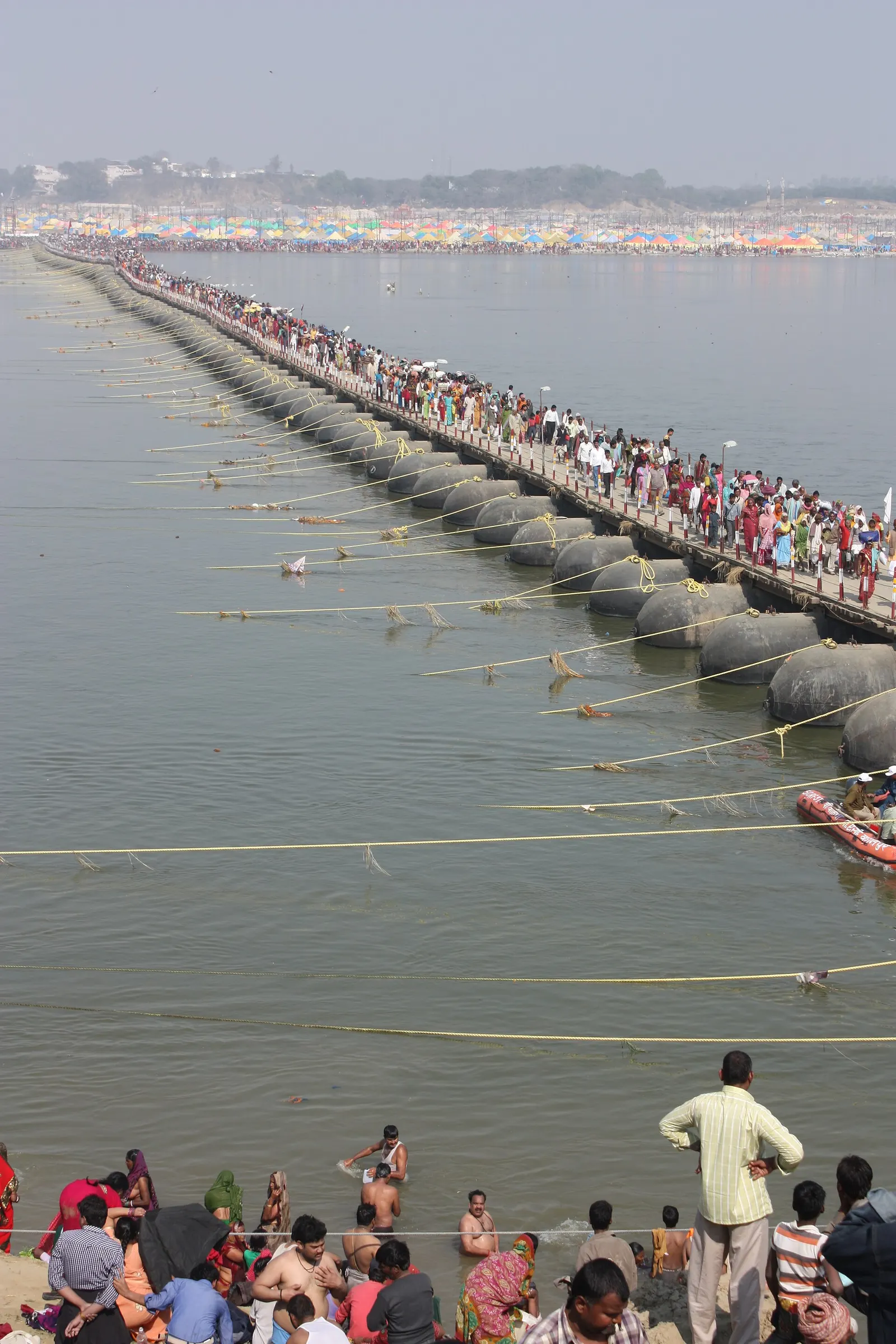
A pontoon-bridged city of canvas rises on the floodplain for six weeks, laid out in sectors with its own police stations, hospitals and akhara camps. Days are ordered around bathing dates: on the amrit snan mornings the ash-smeared Naga sadhus of the Juna and Niranjani akharas process to the water first, before millions follow them into the Ganga, the Yamuna and the mythical Sarasvati at Prayagraj's Sangam. Kalpvasis stay the full month in tents on one meal a day. Come with a local guide, a fixed meeting point, cash and no expectation of comfort. Prayagraj's next Ardh Kumbh falls around 2031 and Haridwar's turn in 2033.

Jan03 / 20

Pongal

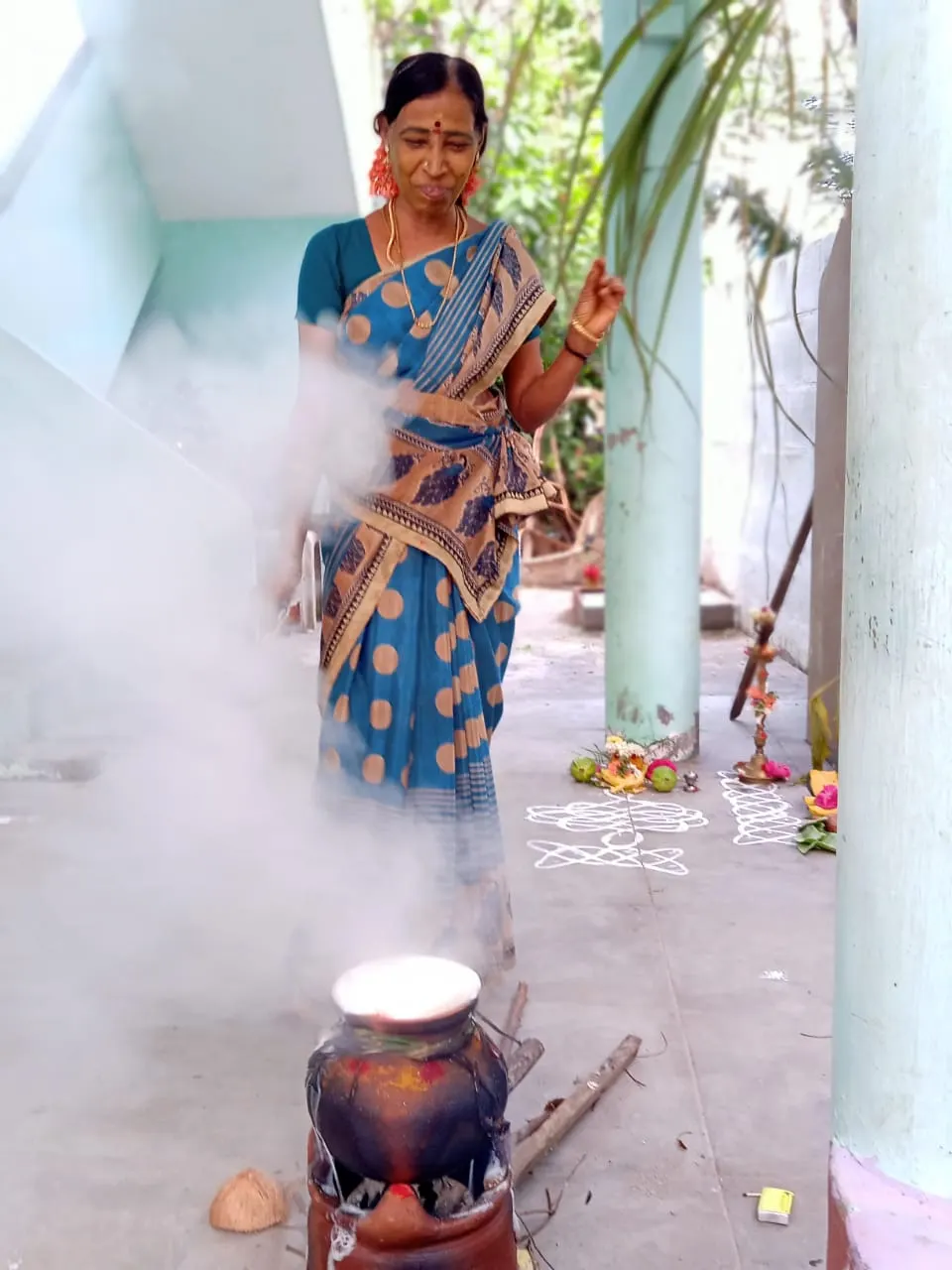
Tamil Nadu's four-day harvest festival, tied to the solar calendar rather than the lunar one. Milk and new rice boil over in fresh clay pots, rice-flour kolams cover every doorstep, cattle are painted and garlanded, and the jallikattu bulls run at Alanganallur near Madurai.

When it falls
14–17 January. Pongal follows the sun rather than the moon, so it lands on the same dates almost every year, when the sun enters Makara and the Tamil month of Thai begins.
Where it is most vivid

Bhogi opens the festival with bonfires of old mats and broken furniture, and by dawn on Thai Pongal every threshold in Madurai and Thanjavur carries a fresh kolam drawn in rice flour. Families cook the first paddy of the harvest with jaggery, milk and cashew in a new pot tied with turmeric root, and shout Pongalo Pongal when it froths over the rim. Day three, Mattu Pongal, belongs to the cattle: horns painted, bells and marigold ropes, and jallikattu bull-taming at Alanganallur, about 25 km from Madurai, where the crowd packs the vaadi vaasal. Stay in a Chettinad mansion homestay, eat sakkarai pongal off a banana leaf, and end at the Meenakshi Amman Temple.

1 festival

February

फ़रवरी

Winter loosens its hold. The high Himalaya keeps its own new year while the plains stay dry, bright and easy to travel.

Feb04 / 20

Losar

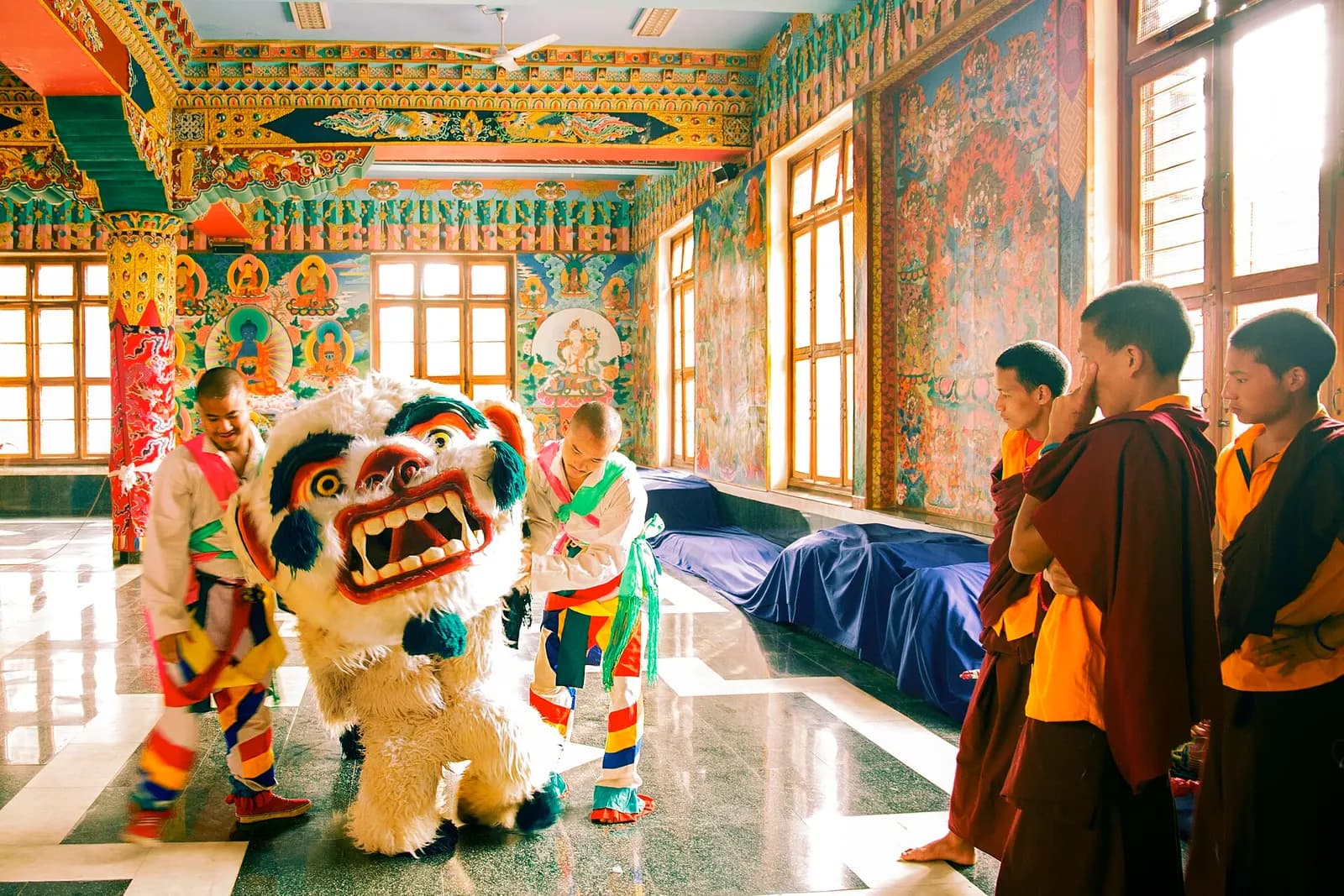
The Buddhist new year of the high Himalaya, kept in deep winter with butter lamps, masked cham dances and barley beer. Ladakh runs two months ahead on a centuries-old royal decree, so Leh's old town fills with fire processions while Sikkim and Tawang wait for February.

When it falls
February or early March on the Tibetan lunar new year, marked in Sikkim, Tawang and the Tibetan settlements. Ladakh keeps its own Losar two months earlier, in late December or early January.
Where it is most vivid
Be here for it
LehGangtokTawang

On the eve, families eat guthuk, a nine-ingredient noodle soup with dough dumplings that hide a chilli, a coin or a lump of charcoal to tell you what kind of person you are, then sweep the house and carry the leftovers out with the year's bad luck. Chemar boxes of roasted barley flour, butter sculptures and ibex-shaped dough figures go on the altar, and khapse pastries are fried by the basket. In Leh the metho procession carries flaming torches through the old town below Namgyal Tsemo, and monasteries such as Spituk, Rumtek and Tawang hold cham dances in their courtyards. Dress for hard frost, accept the chang, and expect houses to open to strangers.

2 festivals

March

मार्च

Colour first, heat after. Braj plays for over a week before the rest of the country joins in, and a crescent moon ends a month of fasting.

Mar05 / 20

Eid-ul-Fitr

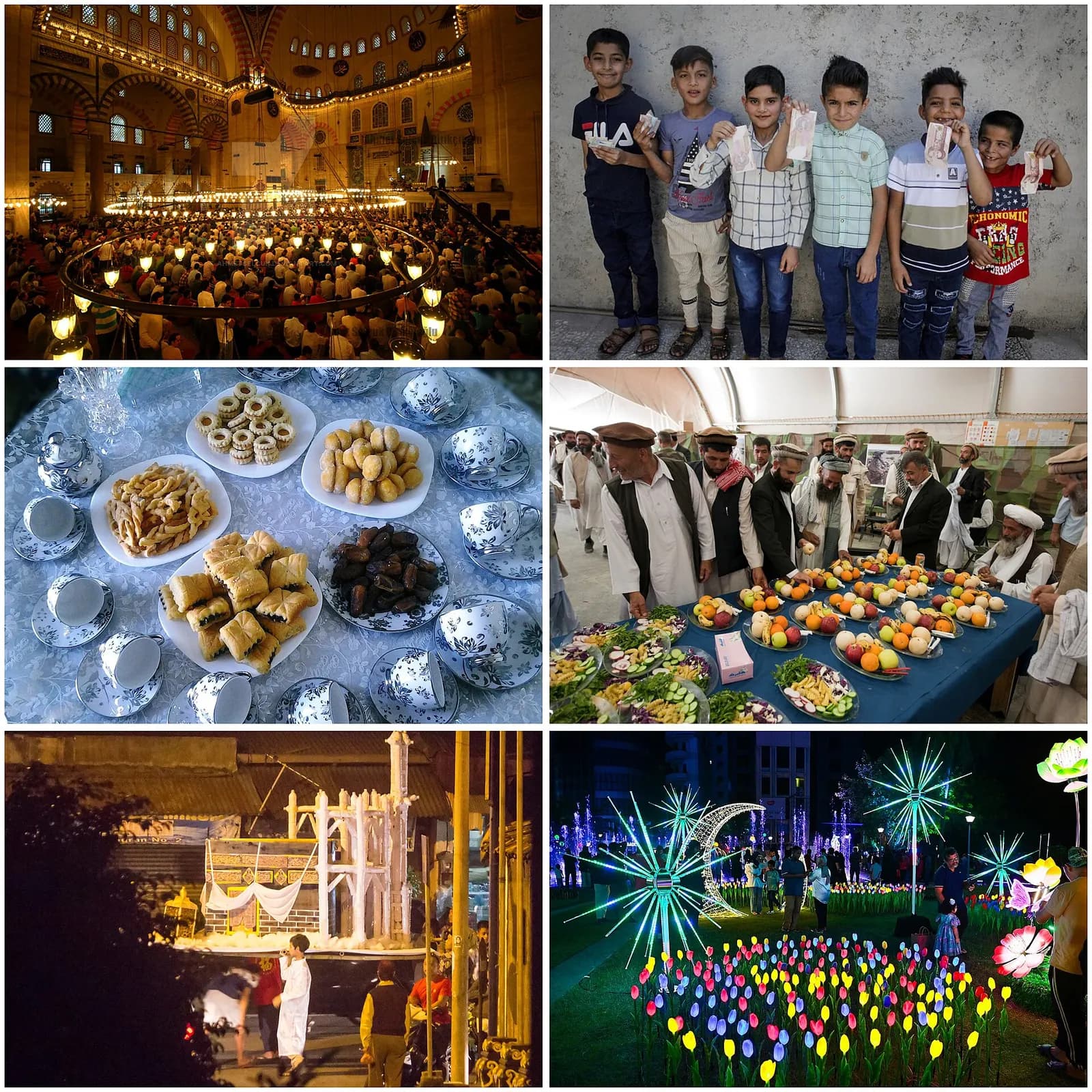
The morning that ends a month of fasting: white kurtas, the embrace given three times, and sheer khurma before anything else. Old Delhi's Jama Masjid, Hyderabad's Mecca Masjid and Srinagar's Hazratbal hold the largest congregations, and the night bazaars beforehand are as good as the day.

When it falls
The first day of Shawwal, once the crescent is sighted at the end of Ramadan. The Islamic calendar moves about eleven days earlier each year, so Eid falls in March through 2027 and in February from 2028.
Be here for it
DelhiLucknowHyderabadSrinagar

Chand Raat, the evening the crescent is sighted, is when the streets are best: Matia Mahal behind Delhi's Jama Masjid stays awake until three in the morning, women queue for henna, and shops weigh out vermicelli by the kilo. Eid namaz is at first light, shoulder to shoulder in the courtyard, followed by the triple embrace and sheer khurma made with milk, dates and roasted seviyan. In Lucknow the Asifi mosque inside the Bara Imambara fills and Aminabad's kebab shops work all day; Hyderabad eats haleem through Ramadan and double ka meetha at Eid. Dress modestly, ask before photographing worshippers, and accept the plate you are handed.

Mar06 / 20

Holi

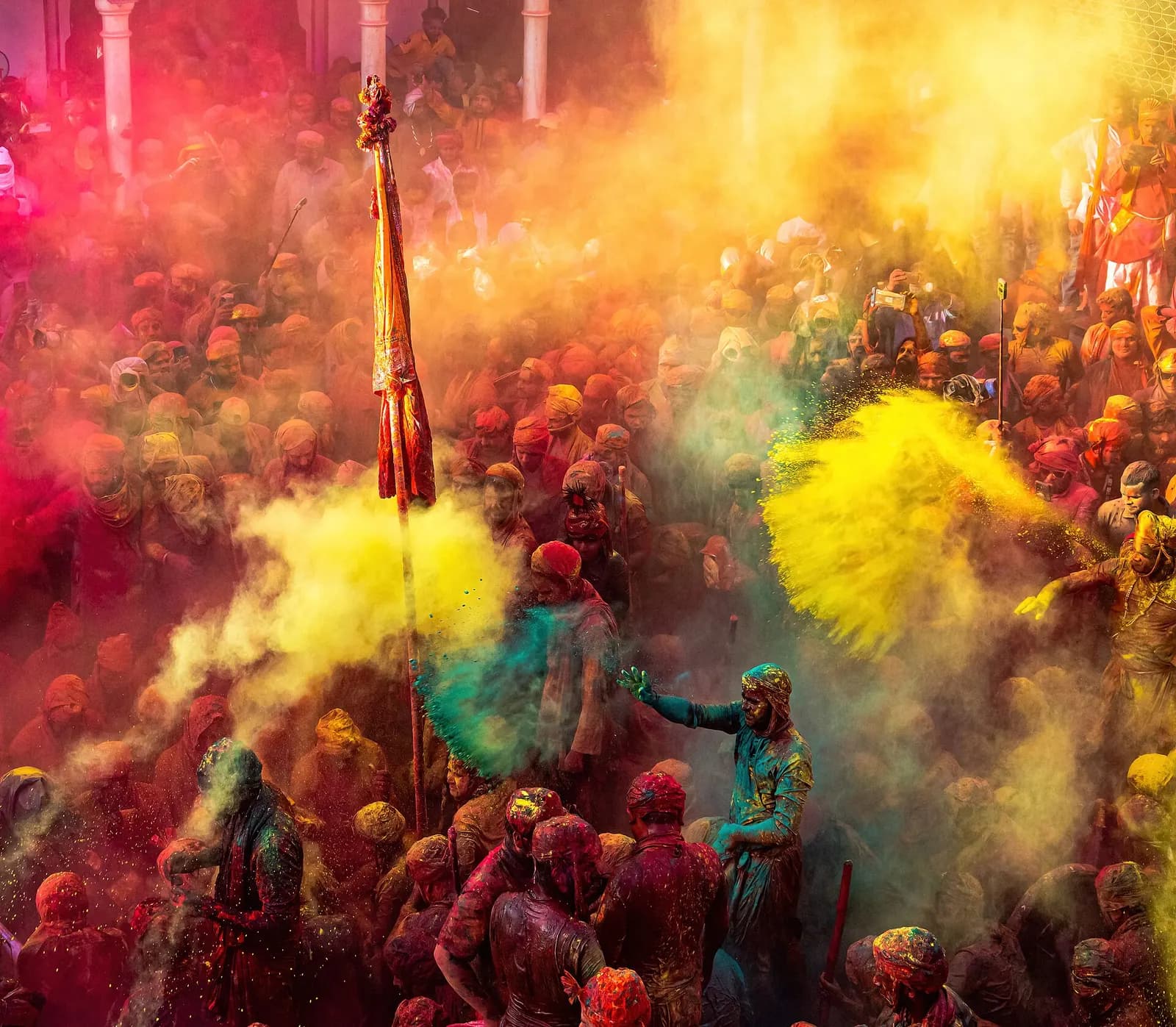
India's spring riot of colour, and in Krishna's Braj country it runs for over a week. Barsana's women drive Nandgaon's men off with lathis, Vrindavan's Banke Bihari temple throws marigold petals and gulal by the sackful, and Rajasthan's cities burn Holika bonfires the night before.

When it falls
Late February to mid-March, with Holika Dahan on the full moon of Phalguna and colours the next morning. Dates follow the lunar calendar, and Braj plays for more than a week beforehand.
Where it is most vivid

The night before, neighbourhoods stack wood for Holika Dahan and circle the fire; the next morning is dry gulal, coloured water and complete social levelling. Braj, an easy ninety minutes north-west of Agra, starts earliest: Lathmar Holi at Barsana and Nandgaon, where women in lehengas swing bamboo staves at shield-carrying men, then Phoolon wali Holi at Vrindavan's Banke Bihari Temple, where priests bury the crowd in flowers. Widows play with colour at the Gopinath temple. Jaipur and Udaipur hold palace bonfire evenings with folk music. Wear clothes you will throw away, oil your hair and skin first, seal your phone in plastic, and insist on herbal colours.

2 festivals

April

अप्रैल

New year in Assam and in the south; the hill roads open just as the plains begin to burn.

Apr07 / 20

Bihu

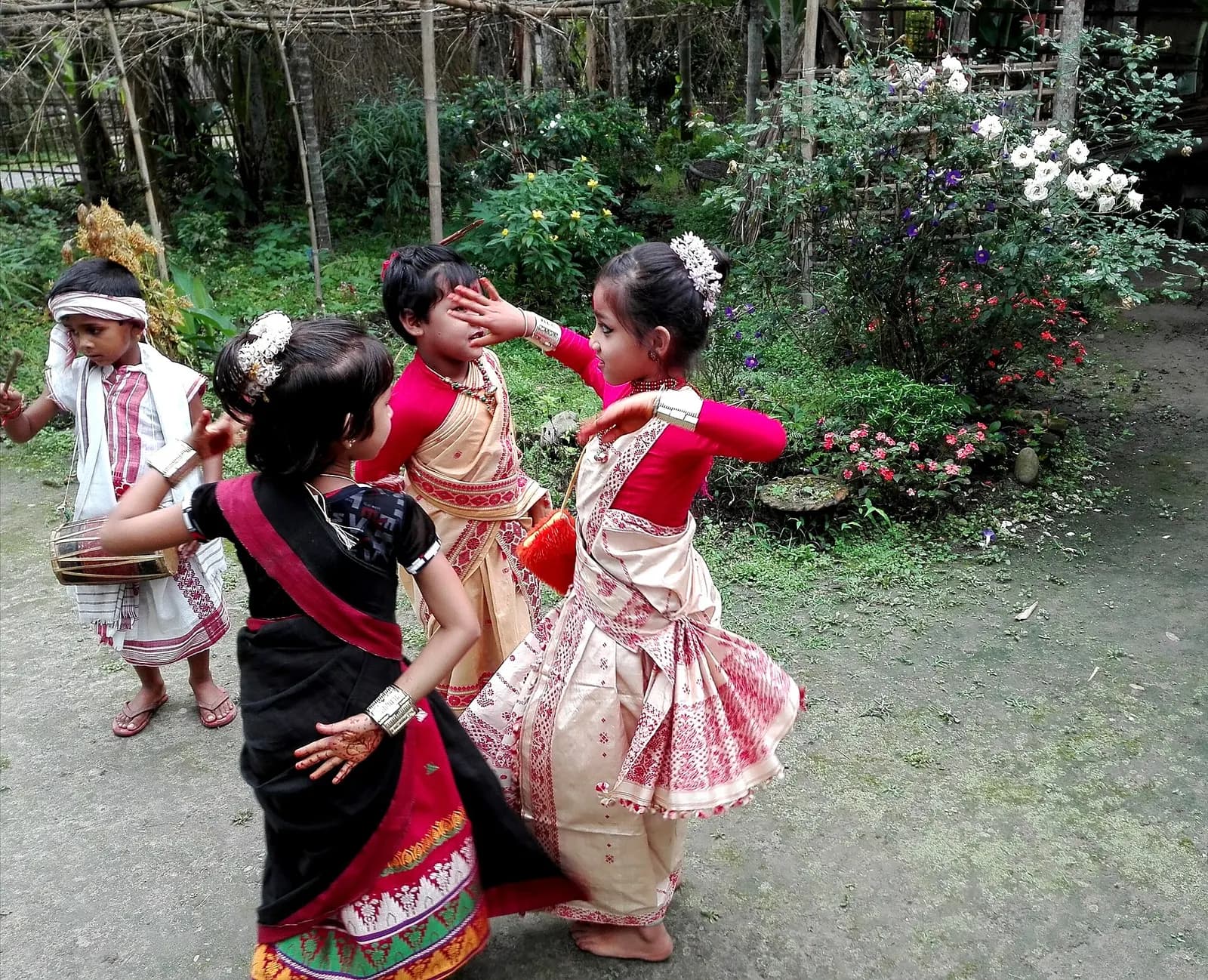
Assam's three Bihus mark the farming year, and Bohag Bihu in mid-April is the loud one: dhol and buffalo-horn pepa, dancers in muga silk, cattle bathed in turmeric, and a woven gamosa pressed on everyone you respect. Husori troupes sing their way through the villages.

When it falls
Bohag Bihu runs for a week from about 14 April, the Assamese new year. Magh Bihu with its bonfires falls in mid-January and the quiet, lamp-lit Kati Bihu in mid-October.
Where it is most vivid

Bohag Bihu opens with Goru Bihu, when cattle are washed in the Brahmaputra's channels, rubbed with turmeric and fed brinjal and gourd. Next morning people wear new clothes, touch the feet of elders and receive a bihuwan, the red-bordered gamosa. Husori groups move courtyard to courtyard singing for blessings, while mukoli bihu is danced in the open by young men and women to the dhol, the pepa horn, the gogona jaw harp and the toka clapper. Guwahati's Latasil field hosts marathon stage bihu; Majuli's satras add sattriya dance. Eat til pitha, coconut laru and fish steamed in banana leaf, and expect open doors everywhere.

Apr08 / 20

Thrissur Pooram

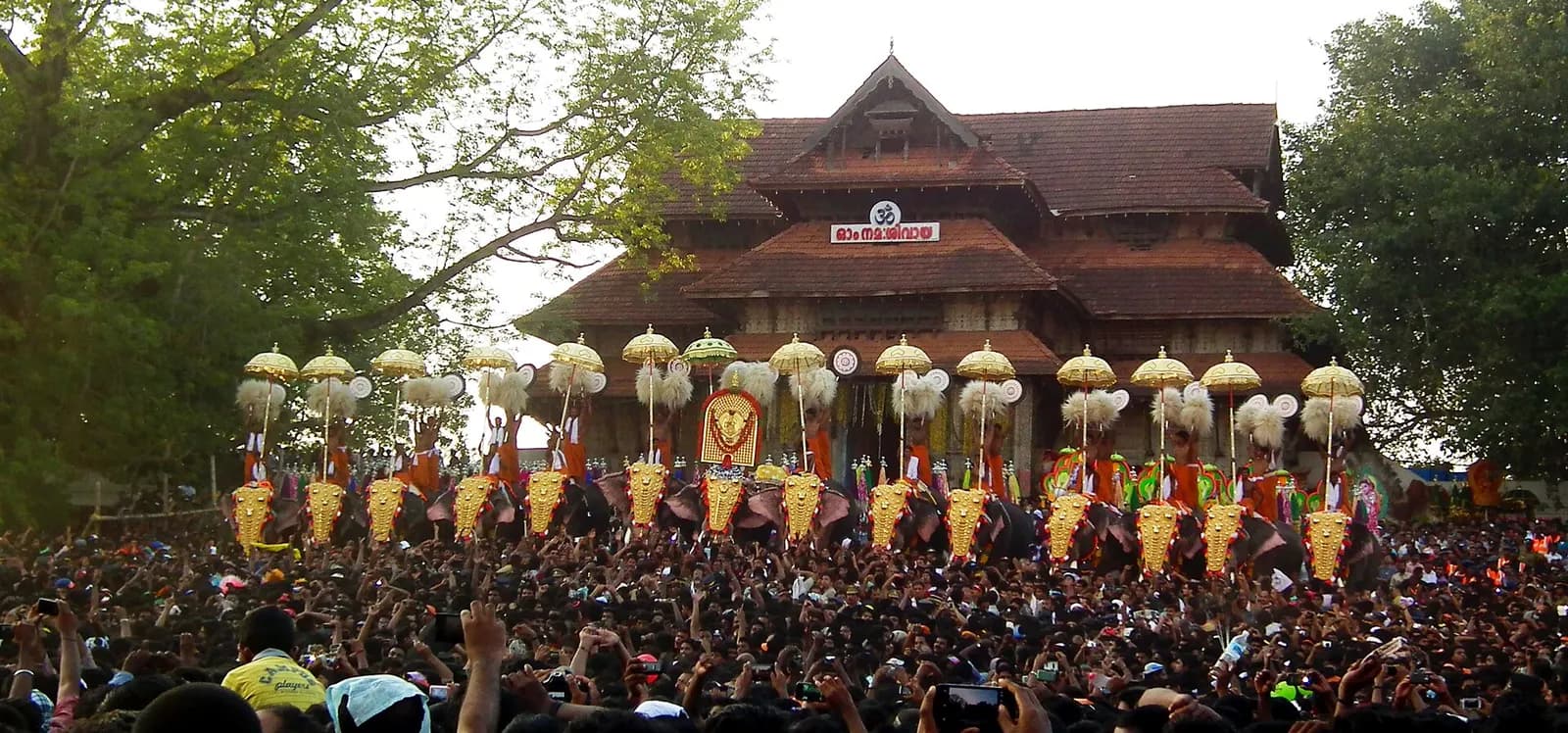
Kerala's loudest and most disciplined spectacle. Two temple factions, Paramekkavu and Thiruvambadi, face each other across Thekkinkadu Maidan with rows of caparisoned elephants, hundreds of drummers and a silent duel of embroidered parasols. Sakthan Thampuran devised it in 1798 to outdo a rained-out festival.

When it falls
April or early May, on the Pooram asterism in the Malayalam month of Medam. The sample fireworks run a few nights earlier and the main display begins around three in the morning.
Where it is most vivid
Be here for it
ThrissurKochi

The day opens with small neighbourhood temples arriving to pay respects at Vadakkunnathan, the Shiva temple on the wooded hill at the centre of Thrissur. By afternoon the two rival sides line up fifteen elephants each under gold nettipattam foreheads and the kudamattam begins: teams riding the elephants swap embroidered silk parasols in fast, roared-at rounds while the crowd judges every design. Before that comes ilanjithara melam, roughly 250 percussionists massed under the ilanji tree playing pandi melam for four hours, which is the real reason connoisseurs come. Book a balcony on Round South, carry ear protection and water, and do not stand close to the elephants.

Between festivals

May

मई

The hottest weeks on the plains and the finest light in the mountains — a month for altitude rather than for crowds.

No festival on our calendar

May belongs to the mountains: the Ladakh roads open, Kashmir is at its best, and the plains are better left until the rain.

1 festival

June

जून

The monsoon gathers on the west coast. Above the clouds in Ladakh, the monasteries dance in their courtyards.

Jun09 / 20

Hemis Festival

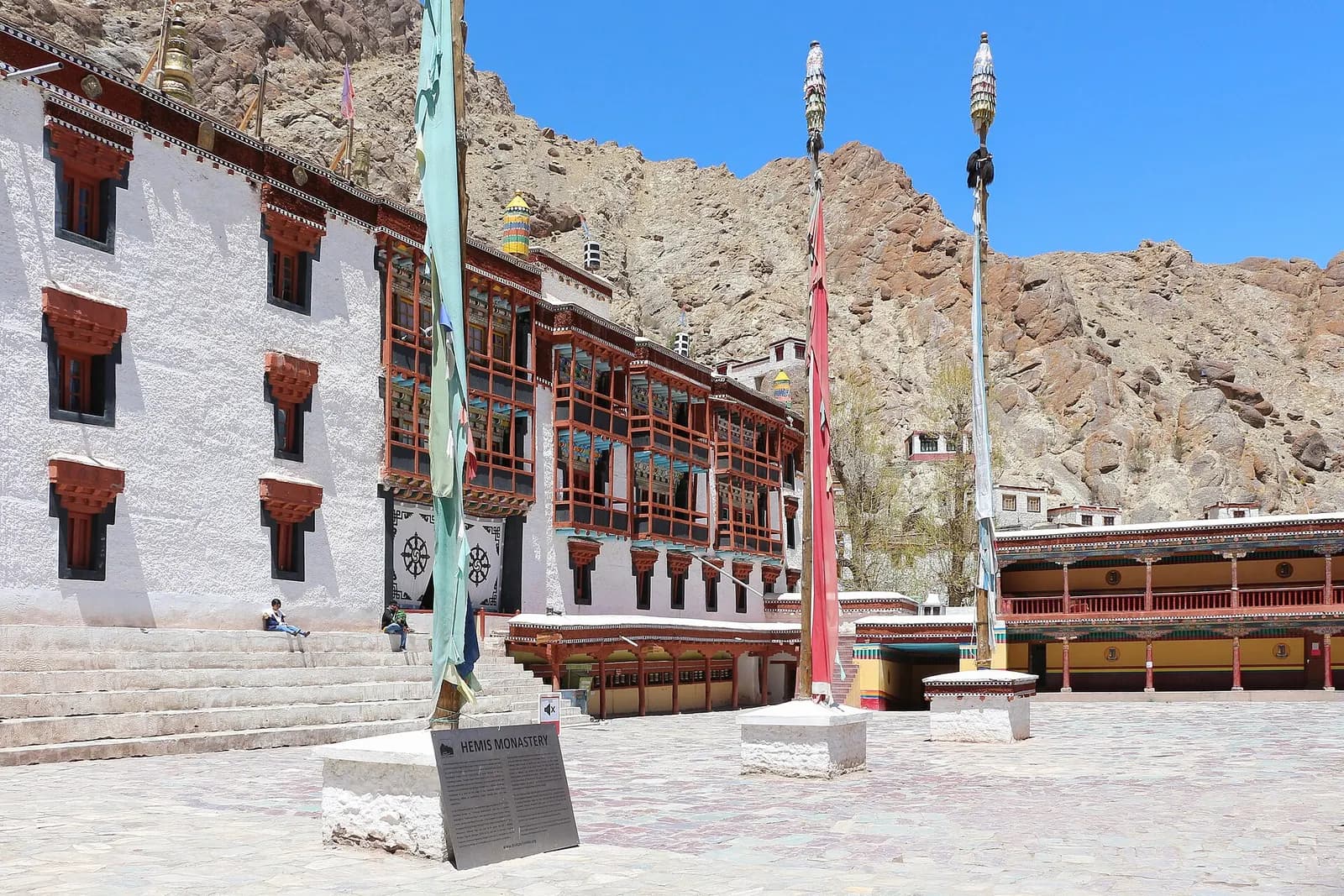
Ladakh's largest monastic festival, held in the stone courtyard of Hemis Gompa about 45 km southeast of Leh at roughly 3,600 m. Over two days monks in brocade robes and painted masks dance the cham for Guru Padmasambhava, while villagers picnic on the terraces above.

When it falls
The tenth and eleventh days of the fifth month of the Tibetan calendar, which fall in late June or July. Dates shift by a few weeks each year and are announced by the monastery.
Where it is most vivid
Be here for it
LehLamayuru

Hemis belongs to the Drukpa lineage and has been the wealthiest monastery in Ladakh since it was rebuilt in 1672 under royal patronage. On festival mornings the courtyard fills early: long copper horns and cymbals open the sequence, then the masked dancers come out in sets, black-hat sorcerers, skeleton lords of the charnel ground and wrathful protectors, each act staging the defeat of ego and ignorance. Clowns work the crowd between rounds while butter tea circulates. Every twelve years, in the Tibetan Year of the Monkey, Hemis unfurls a huge silk thangka of Padmasambhava embroidered with pearls; the next unveiling is due in 2028. Arrive by eight and sit high for the light.

1 festival

July

जुलाई

Rain, everywhere, and Puri pulls three chariots straight through it.

Jul10 / 20

Rath Yatra

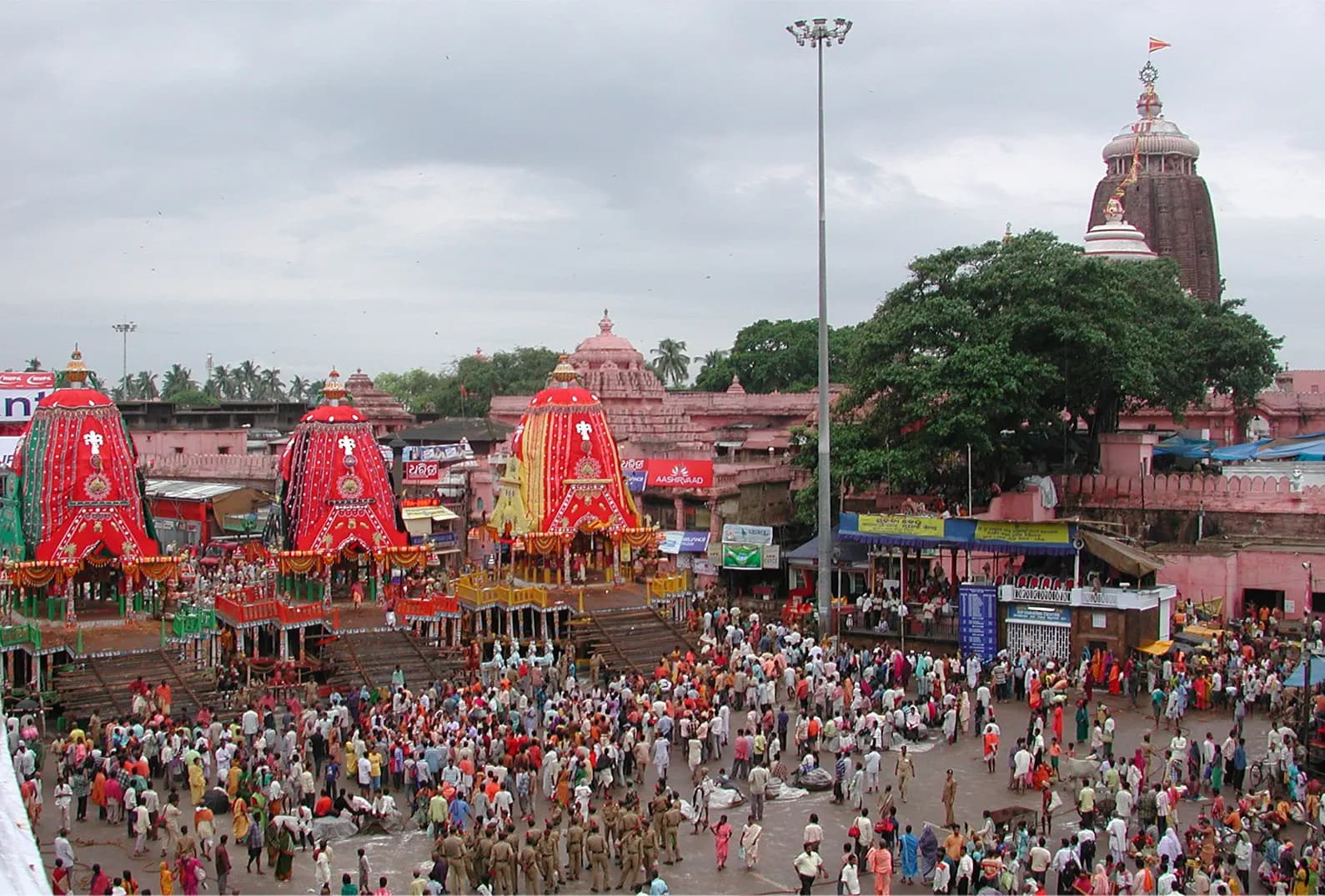
Once a year Jagannath, Balabhadra and Subhadra leave their sanctum in Puri and are hauled three kilometres down the Grand Road on chariots built new every summer. Hundreds of thousands take the ropes, and the Gajapati king sweeps the decks with a golden broom before they move.

When it falls
June or July, on the second day of the bright fortnight of Ashadha. The deities stay at the Gundicha Temple for a week and return on the Bahuda Yatra nine days after setting out.
Where it is most vivid
Be here for it
PuriKonarkBhubaneswar

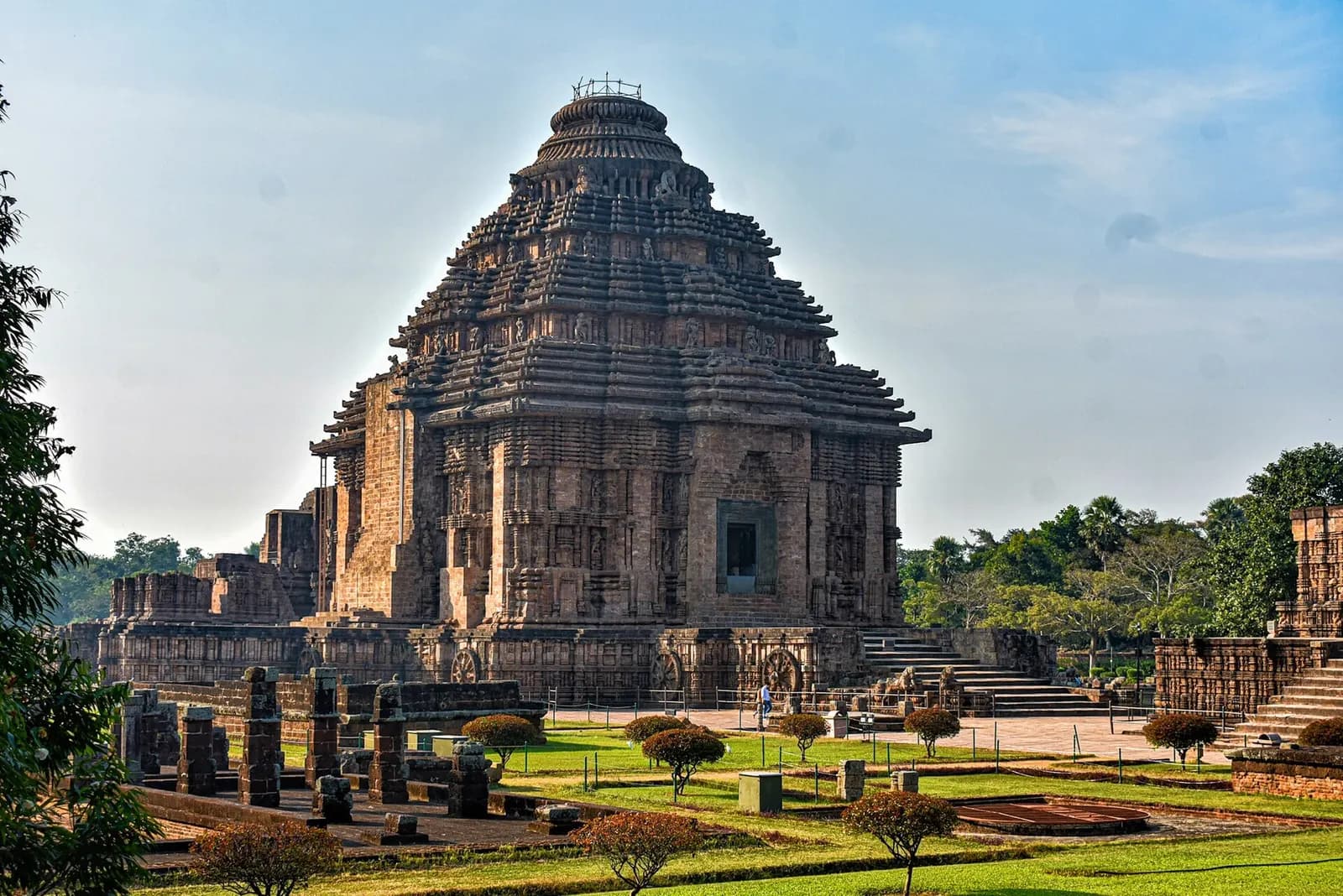
Hereditary carpenters build the chariots from scratch each year in neem wood: Nandighosa for Jagannath with sixteen wheels and a red-and-yellow canopy, Taladhwaja for Balabhadra with fourteen, and Darpadalana for Subhadra with twelve. On the appointed day the deities are brought out in the lurching pahandi procession, the Puri king performs chhera pahara, and the ropes go taut down Bada Danda towards the Gundicha Temple. Non-Hindus cannot enter the main temple but see the whole thing from the road. Book a Grand Road balcony months ahead, go before dawn, drink only sealed water in the heat, and stay on for Konark's sun temple an hour away.

1 festival

August

अगस्त

The green month. Rajasthan swings, fasts and eats its way across the monsoon.

Aug11 / 20

Teej in Jaipur

Jaipur's monsoon festival for Parvati, and the one time the old city dresses entirely in green. The gilded Teej Mata palanquin leaves the City Palace on two evenings with elephants, camels and folk bands, and every sweet shop in Johari Bazaar is stacked with ghewar.

When it falls
Late July or August, on the third day of the bright fortnight of Shravana, once the monsoon has properly arrived. The royal procession goes out on two consecutive evenings.
Where it is most vivid
Be here for it
JaipurBundiUdaipur

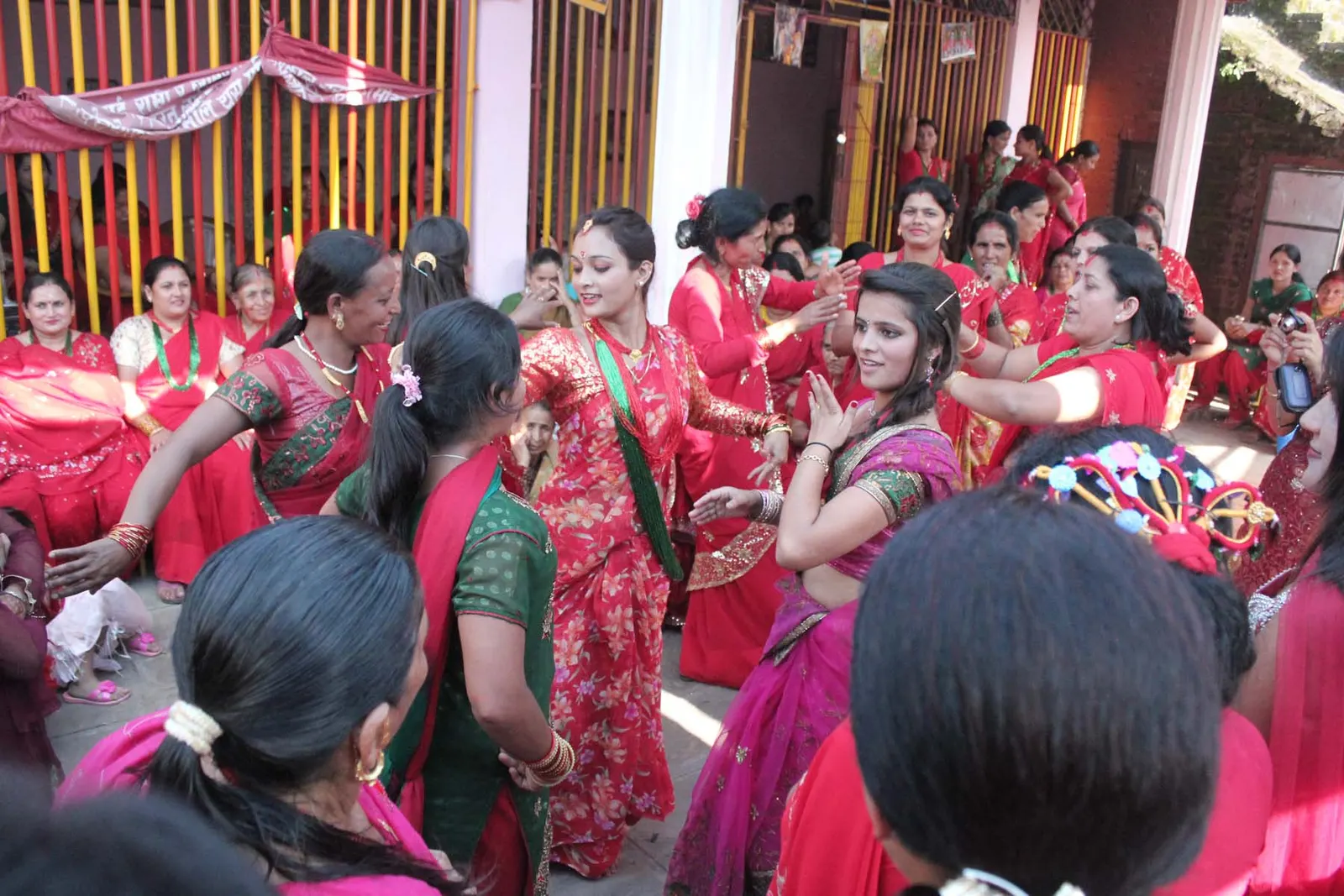
Women fast for Parvati, wear lehariya odhnis in green and pink, and swing on ropes hung from neem trees in courtyards; henna goes on the night before. On both evenings the palanquin of Teej Mata comes out of the Zanani Deodhi of the City Palace, through Tripolia Gate and down Tripolia Bazaar past rooftops packed with families, escorted by caparisoned elephants, camels, Kachhi Ghodi dancers and the police band. Buy ghewar, a disc of fried batter soaked in syrup and topped with rabri, from Laxmi Mishthan Bhandar in Johari Bazaar. Bundi holds its own Kajli Teej a fortnight later, with a smaller and more local procession.

2 festivals

September

सितम्बर

The rain lifts. Kerala lays flower carpets while Maharashtra carries Ganpati down to the sea.

Sep12 / 20

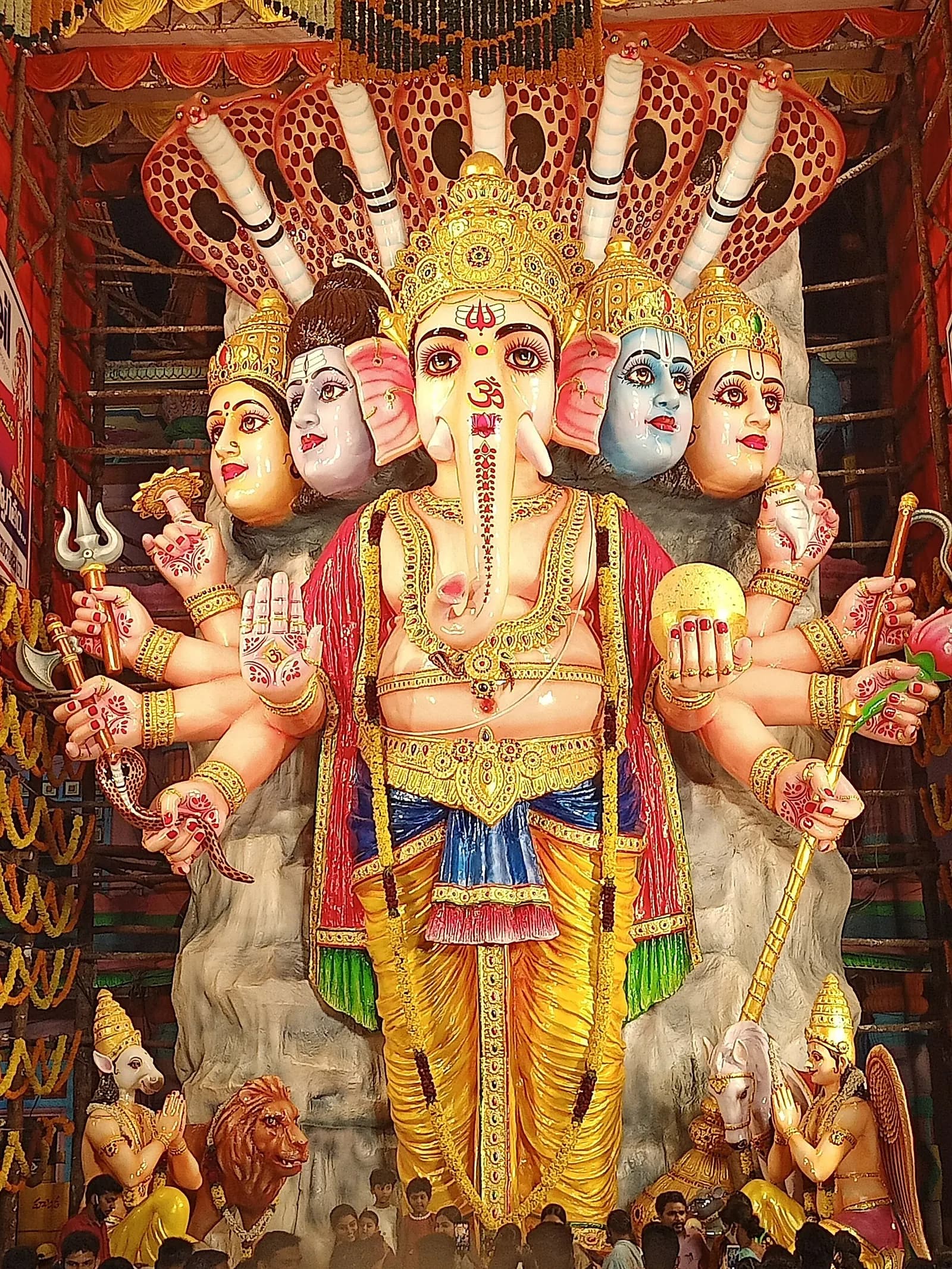
Ganesh Chaturthi

Ten days when Maharashtra installs Ganesha in homes, street corners and enormous pandals, feeds him modaks and then carries him to the sea. Mumbai's Lalbaugcha Raja draws queues that last all night, Pune keeps a procession order set in 1893, and Konkan villages fill up again.

When it falls
August or September, ten days from Bhadrapada shukla chaturthi to the Anant Chaturdashi immersions. Dates follow the lunar calendar; many households keep the idol for only a day and a half.
Where it is most vivid
Be here for it
MumbaiPuneKonkan Coast

Clay idols arrive on decorated trucks and shoulders to shouts of Ganpati Bappa Morya, and for ten days the mandals compete on scale, theme and lighting. In Mumbai the wish queue at Lalbaugcha Raja in Lalbaug runs through the night, while Girgaon Chowpatty takes the biggest visarjan crowds on the last evening. Pune's procession is the more traditional: Kasba Ganpati, the city's presiding deity, leads and Dagdusheth Halwai Ganpati follows in gold. Families in Ratnagiri and Sindhudurg bring relatives back from Mumbai for days of aarti and ukadiche modak steamed with coconut and jaggery. Watch the immersions from a distance and expect closed roads.

Sep13 / 20

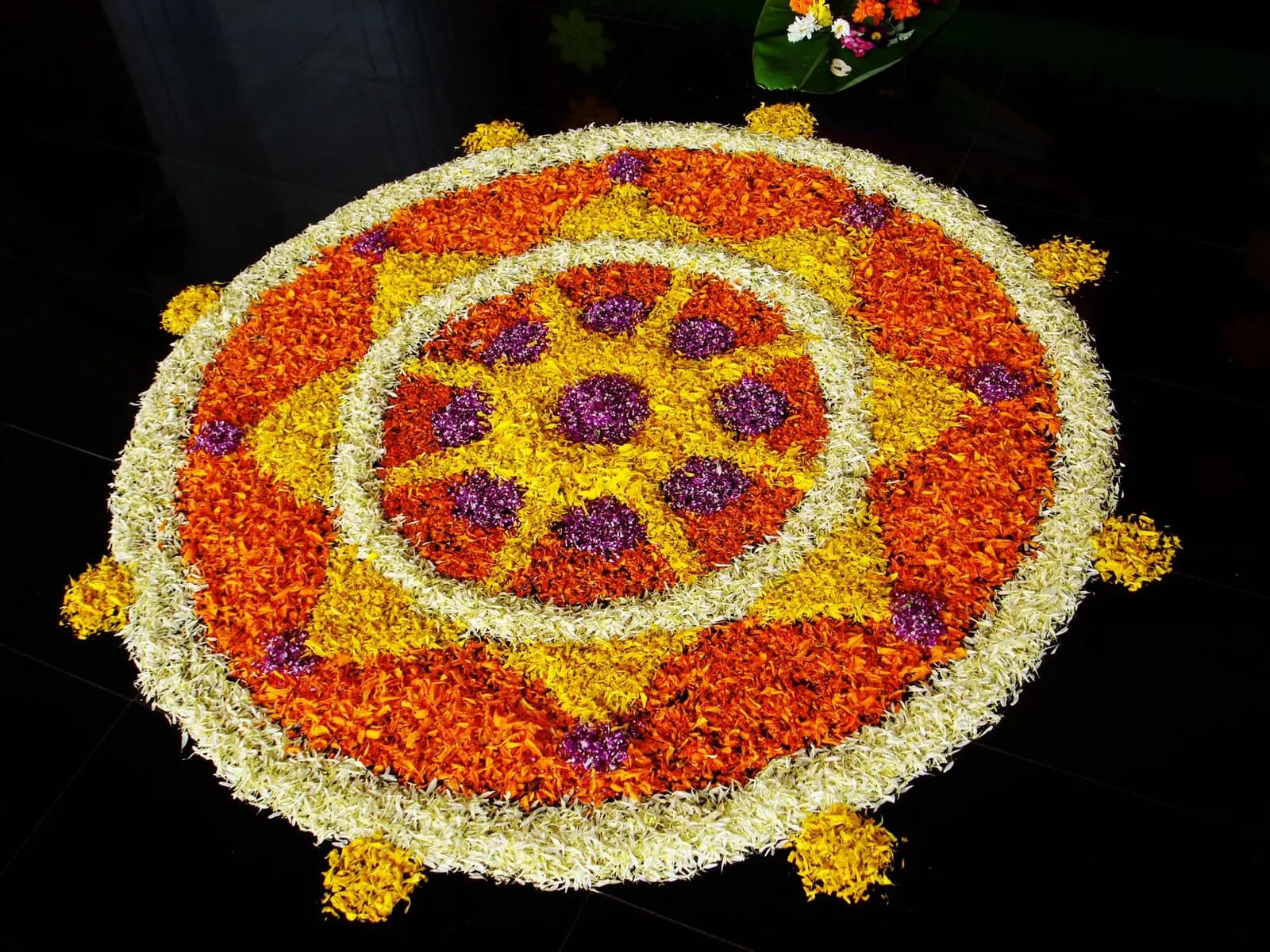
Onam

Kerala's harvest and homecoming festival for the exiled king Mahabali, marked by flower carpets that grow a ring larger each morning, a sadya of two dozen dishes eaten off a banana leaf, and snake boats with a hundred rowers racing at Aranmula and on Punnamada Lake.

When it falls
Late August or September, ten days ending on Thiruvonam in the Malayalam month of Chingam. Dates follow the Malayalam calendar and shift by two to three weeks each year.
Where it is most vivid

Every courtyard lays a pookkalam, a circular carpet of chrysanthemum, thumba and marigold petals, adding a ring a day for ten days. On Thiruvonam the family cooks the sadya: parippu, sambar, avial, thoran, olan, pachadi, a spoon of ghee and payasam to finish, all served in a fixed order on a plantain leaf and eaten with the right hand. Thrissur's Pulikali on the fourth day sends men painted as tigers dancing around Swaraj Round. The snake boats race at Aranmula on Uthrattadi, while Alleppey's Nehru Trophy on Punnamada Lake draws the largest crowd. Book homestays early and accept every invitation to eat.

2 festivals

October

अक्तूबर

The month to be in India: nine nights of dancing in the west, five days of Durga in the east.

Oct14 / 20

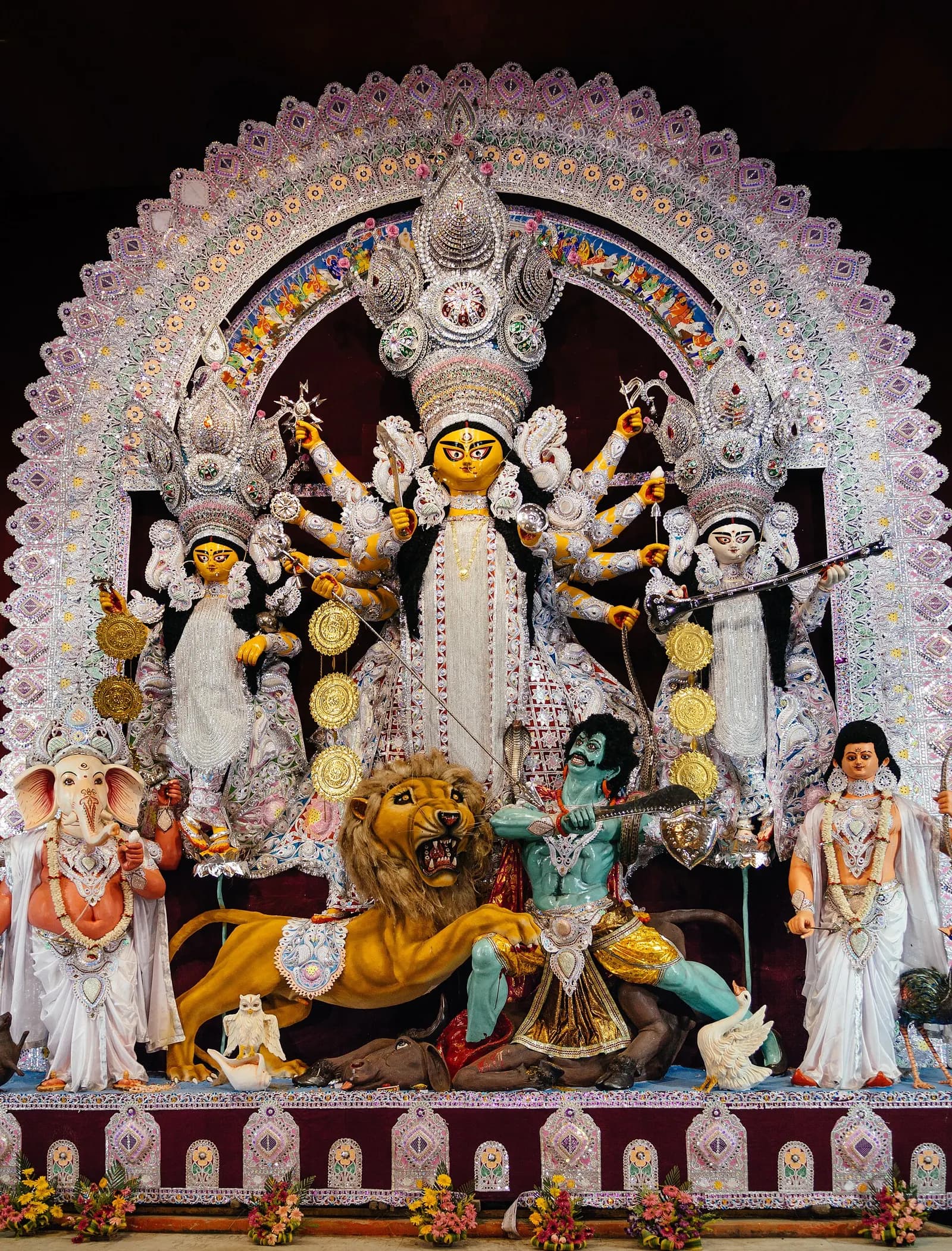
Durga Puja

Kolkata's five nights of pandal-hopping, dhaak drums and street food, inscribed by UNESCO in 2021. Clay goddesses built in Kumartuli are installed in bamboo-and-cloth pavilions that copy temples, spaceships and slum streets alike, and the whole city walks until dawn to see them.

When it falls
September or October, from Mahalaya to Vijaya Dashami in the bright fortnight of Ashwin. The city stays awake from Shashthi onwards; dates follow the lunar calendar.
Where it is most vivid

It begins weeks earlier in Kumartuli, the potters' quarter off Banamali Sarkar Street, where idol-makers build Durga on straw and clay armatures and paint the eyes on Mahalaya morning. From Shashthi the crowds move: College Square with the pandal reflected in its tank, Bagbazar Sarbojanin for the old-school image, Ekdalia Evergreen and Maddox Square for the sheer press of people. Dhunuchi naach is danced with smoking coconut-husk censers to the beat of the dhaak, and bhog khichuri is served free at the community pujas. On Dashami married women play sindoor khela before the immersions at Babughat. Walk between pandals after midnight and eat kathi rolls as you go.

2 festivals

November

नवम्बर

Cold mornings, clear nights, the brightest lamps of the year, and fifty thousand traders on the Pushkar sands.

Nov16 / 20

Diwali

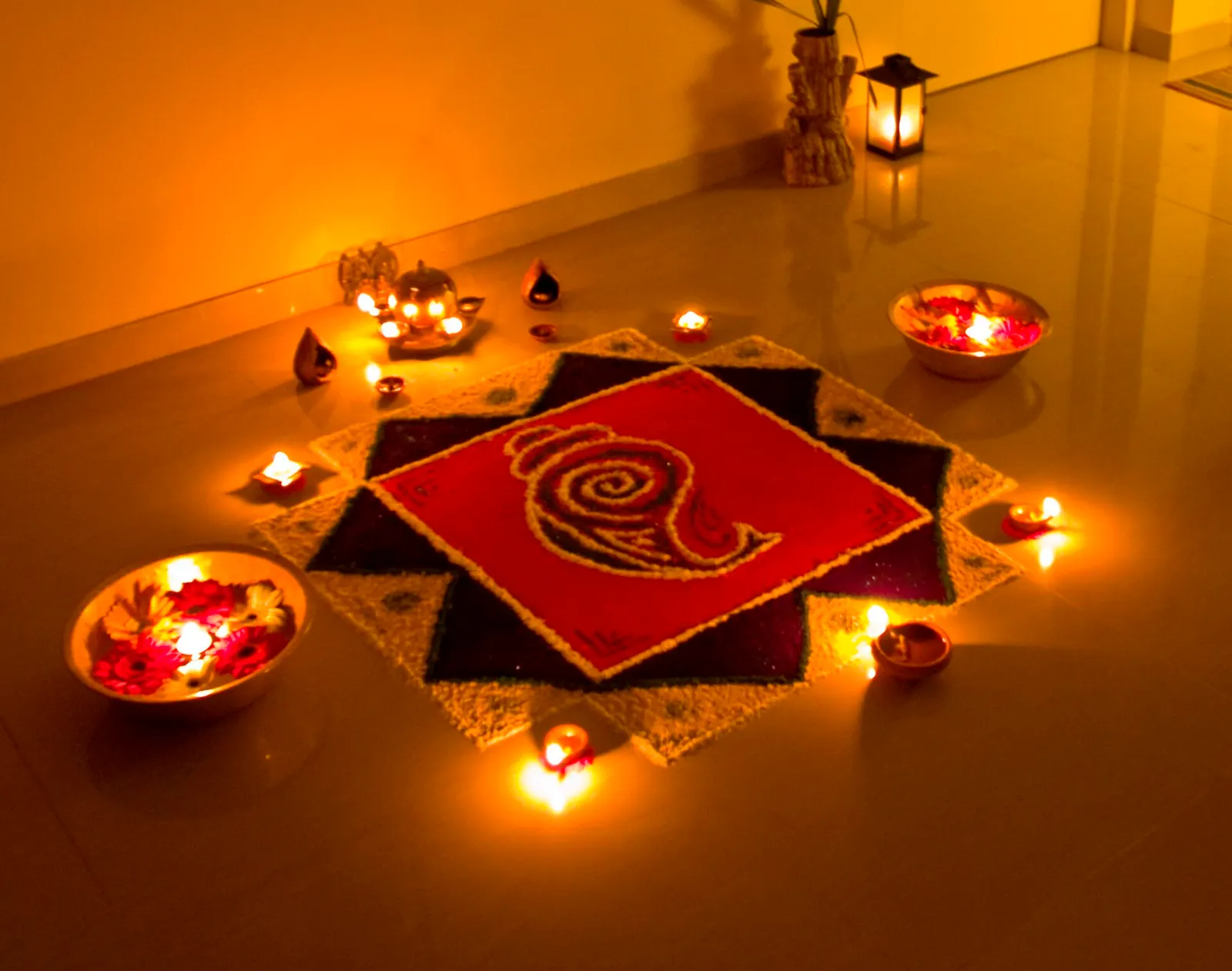
Five days of lamps, rangoli and sweets that reset the year for most of India. Jaipur lights whole bazaars in a ward-by-ward competition, Ayodhya floats lakhs of diyas along the Saryu, and Varanasi follows a fortnight later with Dev Deepawali on the ghats.

When it falls
October or November, five days around the new-moon night of Kartika, when Lakshmi Puja is performed. Dates follow the lunar calendar; in 2026 the main night falls on 8 November.
Where it is most vivid
Be here for it
VaranasiJaipurAyodhyaAmritsar

Houses are cleaned and painted, doorways get rangoli and mango-leaf strings, and traders open new account books at Lakshmi Puja on the darkest night of the year. Jaipur takes it further than anywhere else: Johari Bazaar, Tripolia Bazaar and Chaura Rasta are outlined in millions of bulbs, judged ward by ward, and the traffic simply stops. Ayodhya's Deepotsav lights rows of oil lamps down the Saryu ghats. Amritsar's Golden Temple keeps the same night as Bandi Chhor Divas, with lamps doubled in the sarovar and fireworks overhead. Fifteen days later, Varanasi's Dev Deepawali sets every step of the ghats alight. Book hotels months ahead.

Nov17 / 20

Pushkar Camel Fair

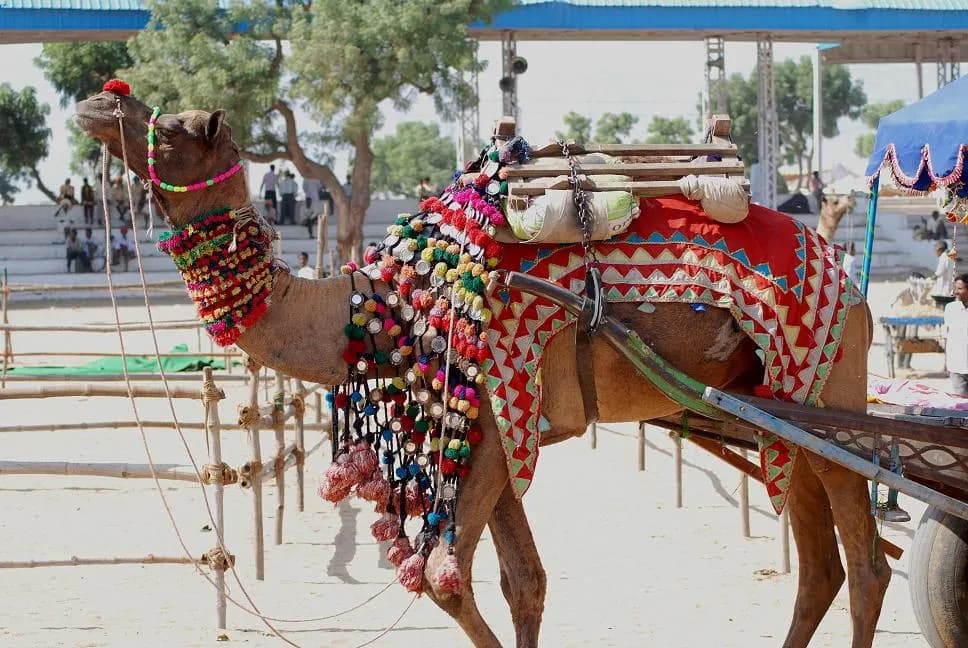
Part livestock market, part pilgrimage. Thousands of camels, Marwari horses and cattle camp on the dunes west of Pushkar while pilgrims bathe in the lake below the Brahma temple, and the two crowds meet over moustache contests, folk music and plates of malpua.

When it falls
Late October or November, about eight days building to the Kartik Purnima full moon. Trading happens in the first half; the competitions and crowds come later.
Where it is most vivid
Be here for it
PushkarAjmerJaipur

Traders arrive a week early, when the ground is still a working market and the bargaining is real; by the closing days it is a fairground of Ferris wheels, tourist camps and competitions for the longest moustache, the best-dressed camel and matka phod. Pushkar Lake has fifty-two ghats, and on Kartik Purnima pilgrims bathe at Varah and Brahma Ghats before queueing at the Jagatpita Brahma Mandir, one of very few temples anywhere dedicated to Brahma. The town is strictly vegetarian and dry. Sleep in a dune camp, walk out at first light when the camels are being fed, and climb to the Savitri temple for the view over the lake.

3 festivals

December

दिसम्बर

Winter light — hornbill feathers in Nagaland, a white salt moon over Kutch and midnight mass in Goa.

Dec18 / 20

Christmas in Goa

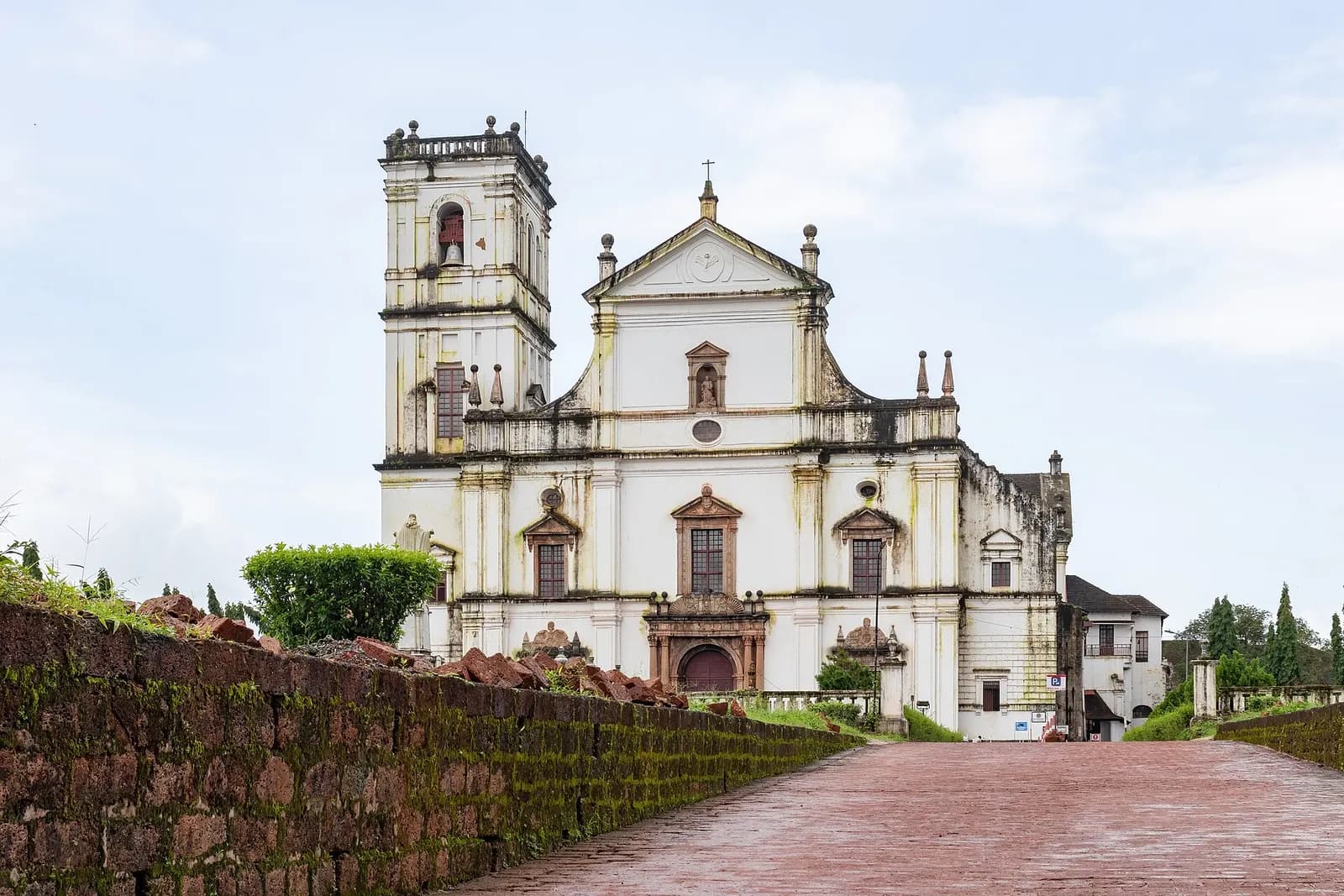
Goa keeps Christmas with four and a half centuries of Portuguese habit: paper star lanterns strung over village lanes, crib competitions, midnight mass in the laterite churches of Old Goa, and a tray of bebinca, dodol, neureos and kulkuls that families begin baking in early December.

When it falls
Advent through New Year, with novenas from mid-December, midnight mass on 24 December and the Feast of St Francis Xavier on 3 December at Old Goa.
Where it is most vivid
Be here for it
Old GoaNorth GoaSouth Goa

Novenas start nine days before Christmas, and by then every house has a star at the gate and a presepio in the front room. Missa do Galo, the cock's crow mass, fills Se Cathedral and the Basilica of Bom Jesus in Old Goa on Christmas Eve, though the village churches of Salcete and Bardez are warmer and easier to get into. Afterwards comes consoada, the tray of sweets neighbours exchange: layered bebinca, dark dodol, coconut neureos and curled kulkuls, with sorpotel and sannas for lunch. The relics of St Francis Xavier are exposed only once a decade, most recently over the winter of 2024 and 2025. Walk Panjim's Fontainhas for the lit Portuguese houses.

Dec19 / 20

Hornbill Festival

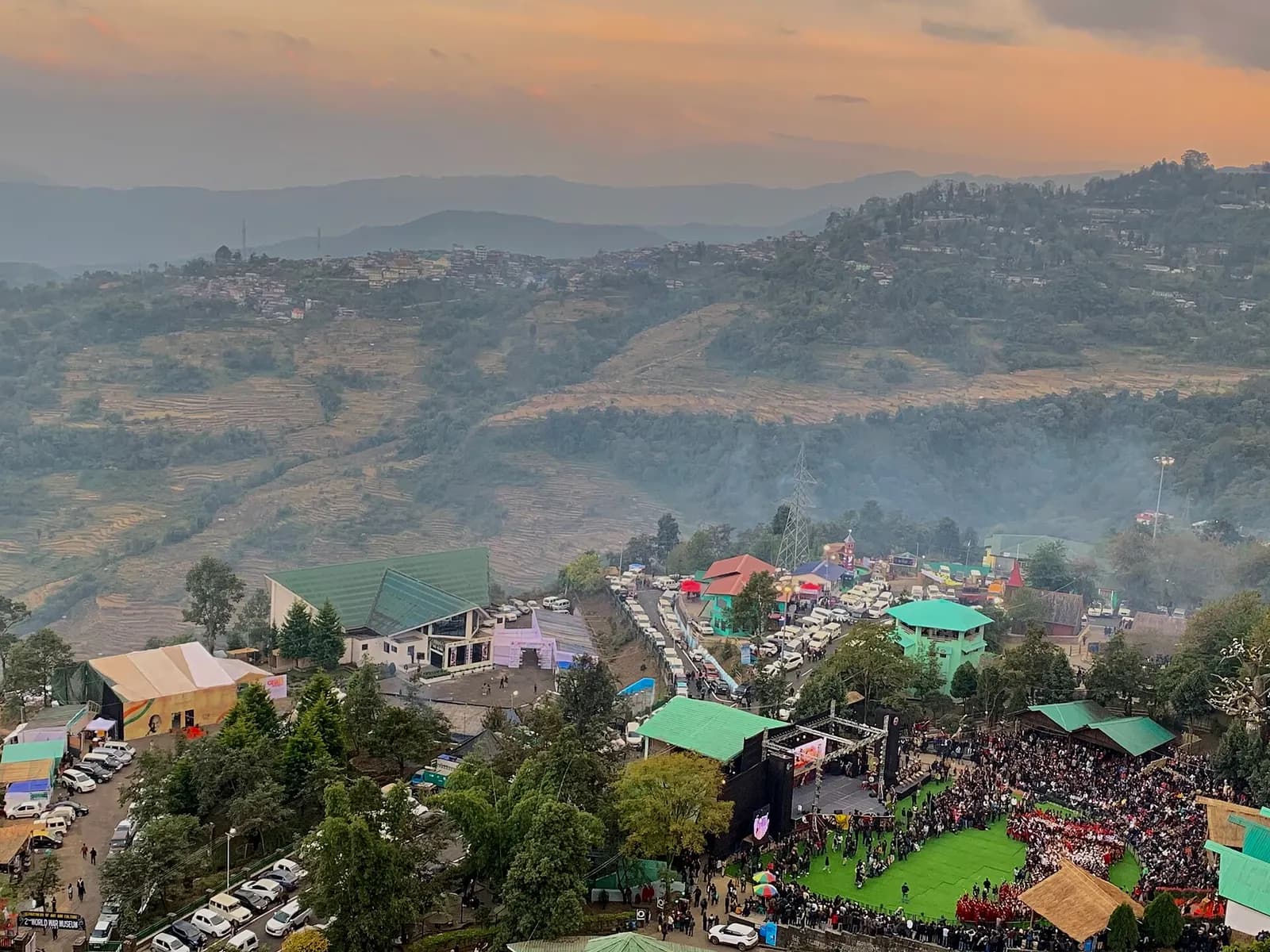
Ten December days at Kisama, about 12 km from Kohima, where every recognised Naga tribe keeps a morung around one arena. Log drums, war dances, Naga wrestling, king-chilli eating contests, rice beer, and a rock contest in Kohima that runs deep into the night.

When it falls
1–10 December every year, opening on Nagaland's statehood day. The dates are fixed, but December nights in Kohima are cold and rooms sell out by September.
Where it is most vivid
Be here for it
KohimaDzukou Valley

The Naga Heritage Village at Kisama is laid out as a circle of morungs, the traditional bachelors' dormitories, one for each tribe, each with carved posts, a hollowed log drum and its own cooking fire. Mornings belong to the arena, where Konyak, Angami, Ao, Chakhesang and other groups perform war chants and harvest songs in hornbill feathers, boar tusks and red-dyed goat hair. The rest of the day is eating: smoked pork with axone and bamboo shoot, sticky rice, zutho rice beer poured from bamboo mugs. Evenings move into Kohima for the rock contest. Bring warm layers, book rooms months ahead, and add a trek into Dzukou Valley.

Dec20 / 20

Rann Utsav

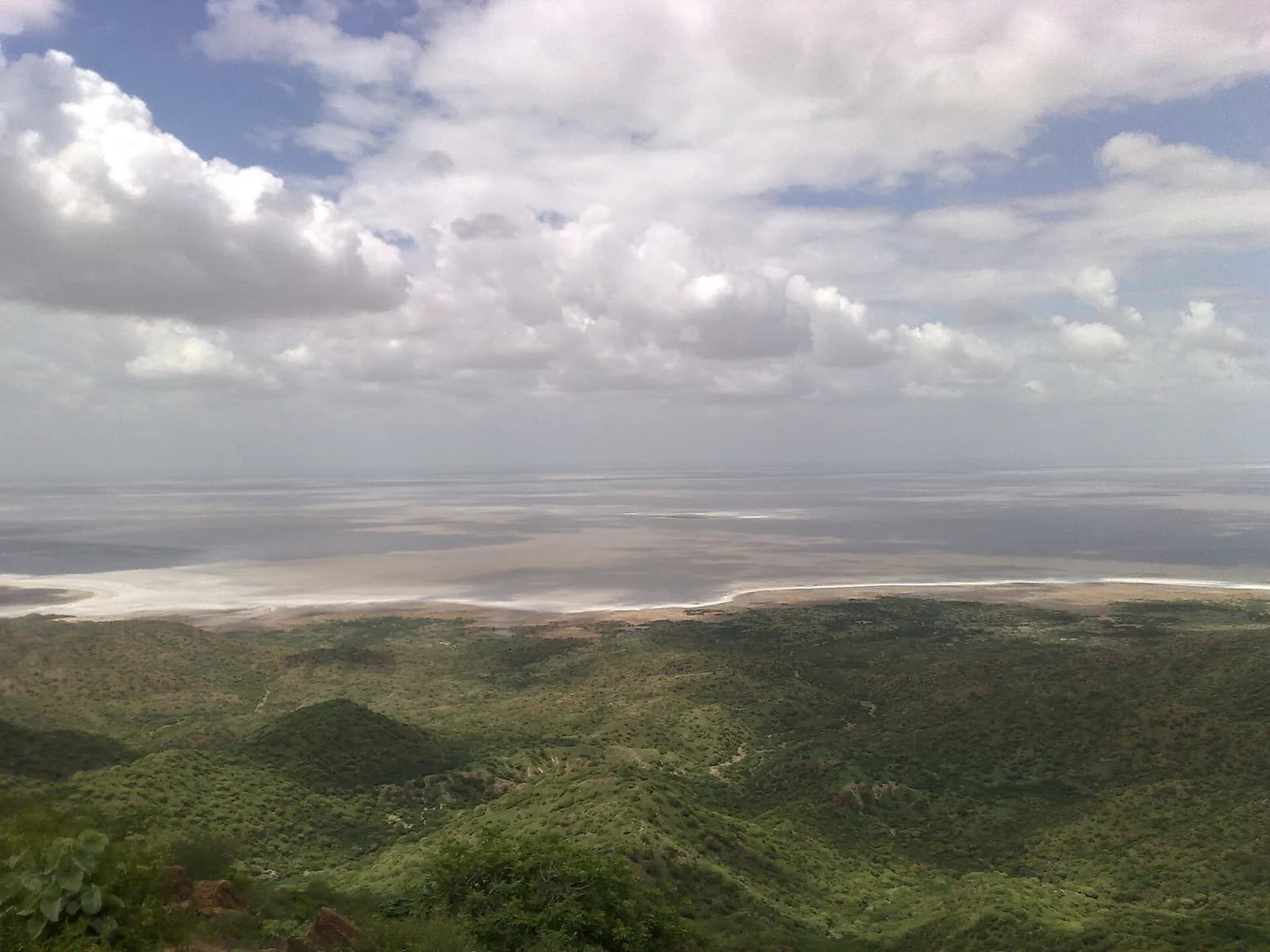
A season-long festival on the salt flats of the Great Rann, based at a tent city near Dhordo, about 80 km from Bhuj. The draw is the white crust of the desert under a full moon, and the craft villages of Kutch within an easy day's drive.

When it falls
Mid-November to late February, with the tent city near Dhordo open all season. Full-moon nights on the salt flats are the ones worth planning around and book out first.
Where it is most vivid
Be here for it
Rann of KutchBhuj

Once the monsoon water evaporates, the Rann dries to a flat sheet of salt that runs to the horizon and takes the colour of whatever the sky is doing. The tent city at Dhordo, named a Best Tourism Village by UN Tourism in 2023, puts up hundreds of furnished tents with folk music, Kutchi thali and camel carts out to the white edge for sunset. Use daylight for craft: Ajrakhpur's block printers, Nirona's rogan painting and copper bells, Bhujodi's weavers, and the mirror-inlaid mud houses of the Banni villages. Drive up Kala Dungar, at 462 m the highest point in Kutch, for the view. Carry your permit and warm clothes.

Go for one

Journeys built around the calendar

त्योहार के साथ यात्रा

Festival dates move, so these routes are planned backwards from them — the seat, the rooftop, the morning after. Tell us the year and we will place the days around it.

A carved stone chariot wheel on the plinth of the Sun Temple at Konark5 days · 4 nights
Themes:HeritageSpiritualCulture

Easy · Best Oct–Feb

Odisha Golden Triangle

Bhubaneswar's stone temples, Konark's sun chariot and dolphins on Chilika

Route: Bhubaneswar → Konark → Puri → Chilika Lake

Group
2–12 (private)
From
₹36,000 pp
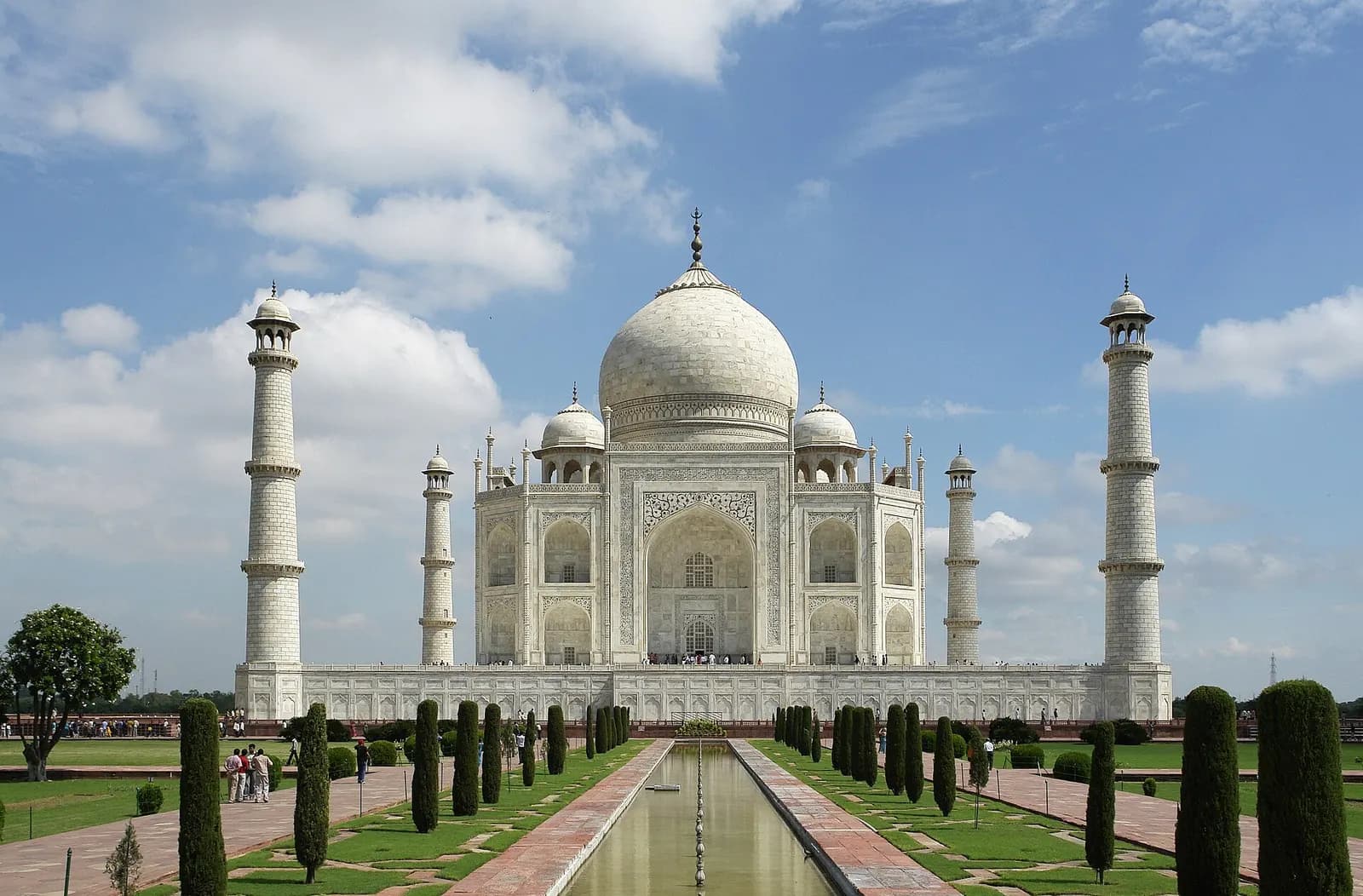
The Taj Mahal at Agra seen along its central watercourse at sunrise6 days · 5 nights
Themes:HeritageCultureFood

Easy · Best Oct–Mar

Golden Triangle Classic

Delhi's tombs, Agra's marble and Jaipur's pink grid in six days

Route: Delhi → Agra → Fatehpur Sikri → Jaipur

Group
2–12 (private)
From
₹58,000 pp
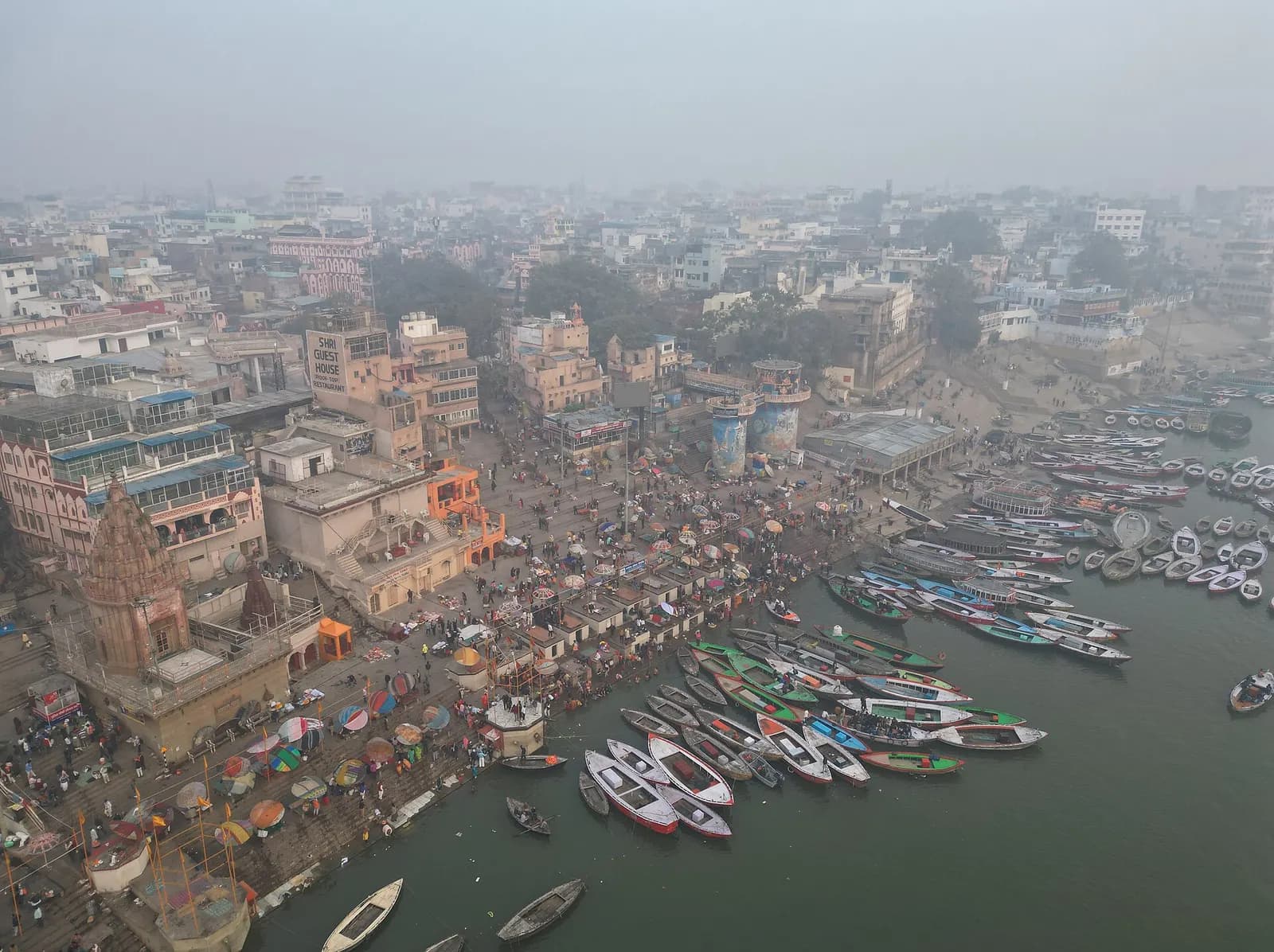
Pilgrims and boats at Dashashwamedh Ghat on the Ganga at Varanasi6 days · 5 nights
Themes:SpiritualCultureHeritage

Easy · Best Oct–Mar

Varanasi and the Ganga Spiritual Trail

Six days from the ghats of Kashi to the Sangam and the Saryu

Route: Varanasi → Sarnath → Prayagraj → Ayodhya

Group
2–12 (private)
From
₹49,000 pp

Plan with us

Which one will it be?

कौन-सा त्योहार?

Give us a festival and the days you can spare. We will tell you where to stand, and what to do with the mornings after.