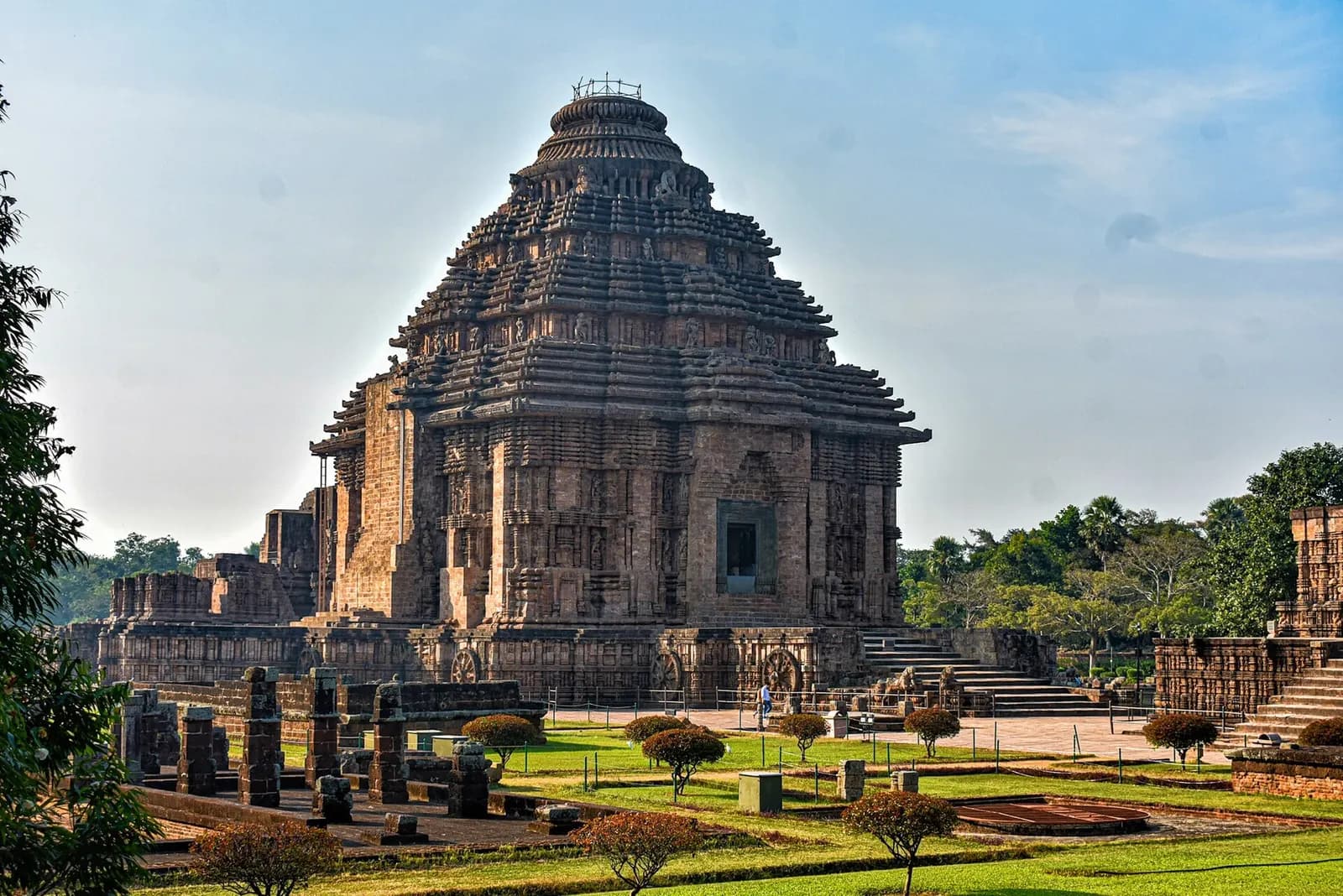
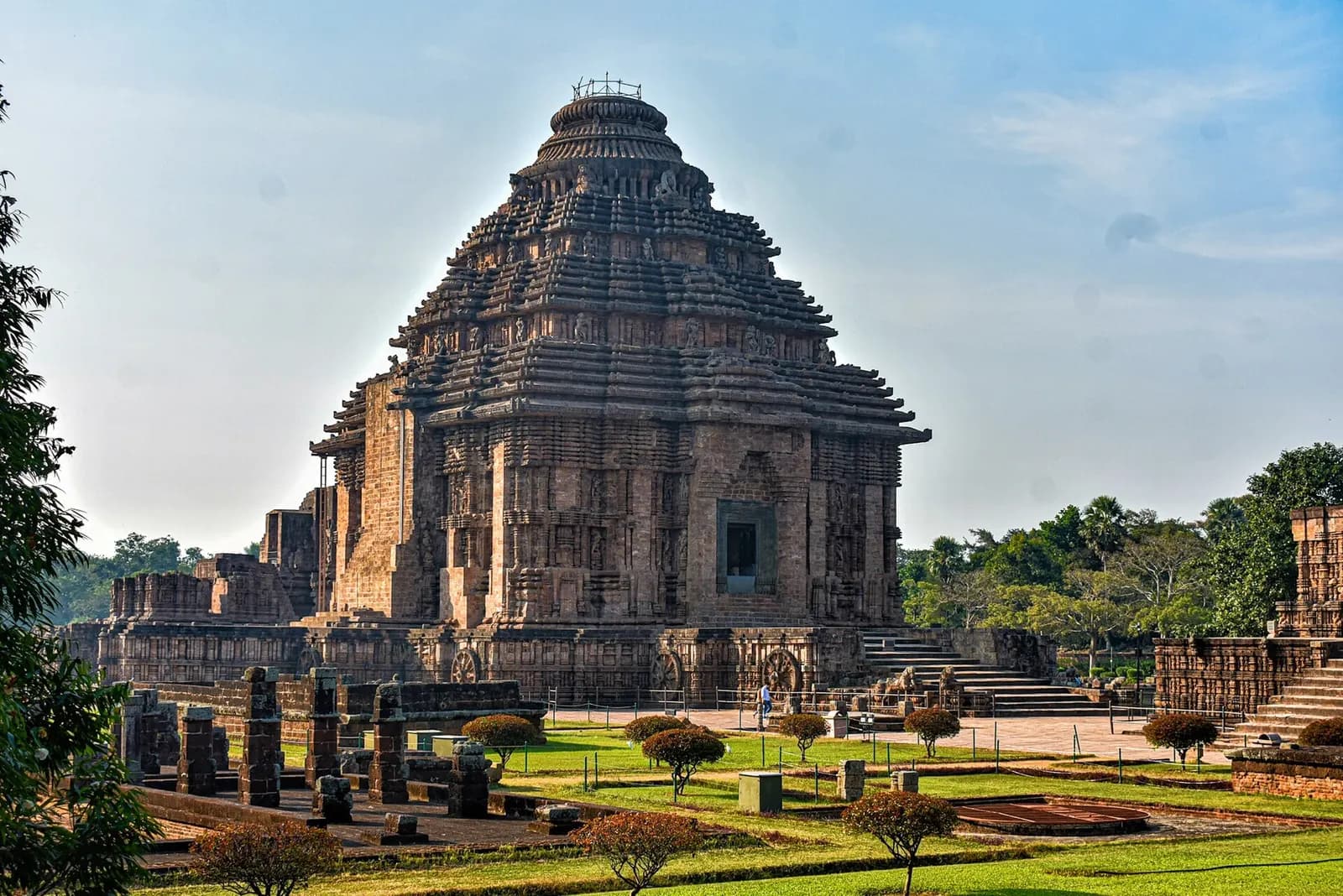
Narasimhadeva I of the Eastern Ganga dynasty built the Sun Temple around 1250 CE, on a shore that has since retreated three kilometres, and designed the whole complex as the chariot in which Surya crosses the sky. Twelve pairs of wheels, each nearly three metres across and carved with spokes, axles and medallion friezes, run along the plinth; they are accurate enough to work as sundials, and guides will show you how to read the shadow of a spoke to the nearest few minutes. Seven straining horses pull from the east.
The soaring deul is gone, its fall blamed variously on sacking and on the failure of its own vaulting, but the pyramidal jagamohana survives, its three tiers stepped with musicians and dancers, and the British filled its interior with sand in 1903 to stop it collapsing. What holds you is the sculpture: erotic maithuna panels that get the attention, and above them giraffes brought by African traders, war elephants, a king reviewing horses, and the three great chlorite Surya images set in the temple's outer niches, each catching the sun at a different hour. Come at opening to have the wheels to yourself, and again in the last hour when the khondalite goes gold.
In the first week of December the Konark Dance Festival stages Odissi and Chhau against the floodlit temple, with Chandrabhaga beach three kilometres away.
 Sweet
Sweet