Debendranath Tagore bought this stretch of Birbhum's red laterite in 1863 and named his retreat Shantiniketan, the abode of peace. His son Rabindranath opened a five-pupil school under the chhatim trees in 1901 and expanded it in 1921 into Visva-Bharati, a university built on the idea that learning belongs outdoors and that India should meet the world on equal terms. UNESCO inscribed the campus in 2023.
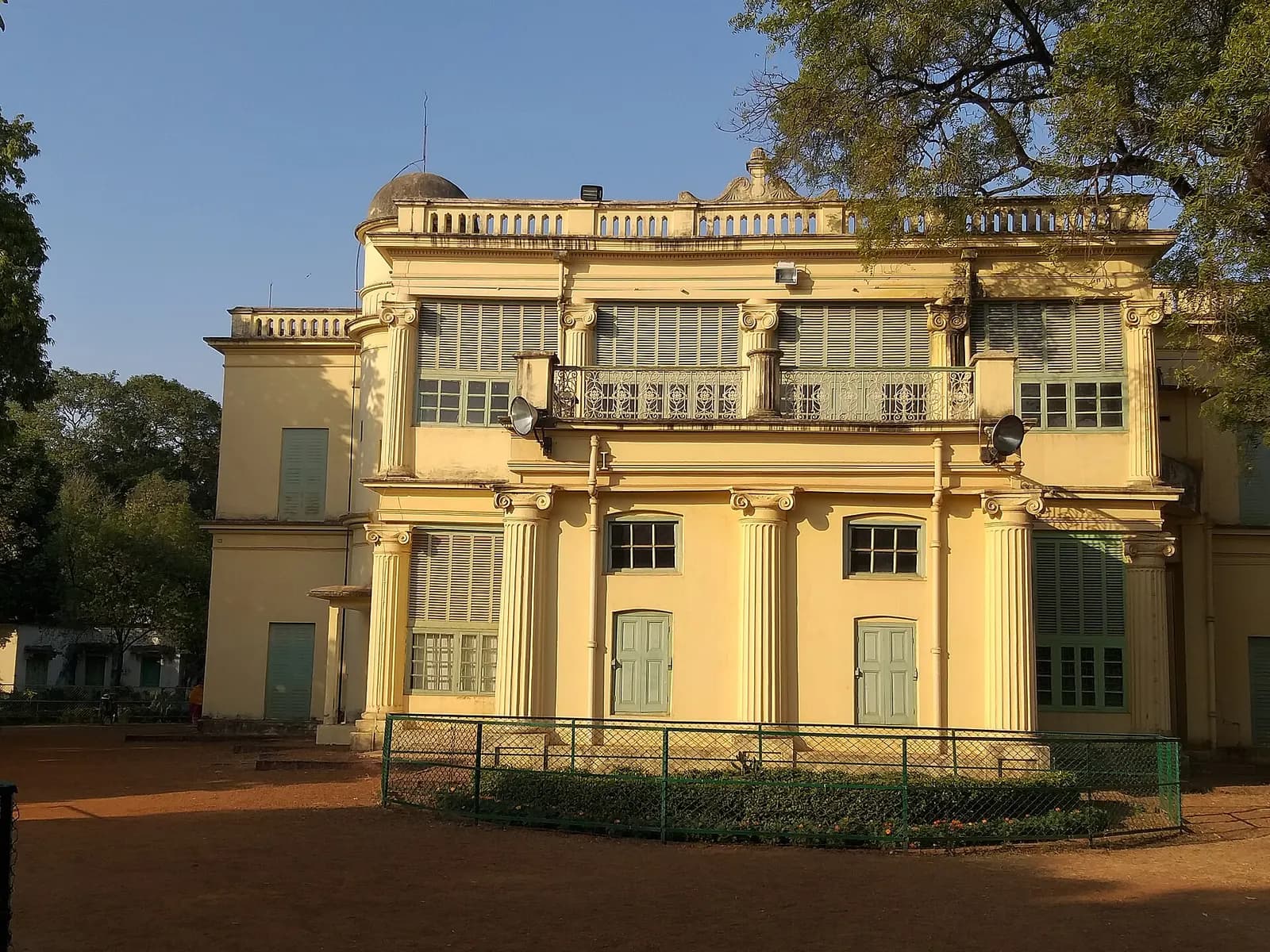
Walking it is the point. The Uttarayan complex holds the houses Tagore lived and wrote in, each named and each different, with Rabindra Bhavana's archive of manuscripts and Nobel memorabilia alongside. At Kala Bhavana the walls carry Nandalal Bose's murals and the lawns hold Ramkinkar Baij's monumental cement sculptures, including the Santhal Family of 1938, arguably the first modern public sculpture in India.
Classes still gather on stone platforms in the shade. Beyond the campus the land opens into the Khoai, an eroded badland of ravines and sonajhuri scrub where a craft market runs every Saturday afternoon; Baul singers with ektara and khamak perform between the stalls of kantha stitch, dokra brass and batik. Come in late December for Poush Mela, or at Holi for Basanta Utsav, when students in yellow dance the spring in with Tagore's songs.
 Sweet
Sweet