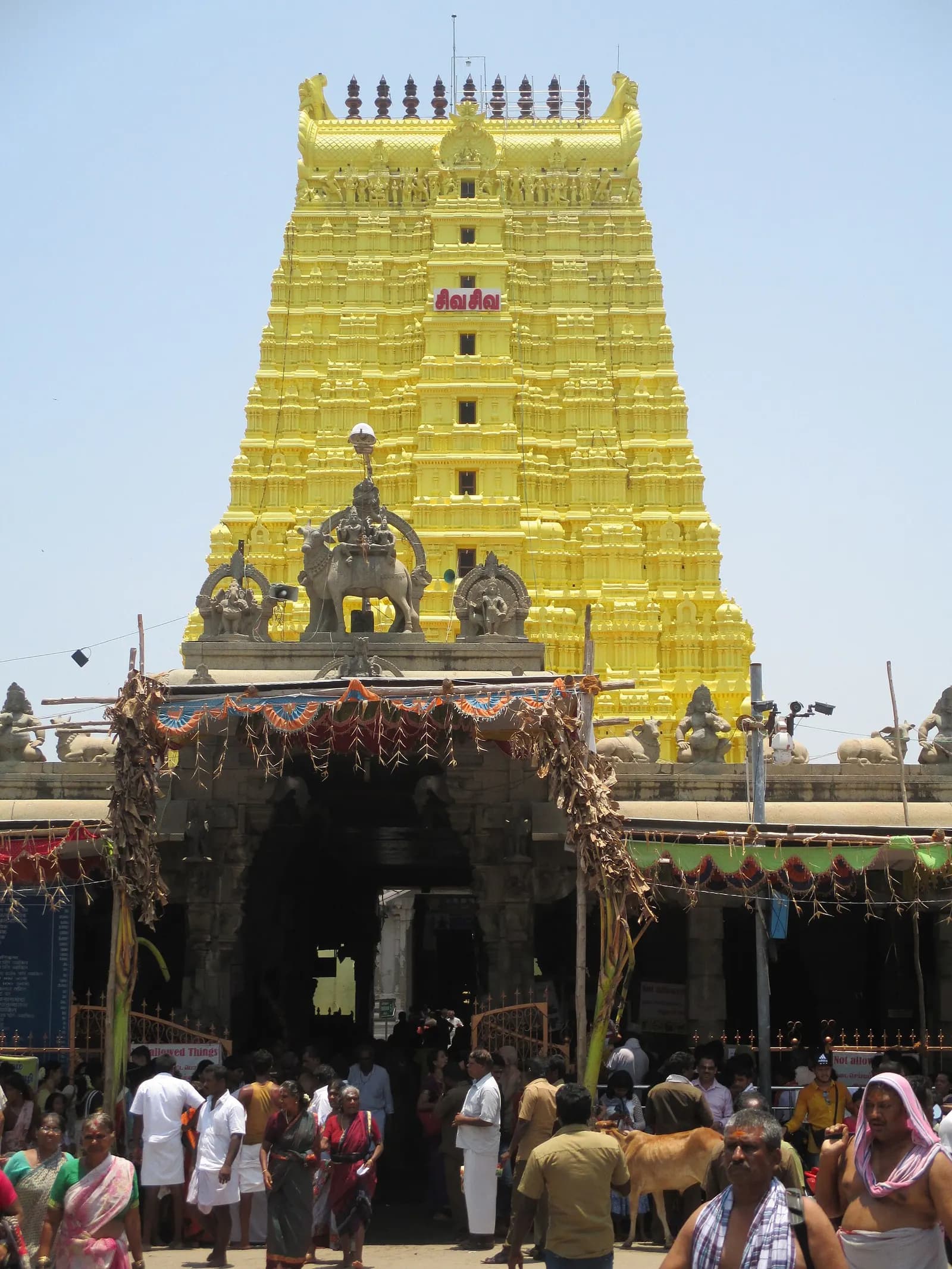
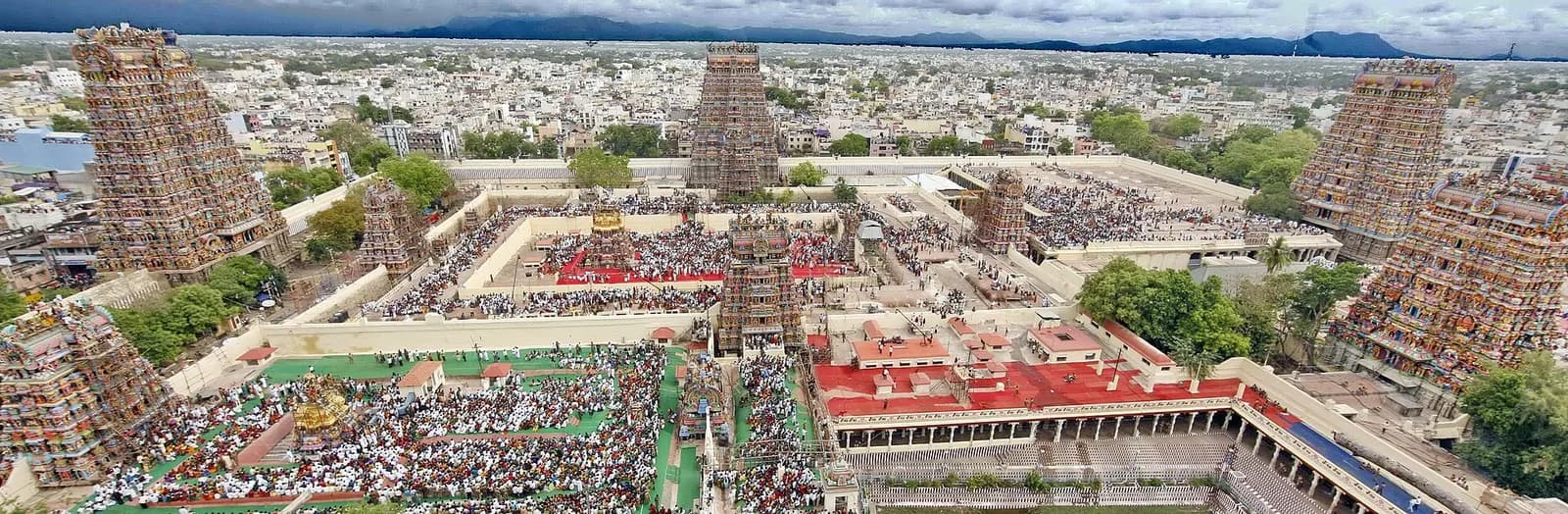
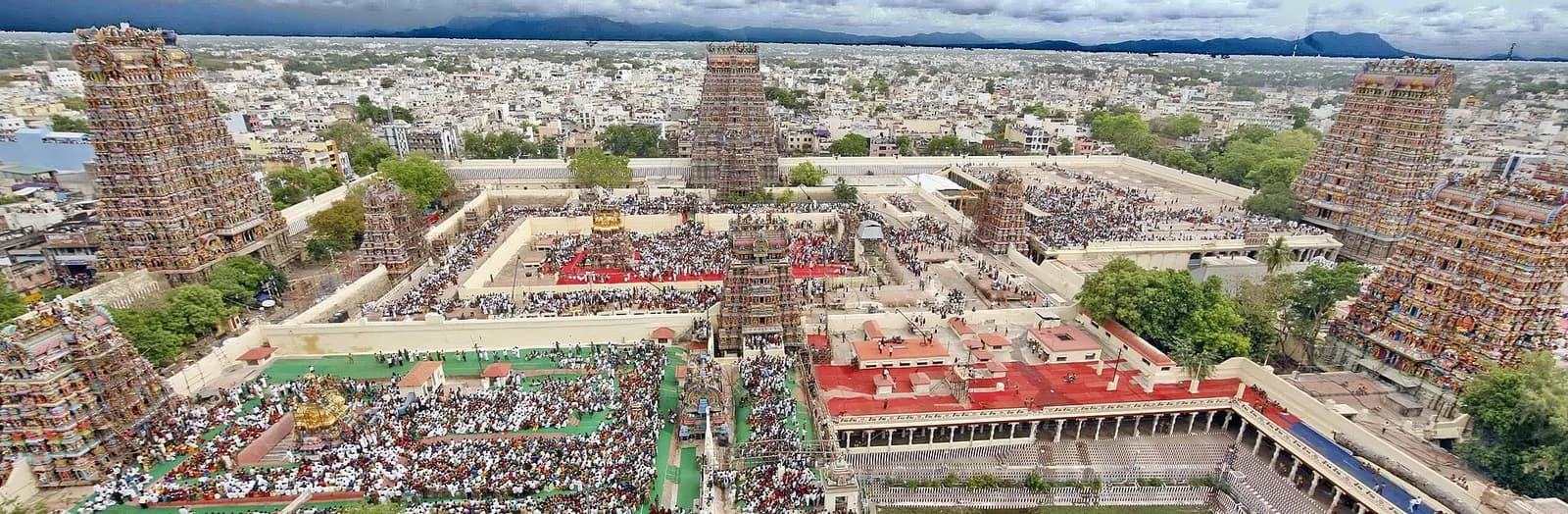
Madurai has been a capital since the Pandyas ruled from here, and Greek and Roman traders knew it as a source of pearls and pepper; Sangam poetry, the oldest Tamil literature, was compiled at academies the city still names itself after. The present Meenakshi Amman Temple is largely a Nayak rebuilding of the sixteenth and seventeenth centuries after Malik Kafur sacked the city in 1310, and it is less a monument than a working town under one roof: fourteen gopurams, the tallest about 52 metres and crusted with painted stucco figures, a Golden Lotus tank where pilgrims wash, a thousand-pillar hall that is now a sculpture museum, and corridors of shops selling bangles, brass and jasmine. The streets outside repeat the temple's plan in squares named Chithirai, Aadi, Avani Moola and Masi.
A day begins at the Mattuthavani flower market or the jasmine stalls of East Chitrai Street, then a slow circuit of the temple before the midday closing. Afternoons suit Thirumalai Nayakkar Mahal, a 1636 audience hall of enormous granite columns, and the Gandhi Memorial Museum, which keeps the blood-stained dhoti he was wearing when shot. Return at half past nine for the palli arai ceremony, when Sundareswarar's image is carried to Meenakshi with drums and lamps.
 Non-veg