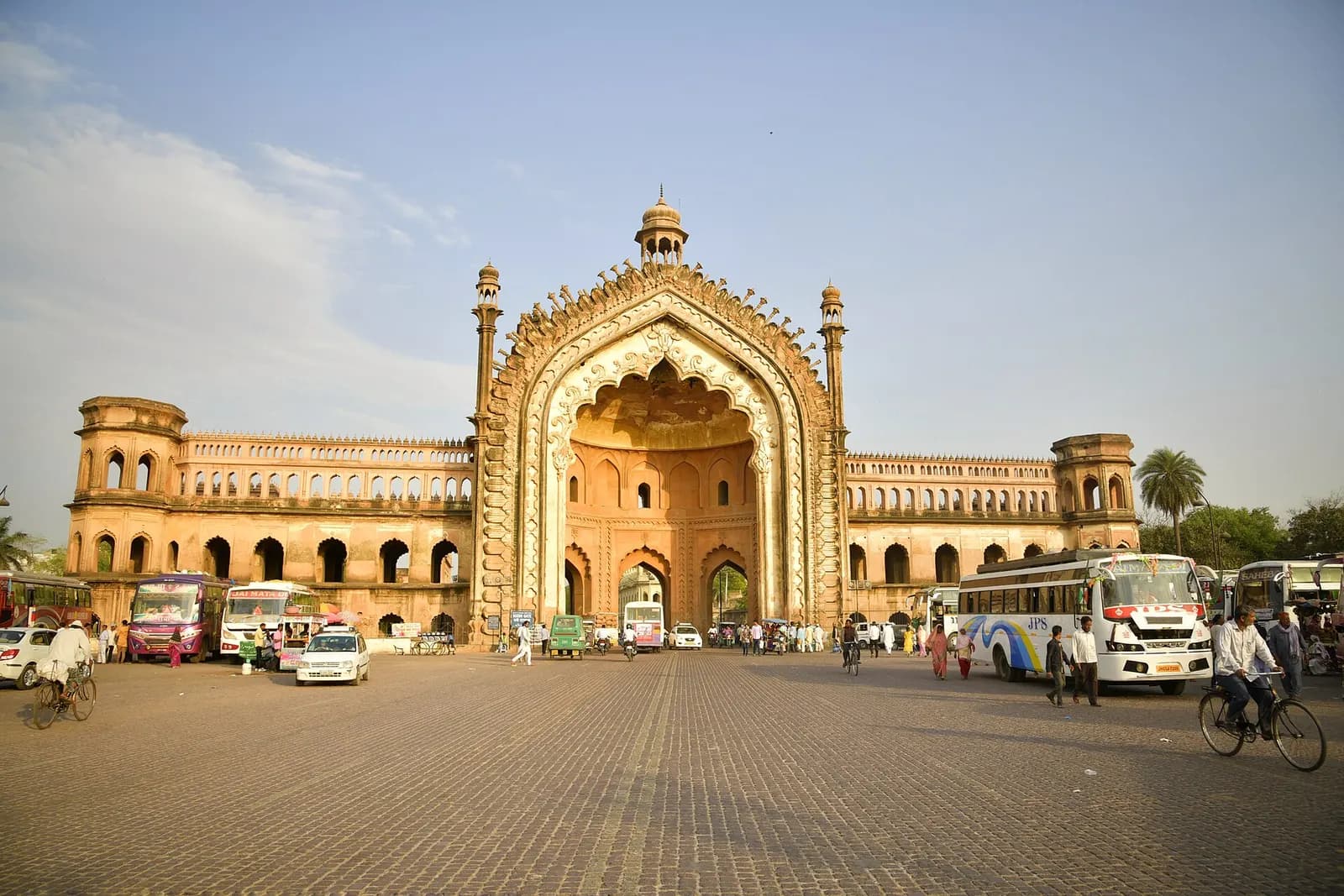
Asaf-ud-Daula built the Bara Imambara in 1784 as famine relief, paying people to build by day and, so the story goes, nobles to tear it down by night so the work would last. The result is a hall 50 metres long with no supporting pillars, a roof-level labyrinth called the Bhool Bhulaiya, and a stepwell dropping towards the Gomti. The Rumi Darwaza beside it is Lucknow's emblem, a 60-foot gateway modelled loosely on Istanbul.
Walk on to the Chota Imambara, all chandeliers and calligraphy, and then to the Residency, where the walls are still pocked by cannon fire from the five-month siege of 1857. That is the morning. The afternoon belongs to Chowk and Aminabad: chikan embroidery in white on white, attar sellers, kite makers, and Tunday Kababi, where the galouti kebab melts because it was made for a toothless Nawab.
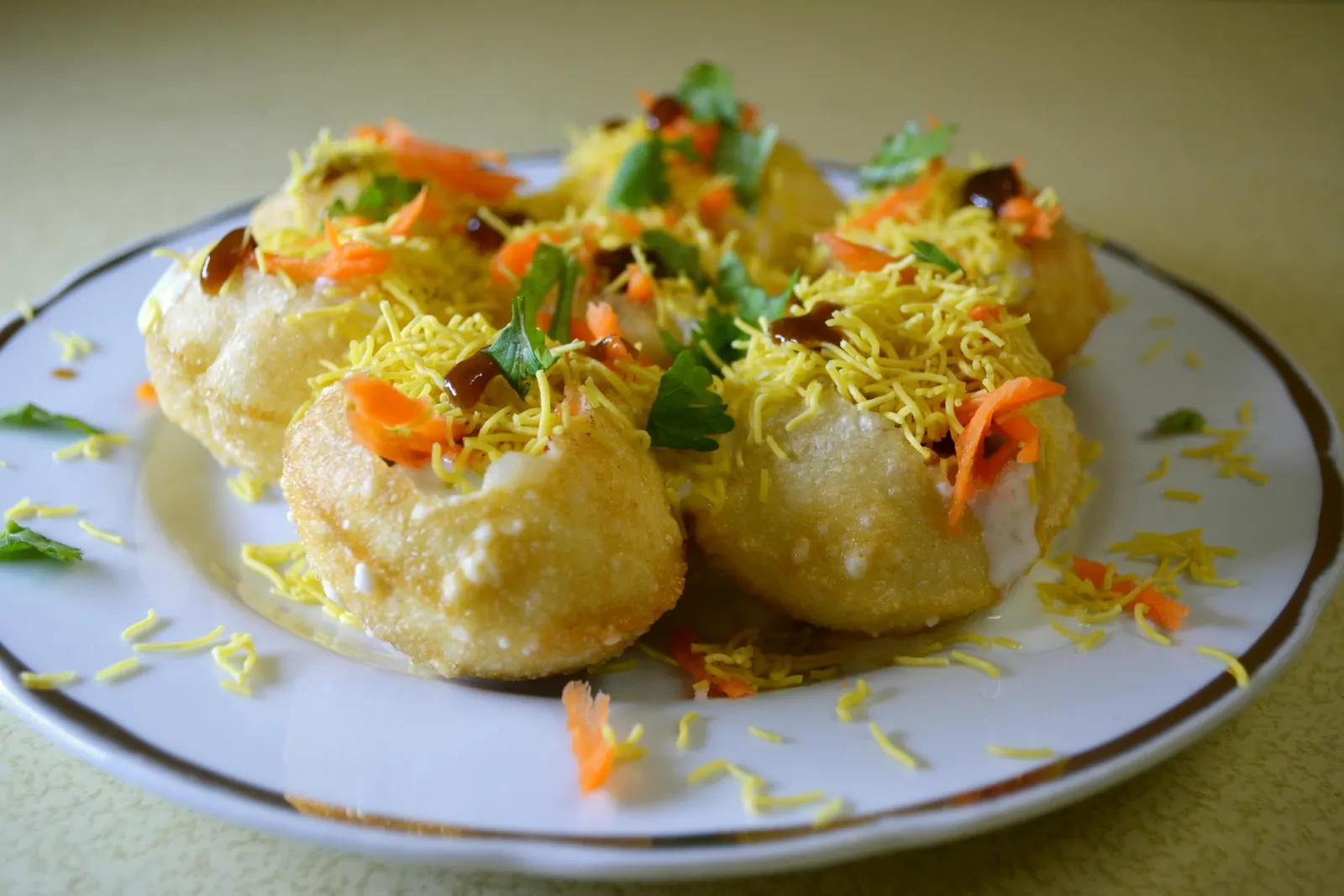
Hazratganj, the colonial high street, is for an evening stroll, a basket chaat at Royal Cafe and, a few streets on in Aminabad, a Prakash kulfi. Lucknow's food is its argument for greatness: dum biryani, kakori kebabs, sheermal bread, nihari for breakfast at Raheem's, and makkhan malai, a winter froth of milk and saffron sold at dawn. The city speaks a courteous Urdu-inflected Hindi, and pehle aap, you first, is still the local reflex.
Two days lets you see the Nawabi core and eat properly; three lets you add Ayodhya or the Dudhwa forests.
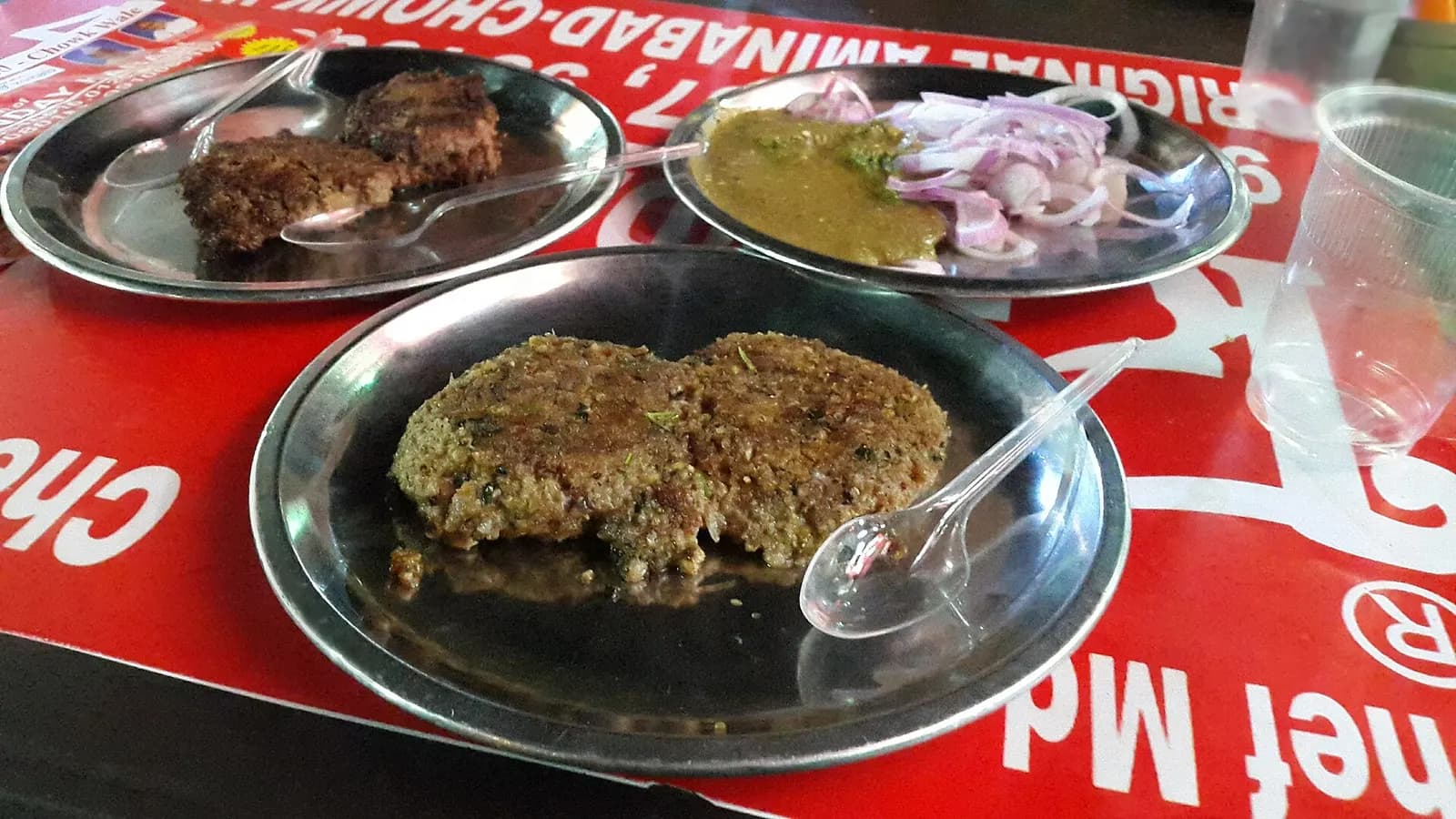 Non-veg