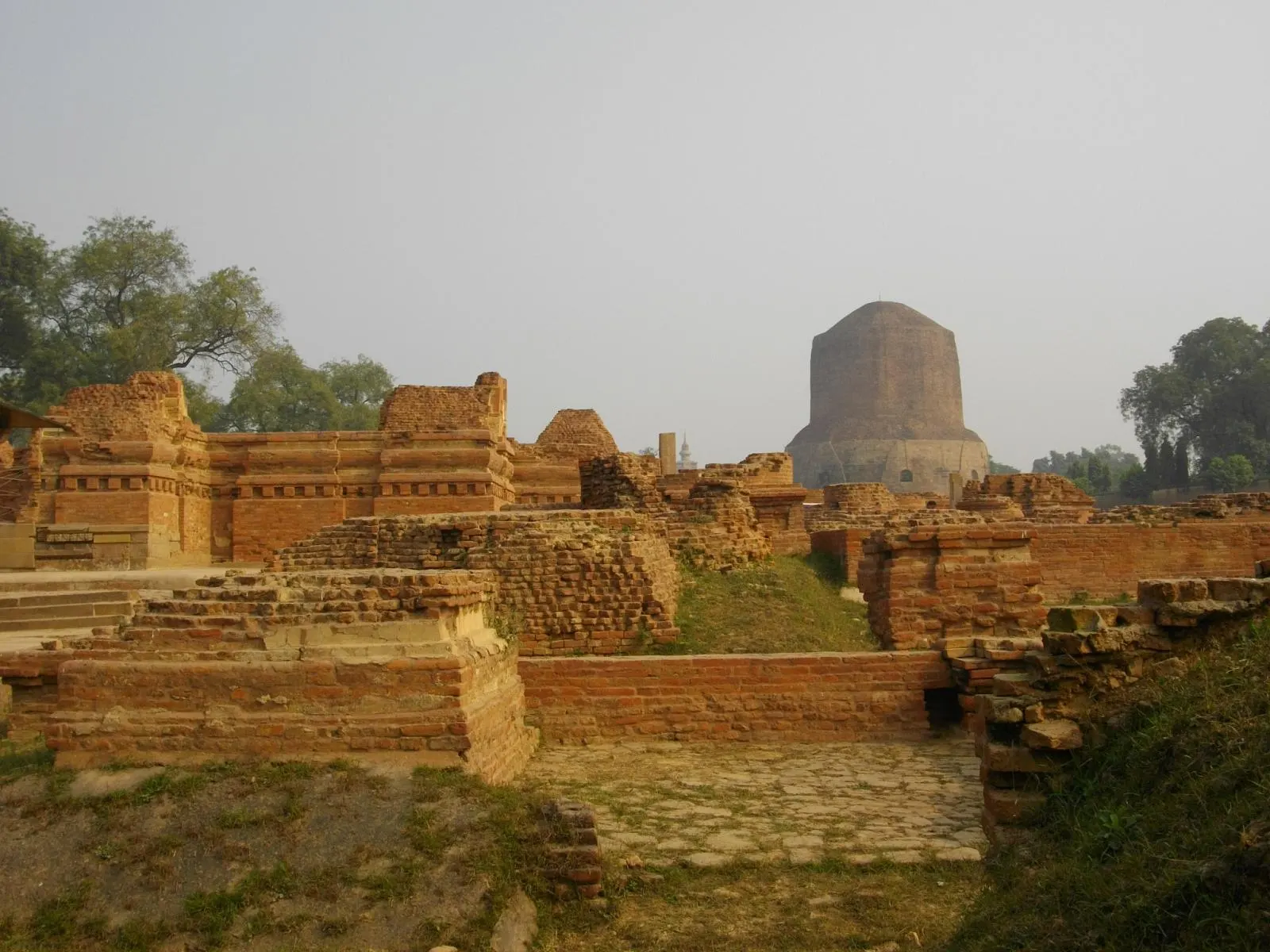
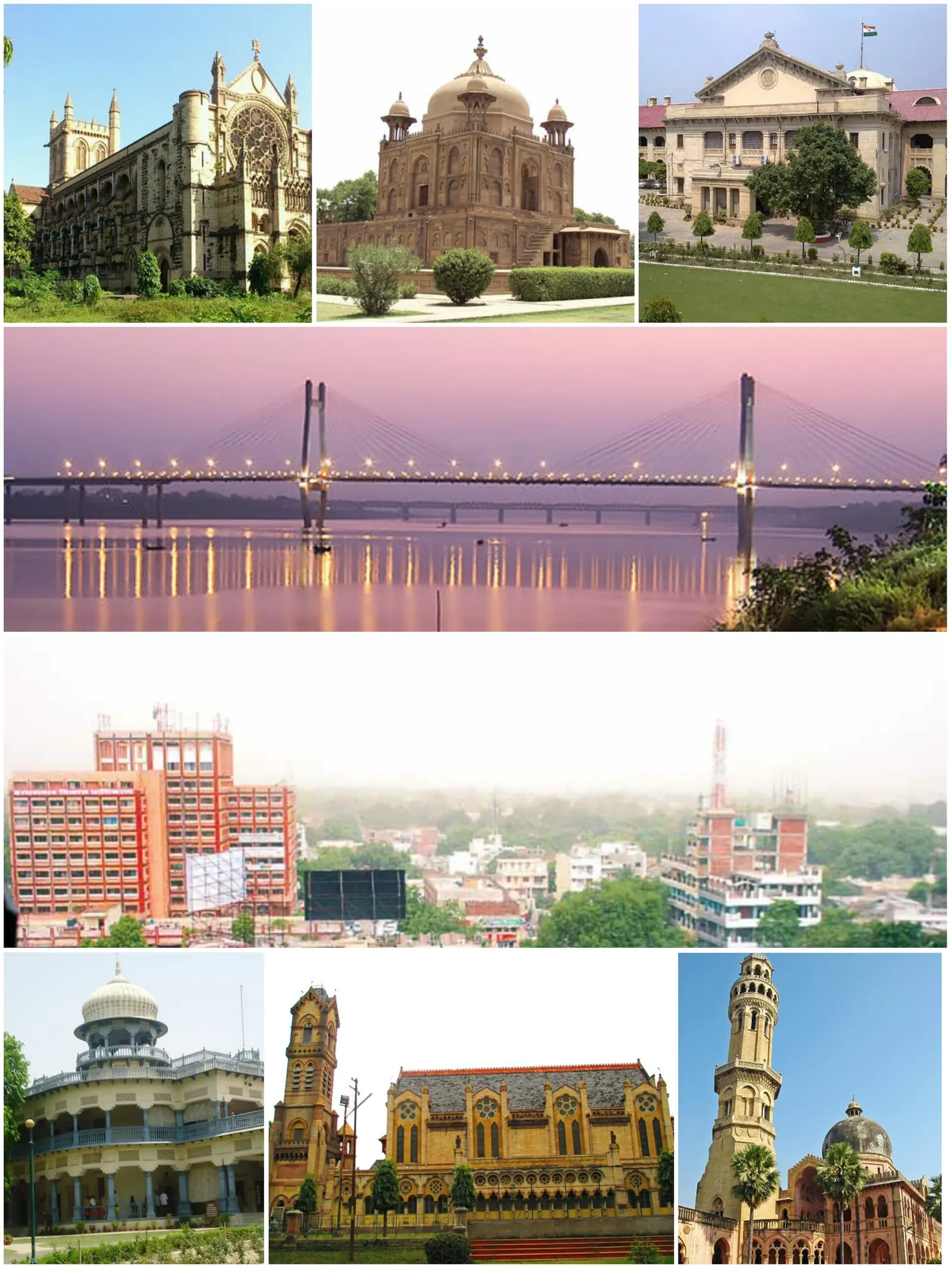
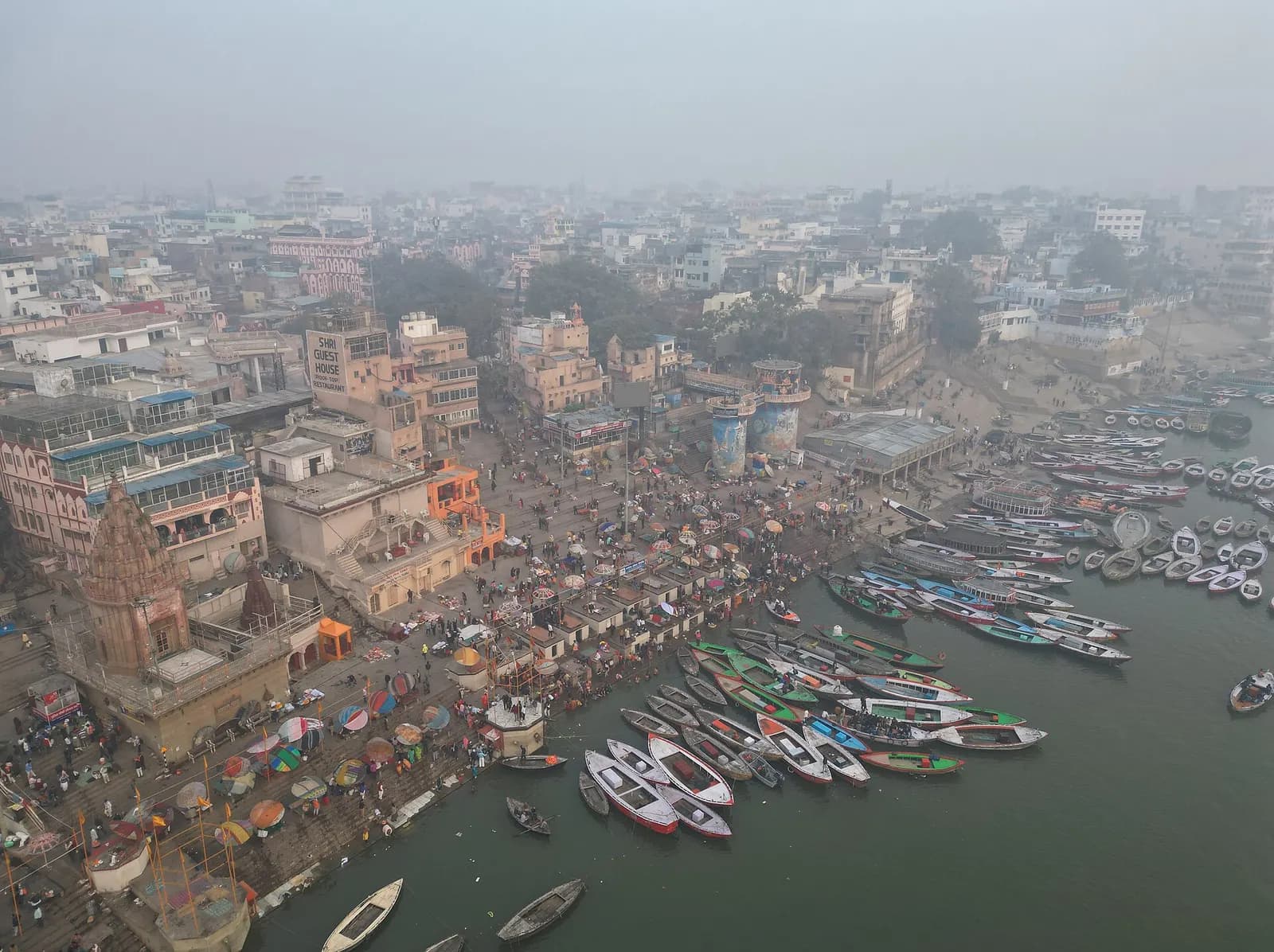
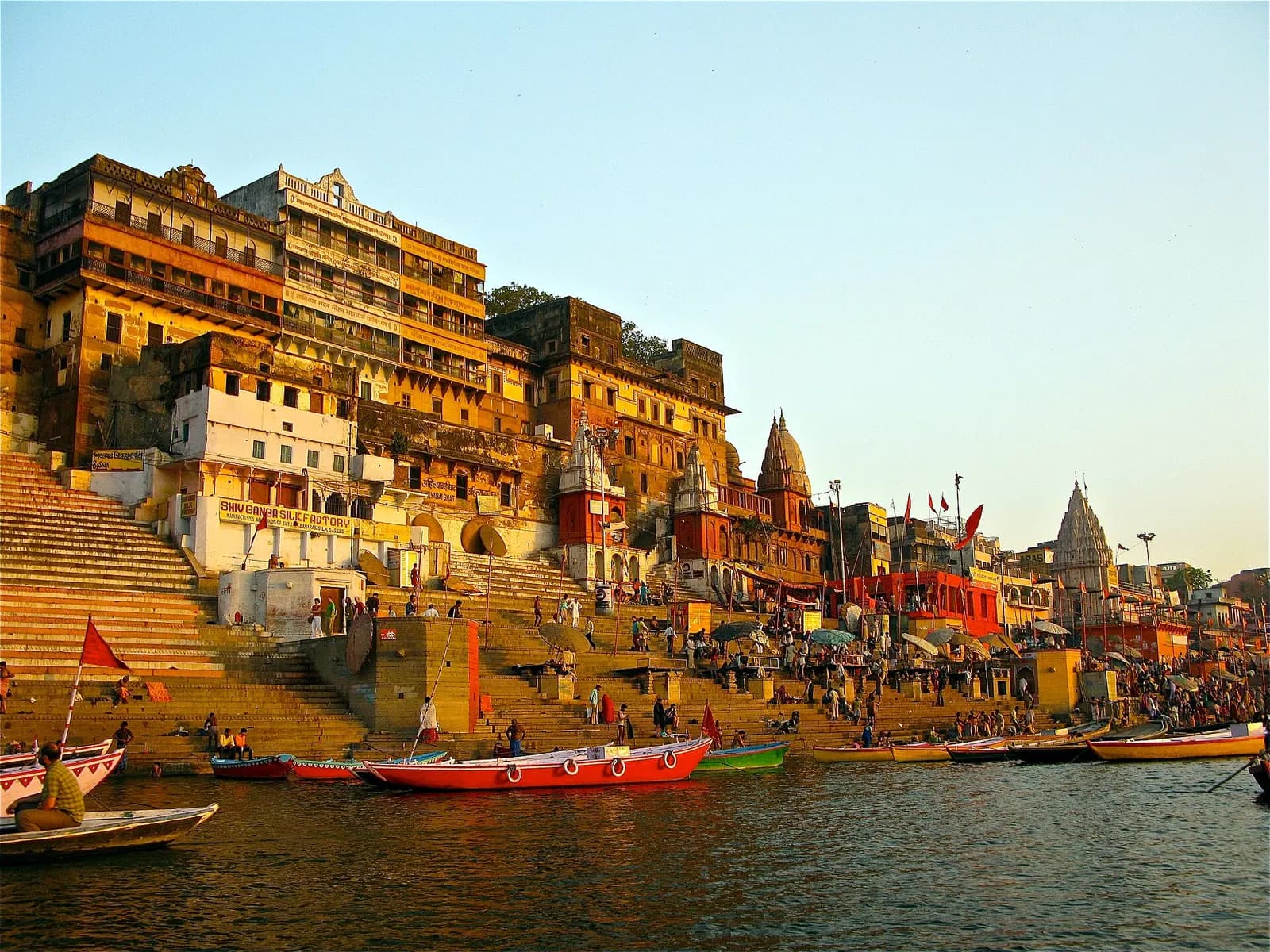
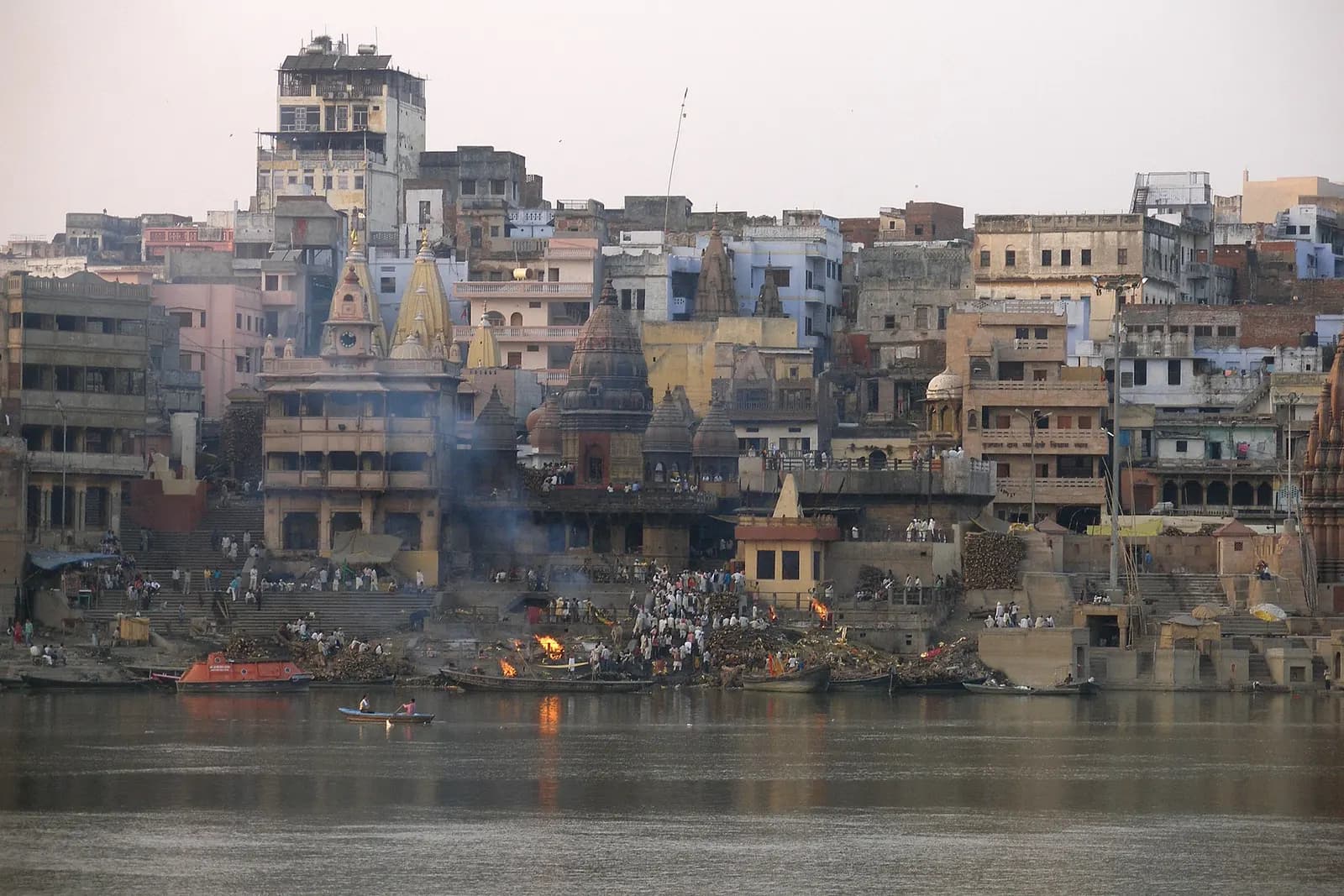
The Ganga turns north here, so the sun rises across the water and the city on the crescent bank gets the first light full in its face. That fact has organised Varanasi since before the Buddha walked through it on his way to Sarnath. Come down to Assi Ghat at half past five for Subah-e-Banaras, when the aarti, yoga and morning raga run together, then take a boat north past Harishchandra and Kedar ghats to Dashashwamedh, where priests are washing the steps, and on to Manikarnika, where cremations continue around the clock and no one minds you watching quietly from the water.
Behind the ghats the old city is a maze of lanes two metres wide, with cows, silk shops, the Kashi Vishwanath temple in its new corridor down to the river, and the akharas where wrestlers train in mud pits. Breakfast is kachori-sabzi with jalebi, lunch is at a thali house, and the afternoon is for Ramnagar Fort across the river or the Bharat Kala Bhavan museum at Banaras Hindu University. At dusk return to Dashashwamedh for the Ganga aarti, seven priests with tiered lamps and conch shells, best seen from a boat.
In November, on Kartik Purnima, Dev Deepawali lights every ghat with a million lamps. Varanasi keeps death in plain sight and is the busier with life for it; give it at least three days and a walker's patience.
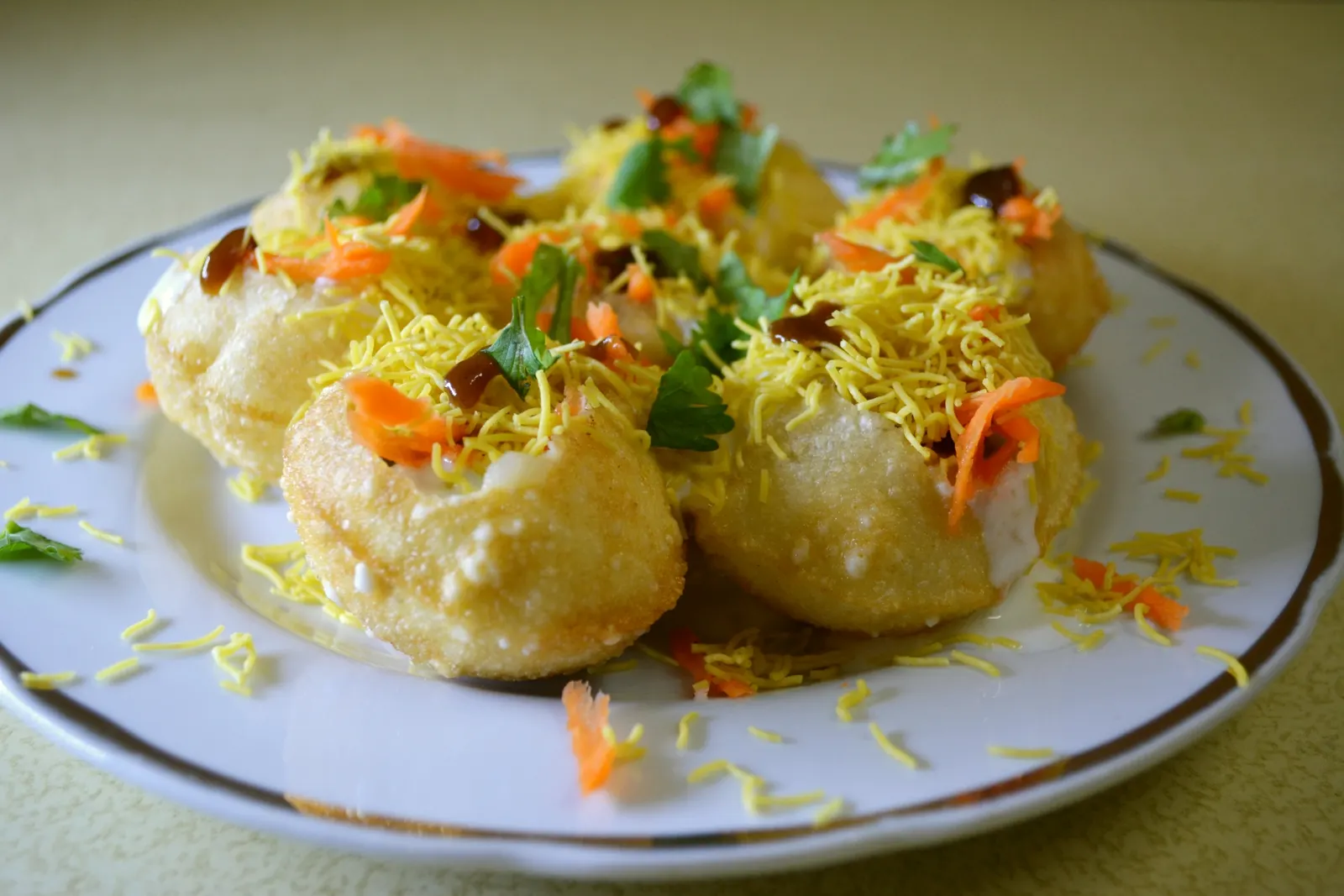 Street food