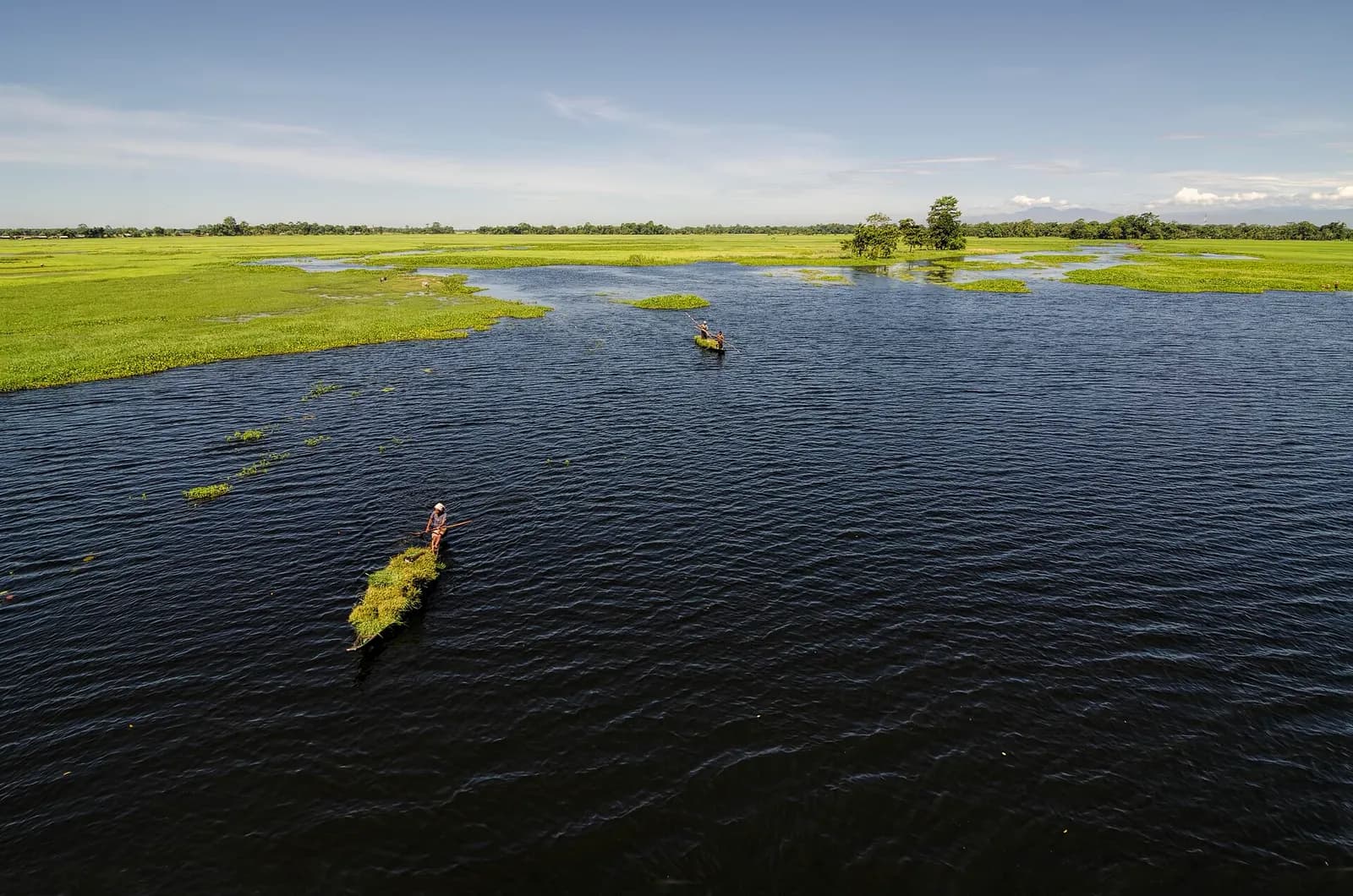
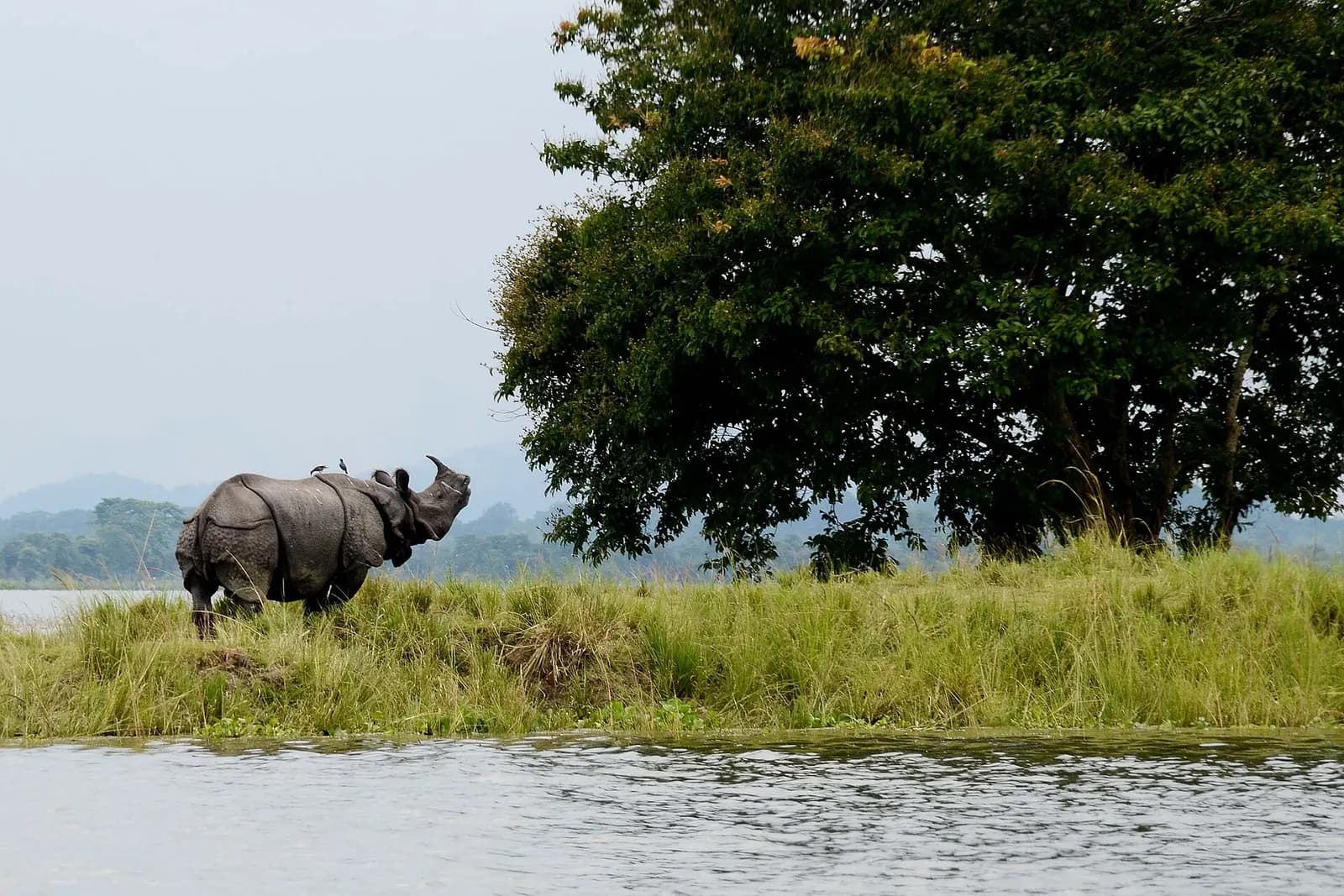
Kaziranga began as a reserve forest in 1905, after Mary Curzon, wife of the Viceroy, toured the area and saw no rhinos at all; a century of protection later it holds more than 2,600 greater one-horned rhinoceros, roughly two-thirds of the species. The park stretches 40 kilometres along the south bank of the Brahmaputra, a mosaic of elephant grass, semi-evergreen forest and beels (oxbow lakes) that the river floods every monsoon, pushing animals up into the Karbi Anglong hills and closing the park from May to October. A day here starts before light at the Kohora or Bagori ranges, where elephants carry you into mist so thick that a rhino resolves out of it thirty feet away, then continues by jeep through Agaratoli in the east, where pelicans, adjutant storks and Pallas's fish eagles work the wetlands and wild water buffalo stand chest-deep in the shallows.
Tigers live here in higher density than almost anywhere, but are seldom seen; swamp deer, hog deer and elephant herds are constant company. Afternoons belong to the tea estates along NH-715, the hoolock gibbons of Panbari, or the orchid park at Durgapur where tea-tribe dancers perform at dusk. Kaziranga matters because it proves that a threatened species can come back, and because a rhino grazing against the Karbi hills at first light is one of India's great wildlife images.
 Vegetarian