Bhuj has been the capital of Kutch since Rao Khengarji I founded it in 1549, and it wears its history harder than most Indian towns. On 26 January 2001 an earthquake of magnitude 7.7 flattened much of the old city and killed thousands. What has since been rebuilt, restored or simply left as it fell is now the reason to come.
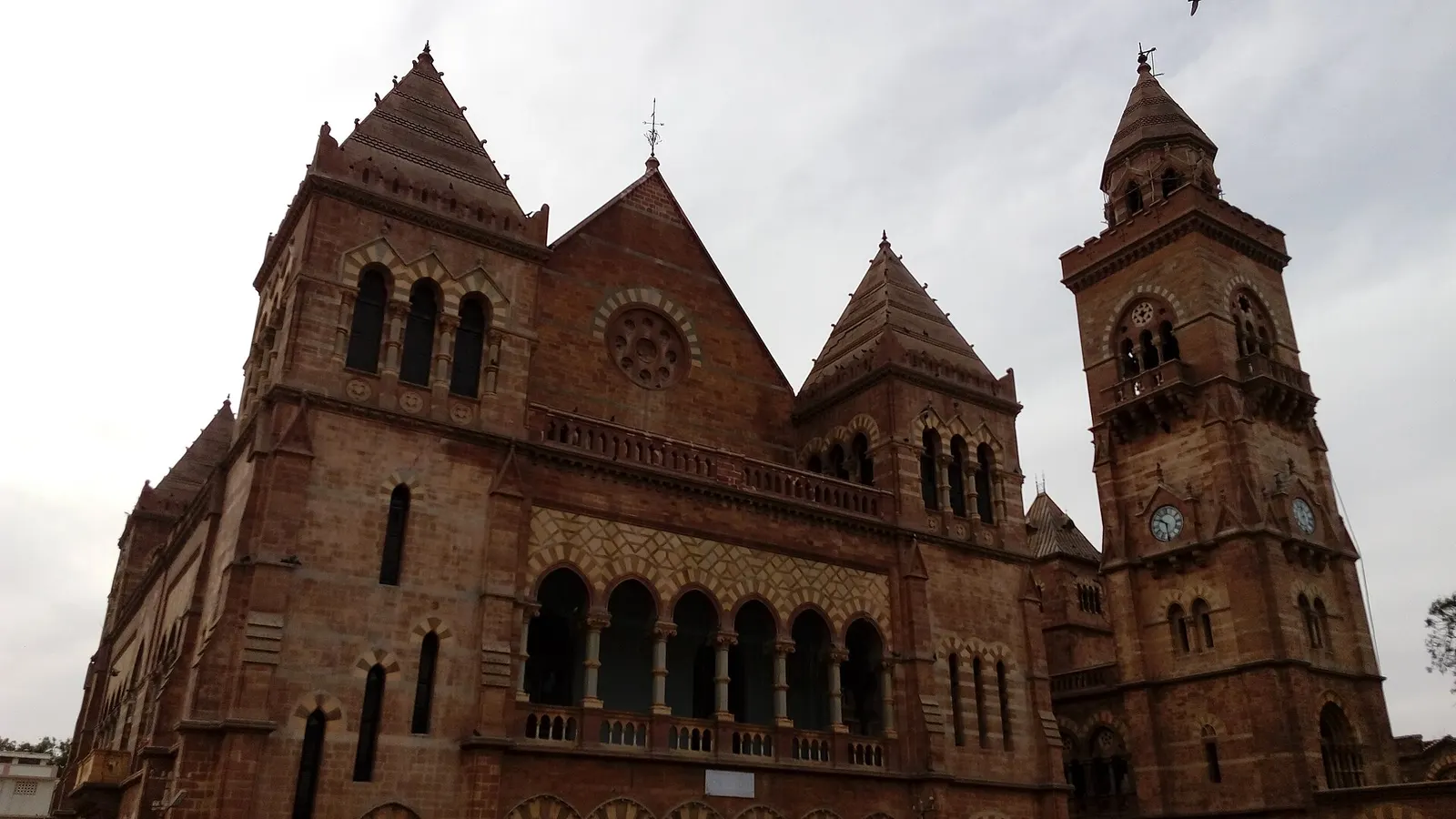
The Aina Mahal, the mirror palace of the 1750s, was designed by Ram Singh Malam, a Kutchi sailor shipwrecked off the Dutch coast who came home after seventeen years in Europe with skills in glass, enamel and tile; its hall of mirrors and pleasure pool survive in part. Next door the Prag Mahal of 1865 is Italianate Gothic with a forty-five-metre clock tower you can still climb for a view over rubble and rebuilding. The Kutch Museum, founded in 1877, is the oldest in Gujarat and holds Kshatrapa inscriptions and cases of Ahir embroidery.
But Bhuj is really a base for craft. Within an hour lie Ajrakhpur, where Khatri families block-print with natural indigo and madder across sixteen stages; Nirona, home to the last practitioners of rogan painting and to copper-bell makers; and Bhujodi, a village of shawl weavers. Buy directly, ask to see the workshop, and the money stays with the maker.
 Vegetarian