Kohima is an Angami village called Kewhira that the British made a headquarters in 1878, and that the world learned about in April 1944, when the Japanese advance into India was stopped on the tennis court of the Deputy Commissioner's bungalow. The fighting ran from early April into late June, often at grenade range across that court; in 2013 Britain's National Army Museum voted the twin battles of Imphal and Kohima the greatest the country has fought. The war cemetery on Garrison Hill now terraces down the slope in mown grass with the tennis court's white lines laid out in stone, and at the foot of it the memorial reads: when you go home, tell them of us and say, for your tomorrow, we gave our today.
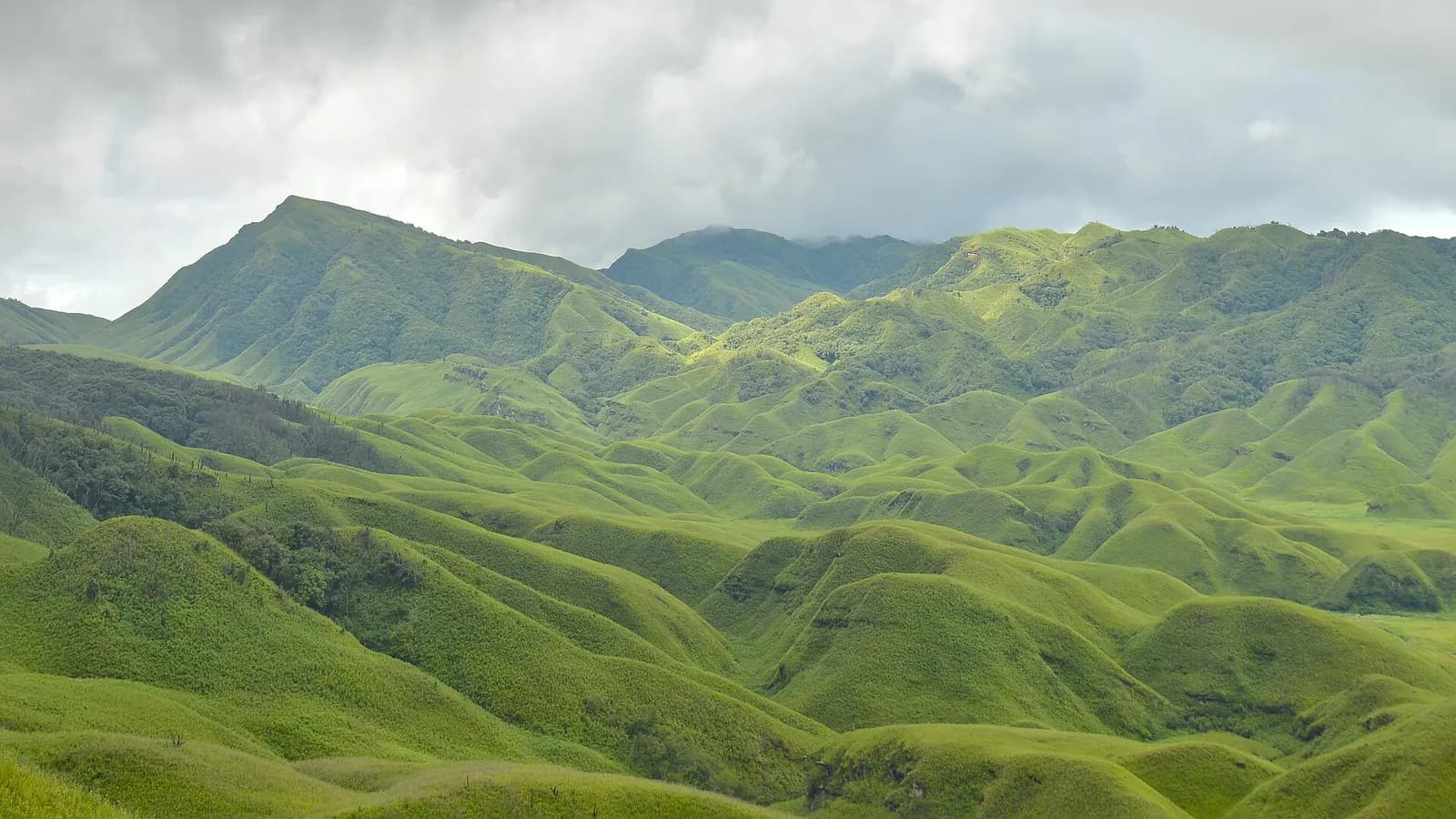
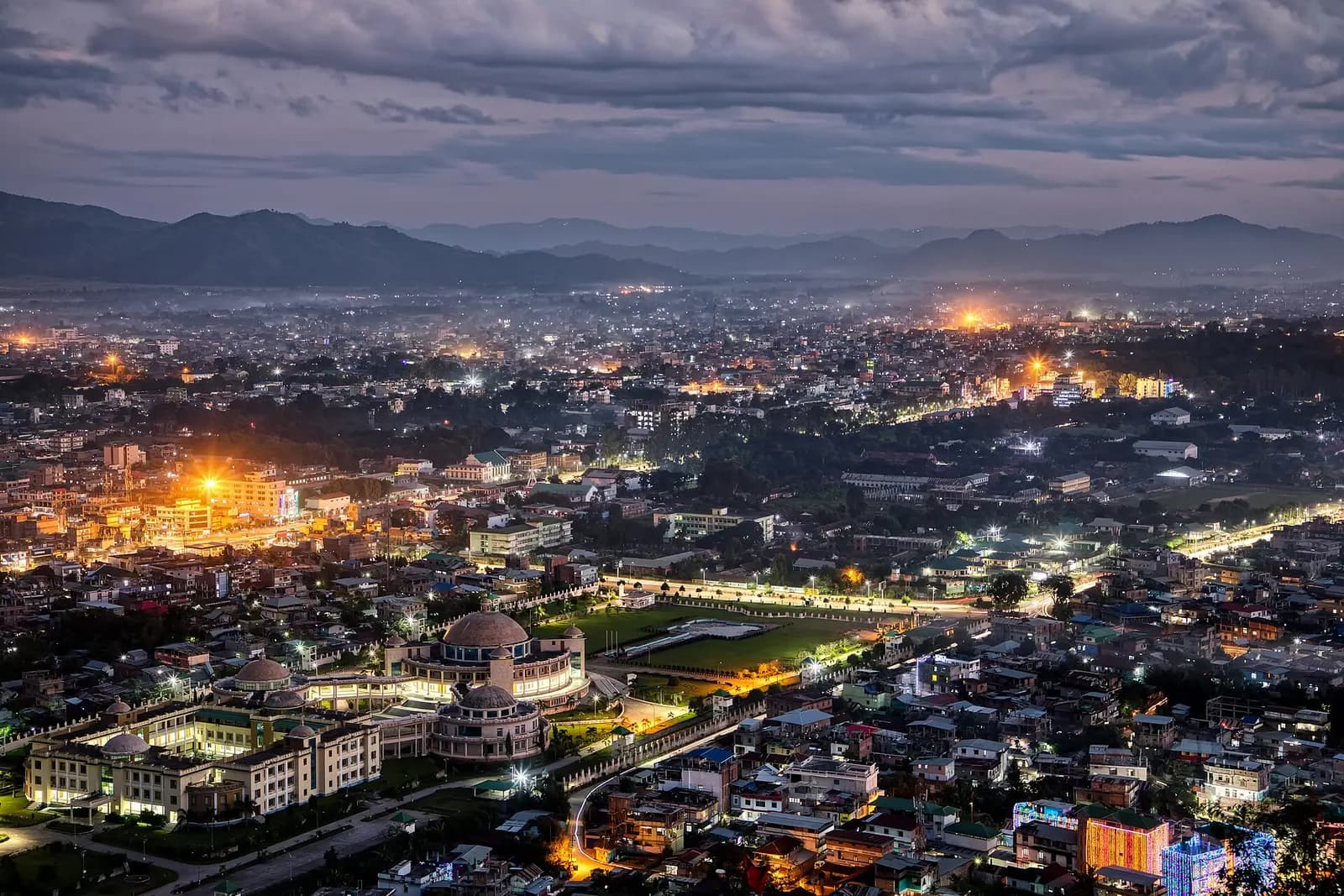
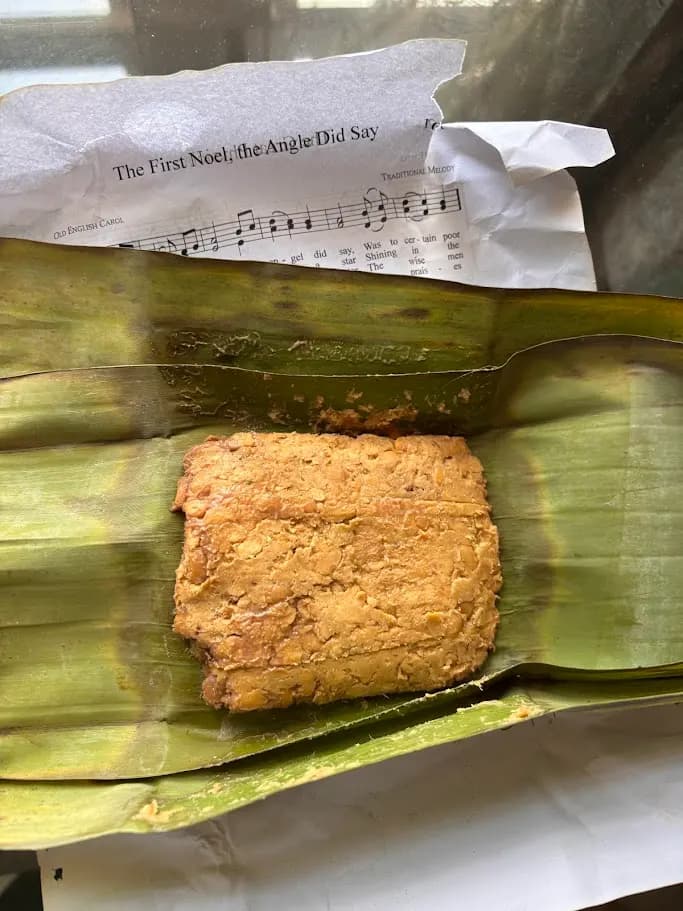
The town itself climbs and doubles back at about 1,450 metres, a stack of tin roofs, Baptist churches and near-vertical lanes above a market where women sell axone, bamboo shoot, wild greens, smoked meat and king chillies from steel bowls. Twelve kilometres out at Kisama, the Naga Heritage Village holds the Hornbill Festival from 1 to 10 December, when Nagaland's recognised tribes build their morungs, beat log drums, wrestle and pour rice beer for ten days. Khonoma, twenty kilometres west, is the Angami village that fought the British in 1879 and then banned hunting in its forests in 1998; its alder-terraced fields make the best short excursion in the state.
 Non-veg