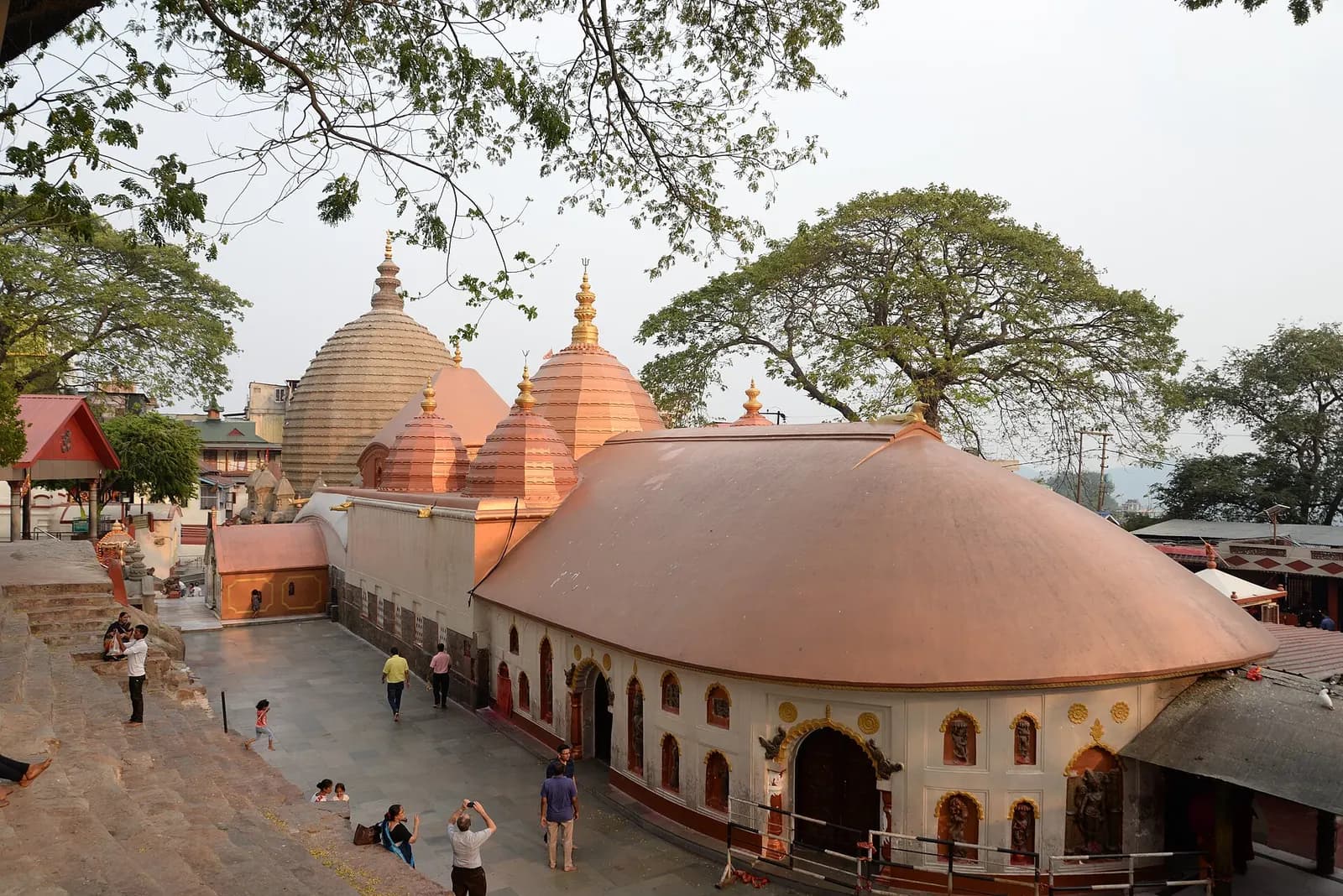
The Kalika Purana calls it Pragjyotishpura, the city of eastern light, capital of the Kamarupa kings, and Guwahati has been the pivot of the Brahmaputra valley ever since. Kamakhya, on Nilachal Hill above the western suburbs, is the reason pilgrims come: a Shakti Peetha where, in the myth, the yoni of Sati fell to earth, worshipped in a dim rock chamber as a cleft in the stone kept wet by a spring. The present temple with its beehive shikhara was rebuilt in 1565 by the Koch king Naranarayan after a raid had ruined the old one, and around it stand shrines to the ten Mahavidyas and a permanent cloud of incense, marigold and goat.
Every June the Ambubachi Mela marks the goddess's menstruation; the doors shut for three days and reopen to lakhs of sadhus and devotees. The rest of the city deserves a day too: the ferry to Umananda, a Shiva temple on the smallest inhabited river island, built by the Ahom king Gadadhar Singha in 1694; the Navagraha temple on Chitrachal hill; the Assam State Museum's Ahom galleries; and an evening cruise when the Brahmaputra turns copper under the Saraighat bridge. An hour north-west, across the river, Sualkuchi's lanes clatter with the looms of muga and pat silk, and Hajo holds Hindu, Buddhist and Muslim shrines on adjoining hills.
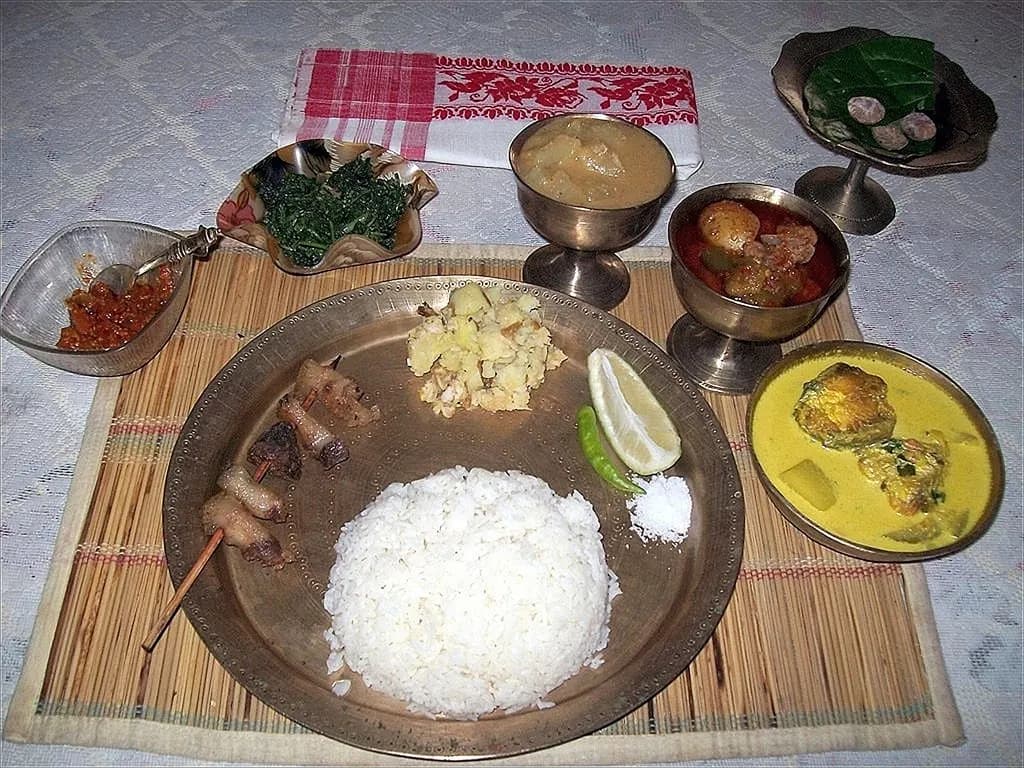
Guwahati is also where every Northeast journey begins, so eat a proper Assamese thali here and learn the taste of khar and tenga before you go.
 Vegetarian