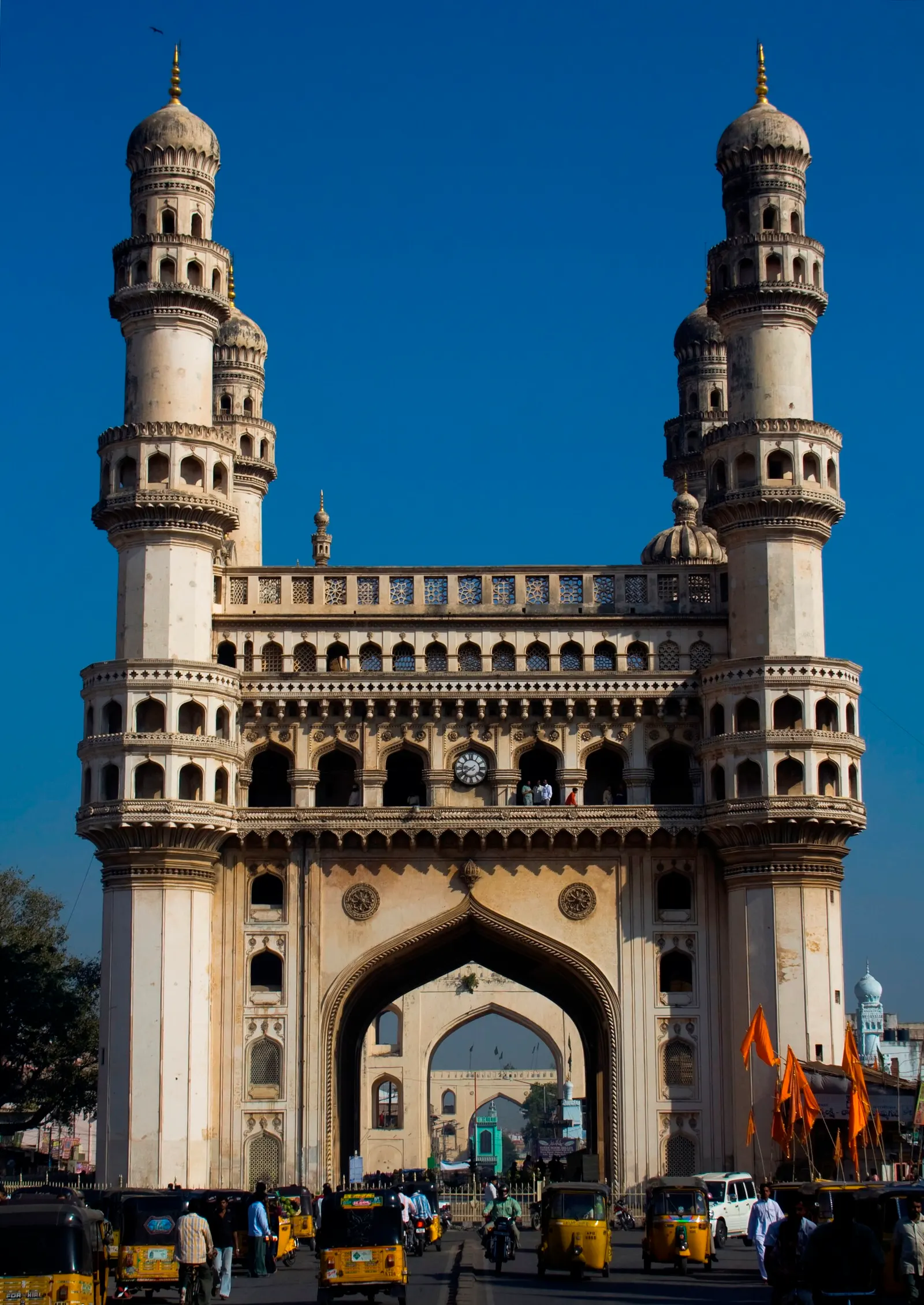
Muhammad Quli Qutb Shah moved his capital off the cramped granite hill of Golconda in 1591 and laid out a new city on the south bank of the Musi around a four-arched gateway, the Charminar; the story that it marked the end of a plague is old, and the mosque on its upper floor is still used. Golconda itself, eleven kilometres west, is the better fortress: some seven kilometres of walls, a citadel reached by around 380 steps, and an acoustic trick by which a clap under the Fateh Darwaza carries to the top. The Qutb Shahi tombs stand in a garden nearby, onion domes over the sultans who once traded the diamonds of the Kollur mines, the Koh-i-Noor among them.
Under the Asaf Jahi Nizams the city grew fabulously rich, and the traces are everywhere: Chowmahalla Palace's durbar hall with its Belgian chandeliers, the Falaknuma on its hill, and the Salar Jung Museum, one man's collection of some 40,000 objects including the Veiled Rebecca and the double statue of Mephistopheles and Margaretta. Around Charminar, Laad Bazaar sells lacquer bangles by the thousand and Mecca Masjid's central bricks are said to hold clay from Mecca. Modern Hyderabad is Hitec City glass and the vast Ramoji Film City.
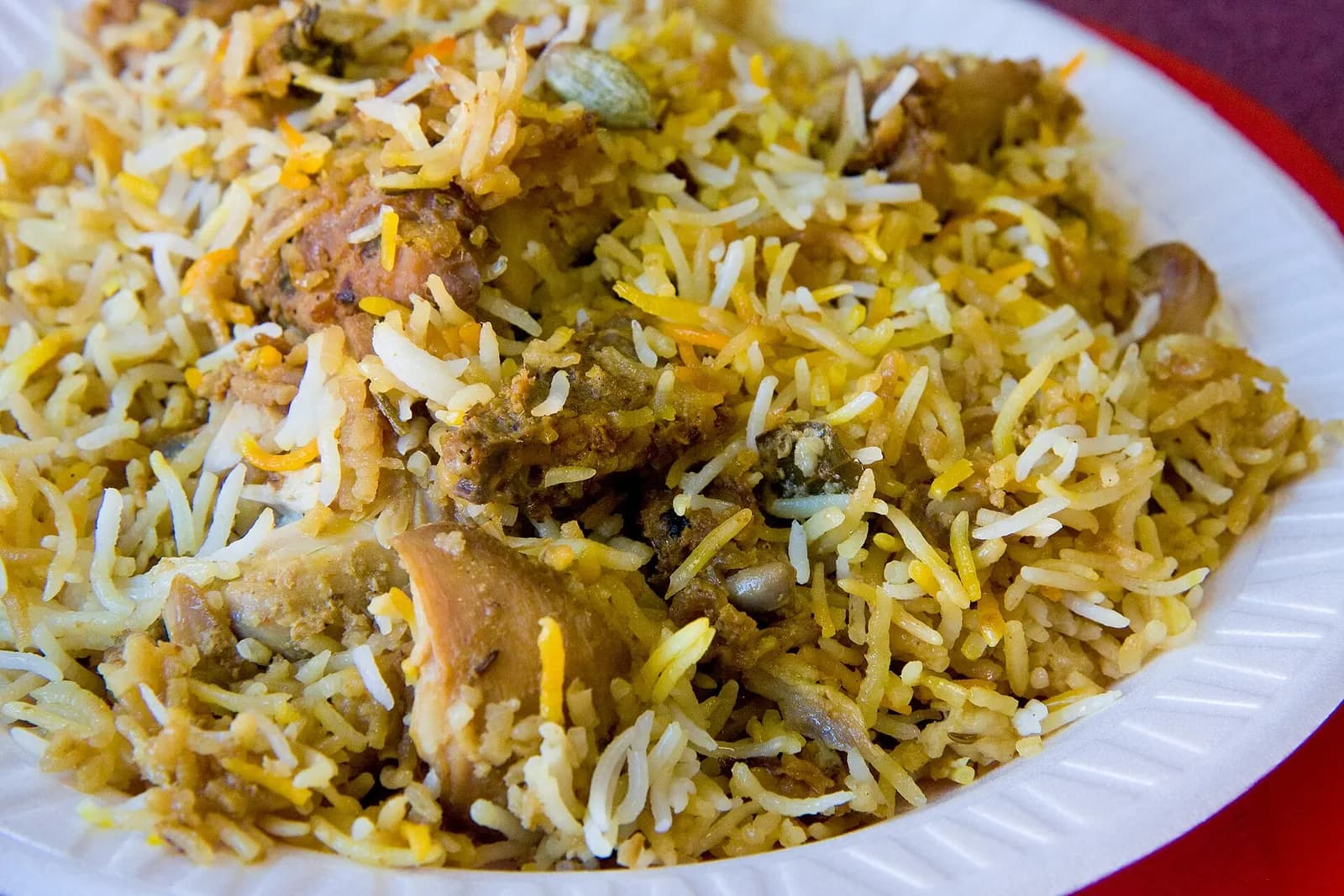
Eat through all of it: dum biryani, haleem in Ramzan, and Osmania biscuits with Irani chai beside the Charminar.
 Non-veg