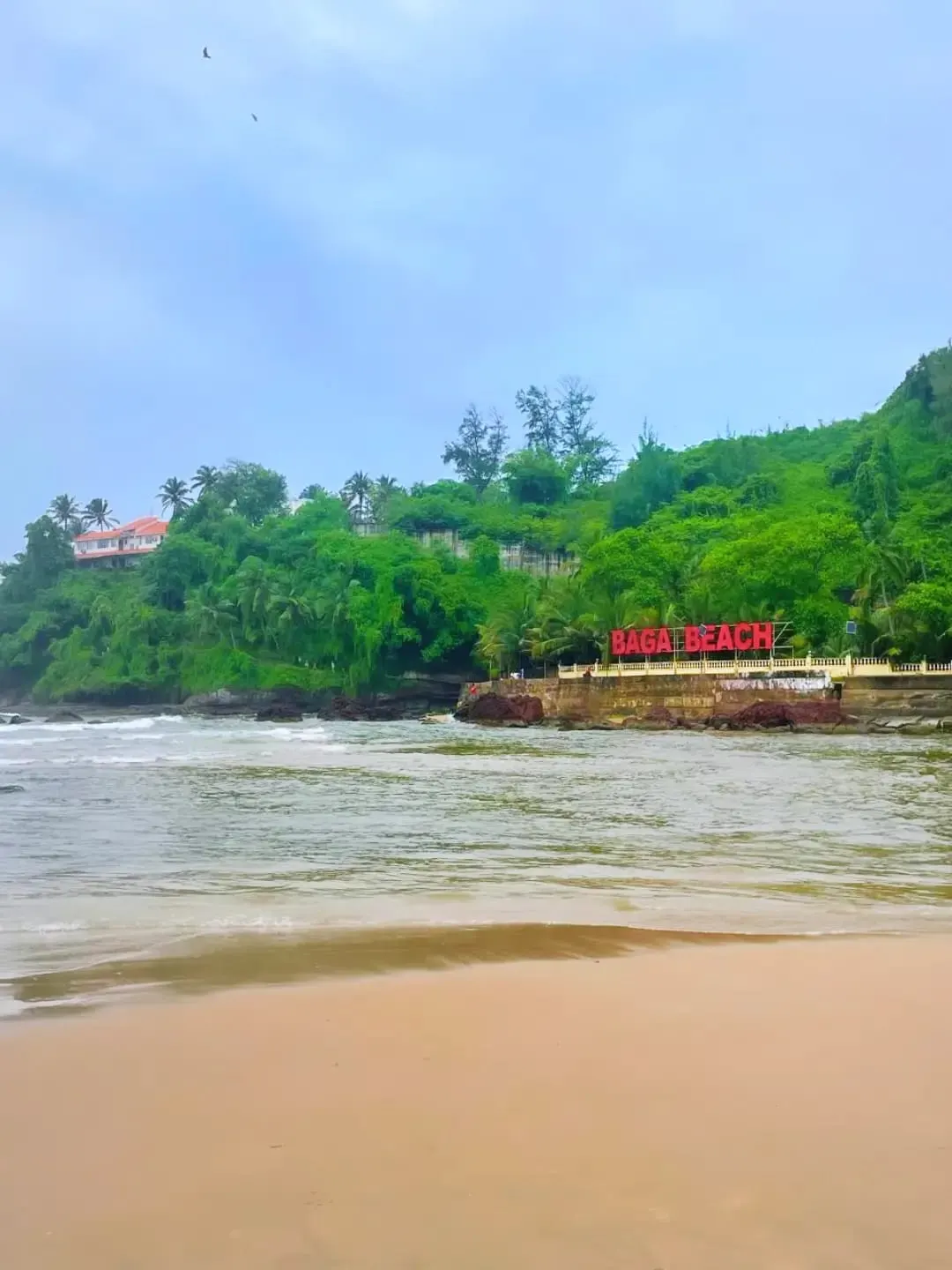
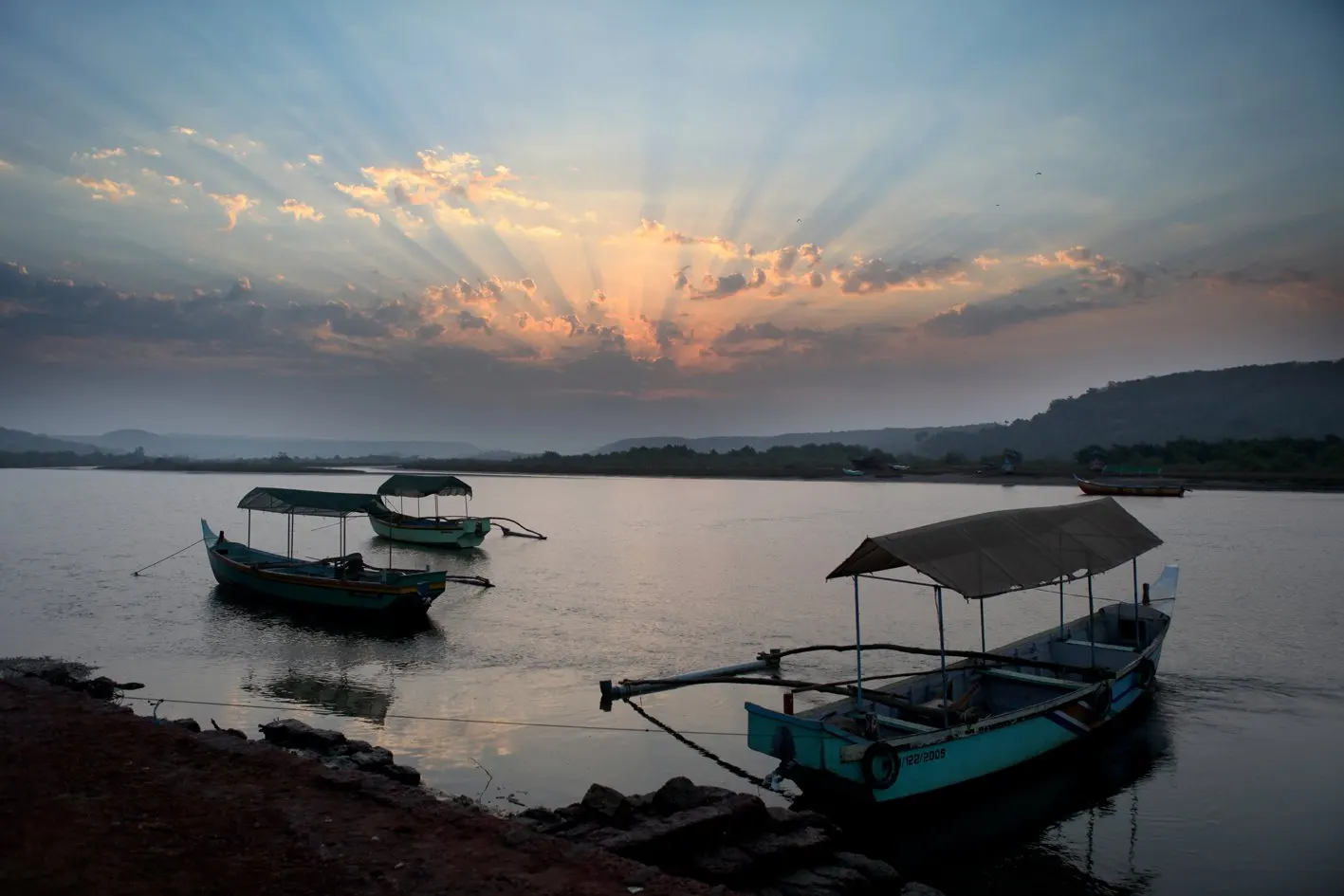
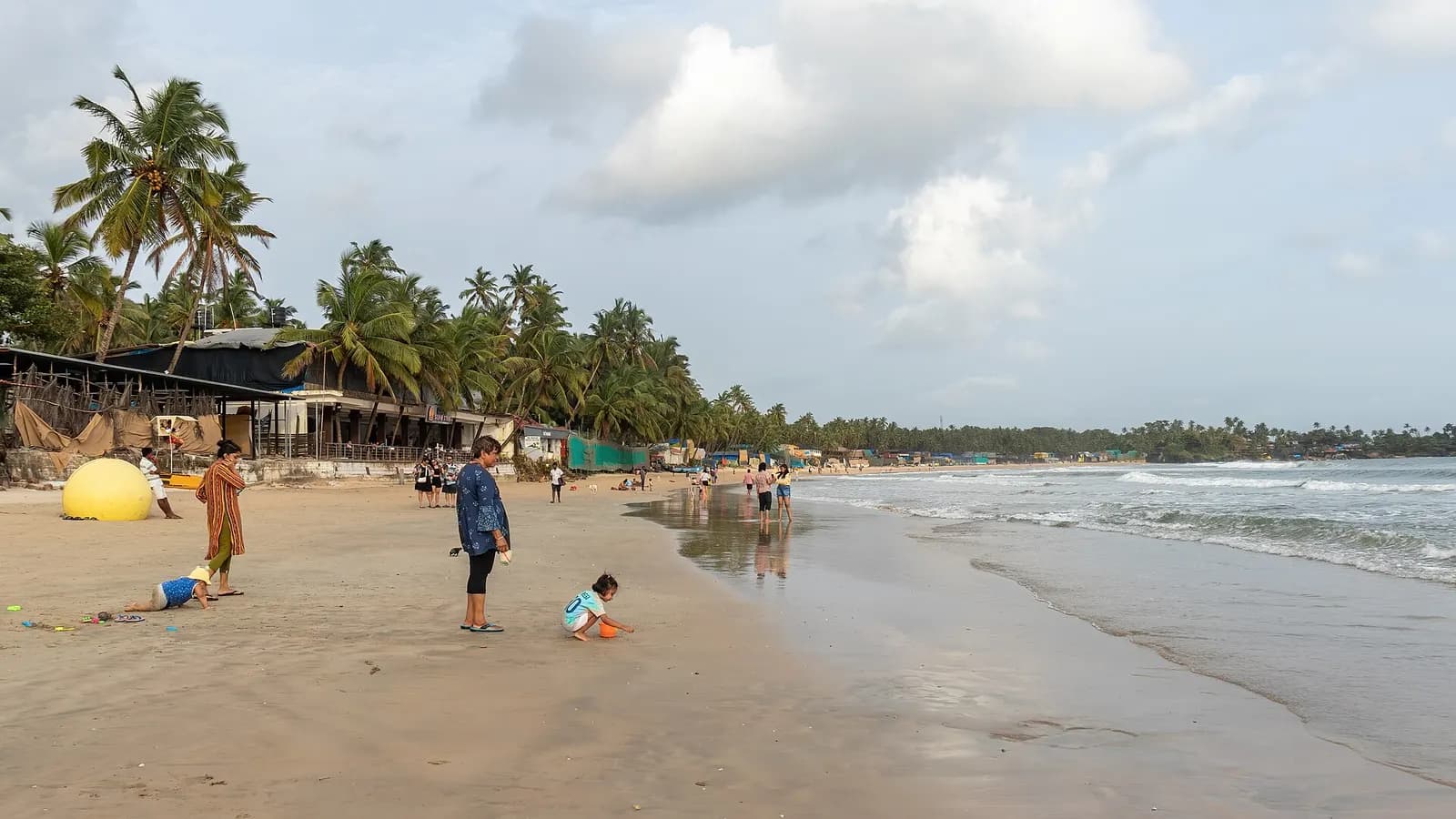
South Goa is the slow half. The beaches are longer, the shacks fewer, the coconut groves thicker, and the villages still run on church feasts and long afternoons. From Colva and Benaulim the sand runs almost unbroken for twenty-five kilometres past Varca and Cavelossim to the Mobor sandbar where the Sal river meets the sea.
Further south, past the cliff and cannon of Cabo de Rama, Agonda and Palolem curve into two of the prettiest bays in India, Palolem a crescent of palms and wooden huts that are dismantled every May before the monsoon and rebuilt in October, Agonda quieter and stricter about noise. Inland, the interior is greener than anything in the north: Netravali's bubbling lake, the Cotigao sanctuary, spice farms around Ponda, and Dudhsagar falls, which drops some 310 metres in four tiers off the Mandovi headwaters and can be reached only by forest jeep from Kulem. South Goa also keeps the grandest Portuguese houses.
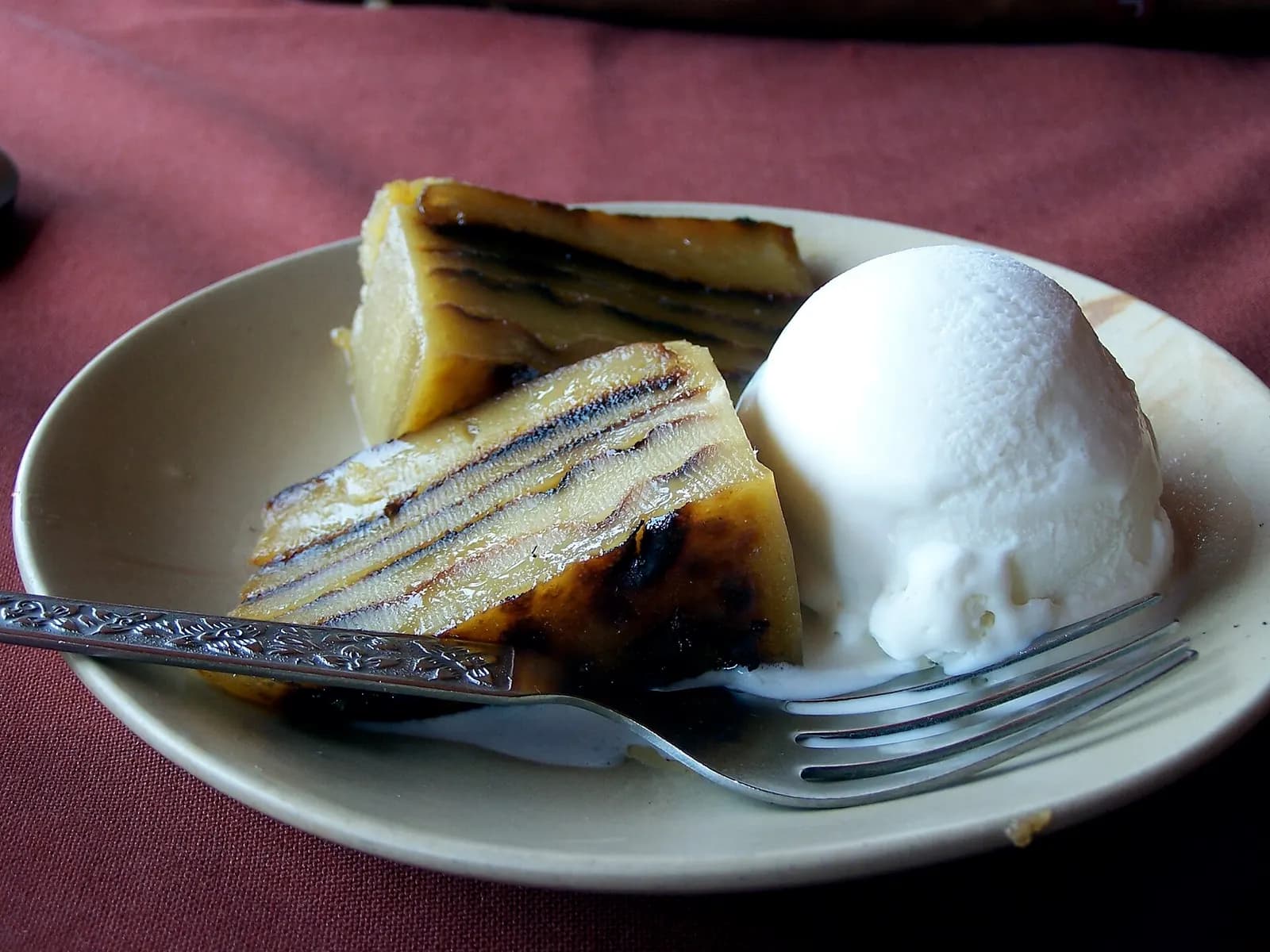
At Chandor, the Braganza mansion stretches the length of the village square, divided between two branches of the family, with a ballroom, a rosewood library and a relic of St Francis Xavier. Margao's covered market is the best place in the state to buy Goan sausage, kokum and bebinca.
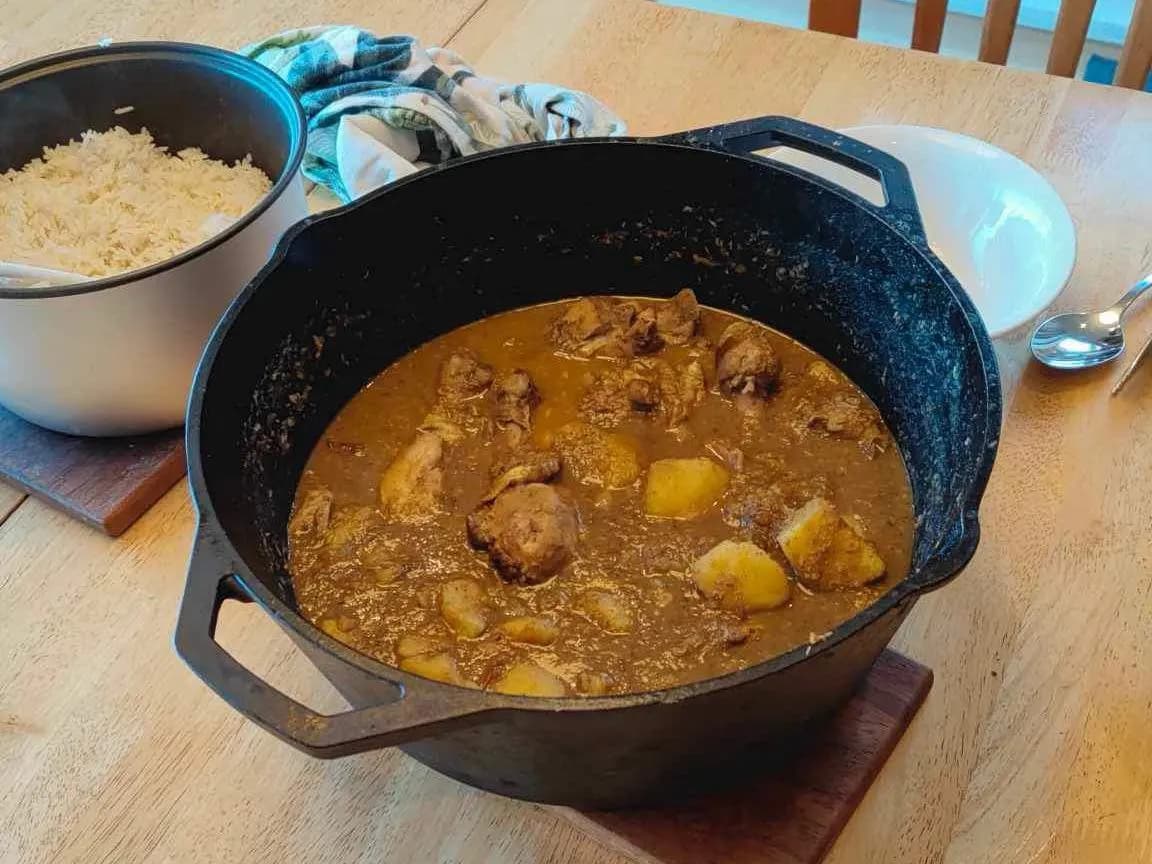 Non-veg