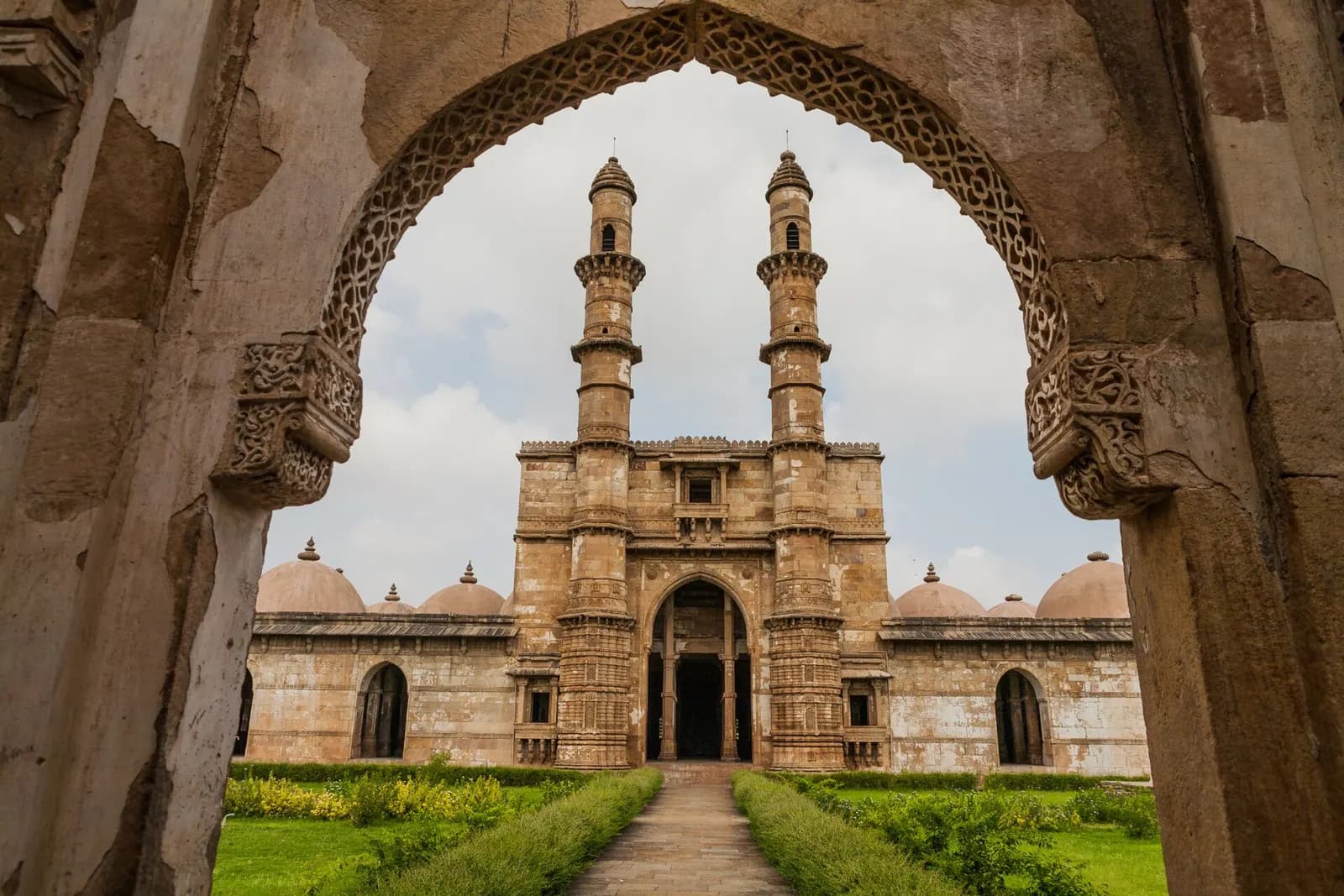
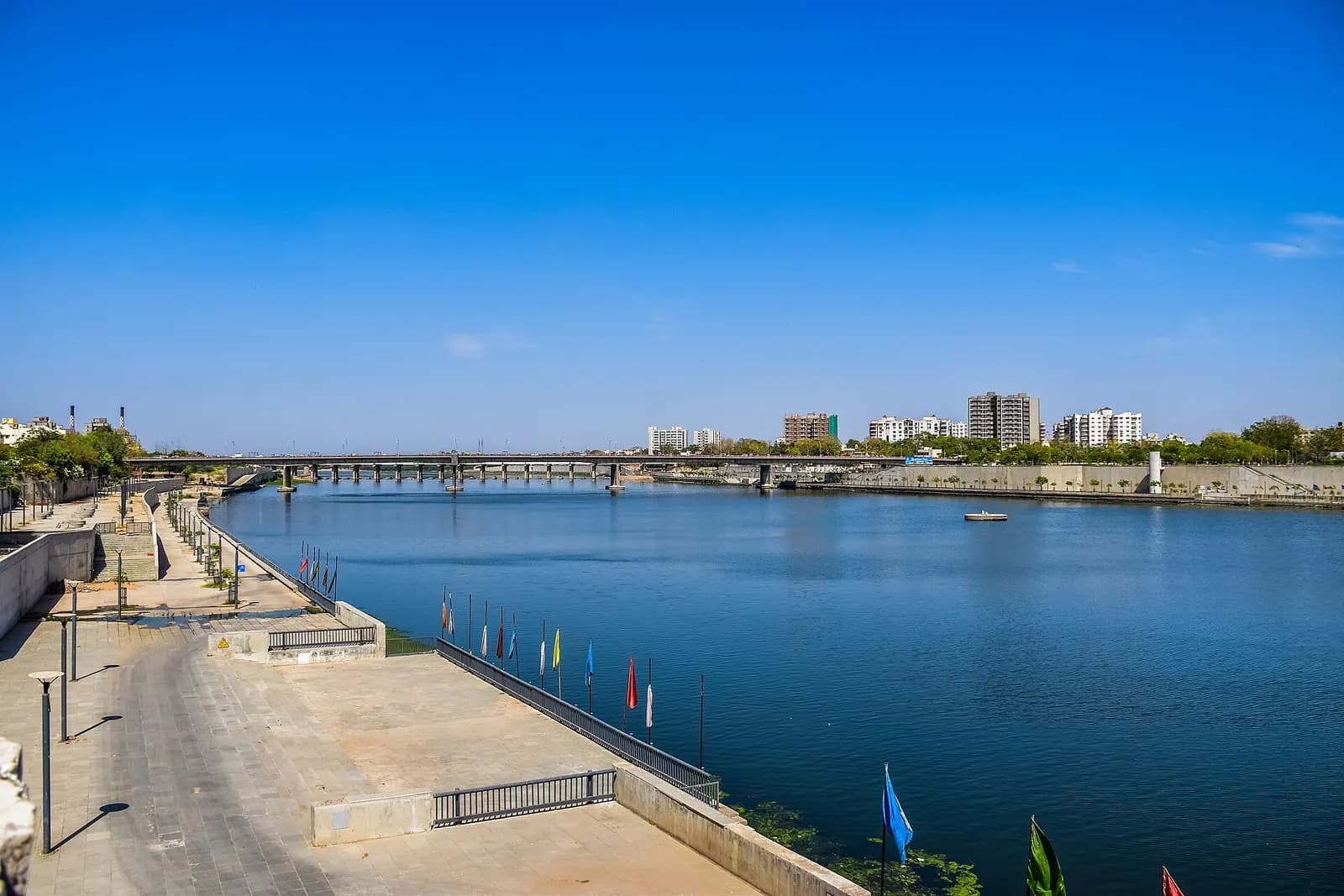
Ahmedabad was founded in 1411 by Sultan Ahmad Shah I on the east bank of the Sabarmati, and in 2017 it became India's first UNESCO World Heritage City. The reason is the old city: a dense weave of pols, self-contained residential lanes with carved timber houses, shared courtyards, secret gates and bird feeders called chabutras, still lived in rather than curated. Walk them early, when the Jama Masjid's 260 pillars stand empty and light comes through the jalis of Sidi Saiyyed's mosque, whose tree-of-life screen has become the city's signature.
Ahmedabad is a sultanate capital, a Jain merchant town and a Gandhian city at once. Sabarmati Ashram, where Gandhi lived from 1917 to 1930 and from where the Dandi march set out, is three spare rooms and a long view of the river. Textiles built the money: the Calico Museum holds one of the finest collections of Indian cloth anywhere, and the mills earned the city its nickname, the Manchester of the East.
Modern architecture matters here too, with Le Corbusier and Louis Kahn buildings standing on the campuses. Evenings belong to Manek Chowk, where a jewellery market becomes a street-food bazaar after ten. Adalaj's stepwell, eighteen kilometres north, is the best half-day trip in Gujarat.
 Vegetarian