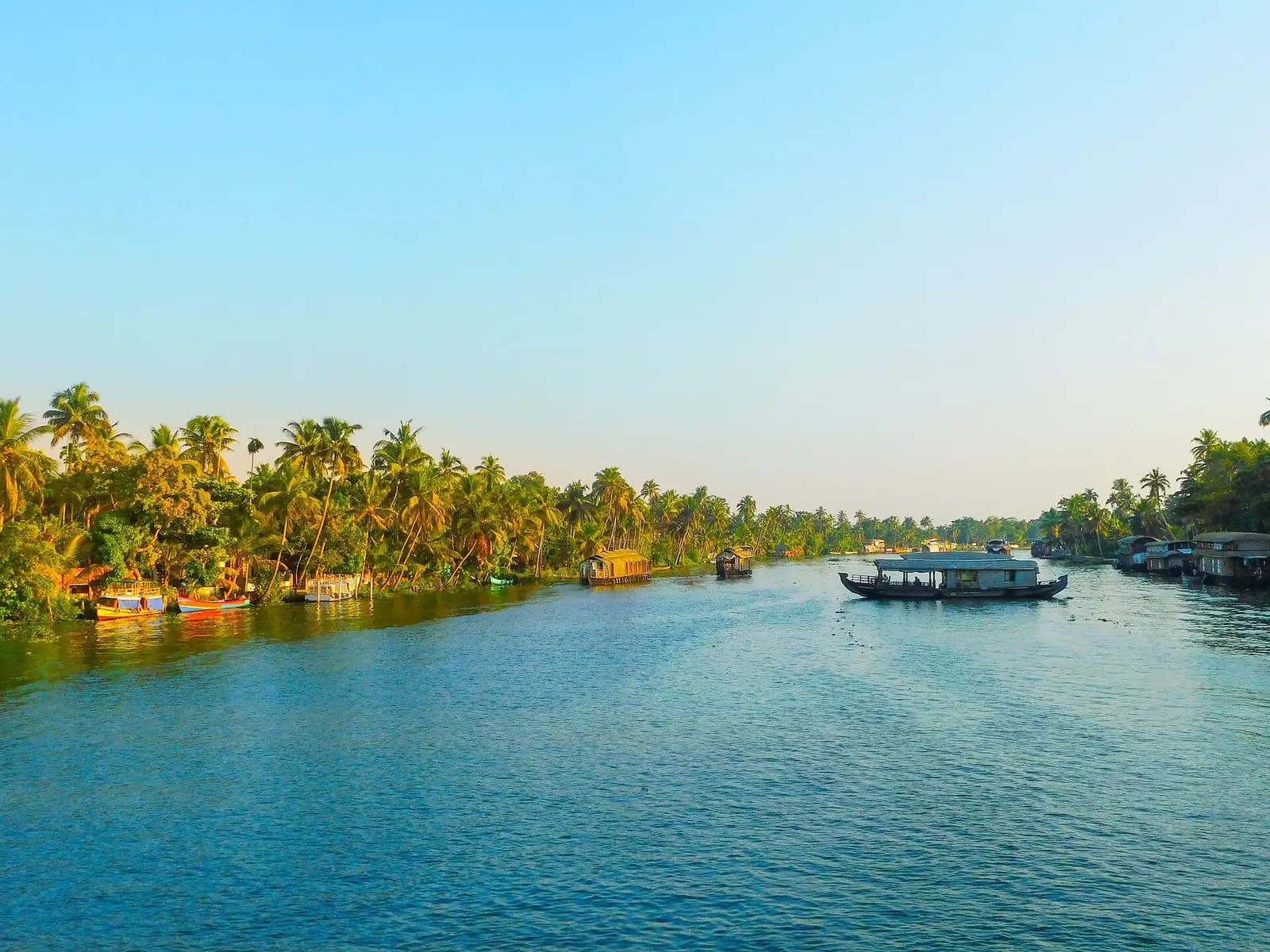
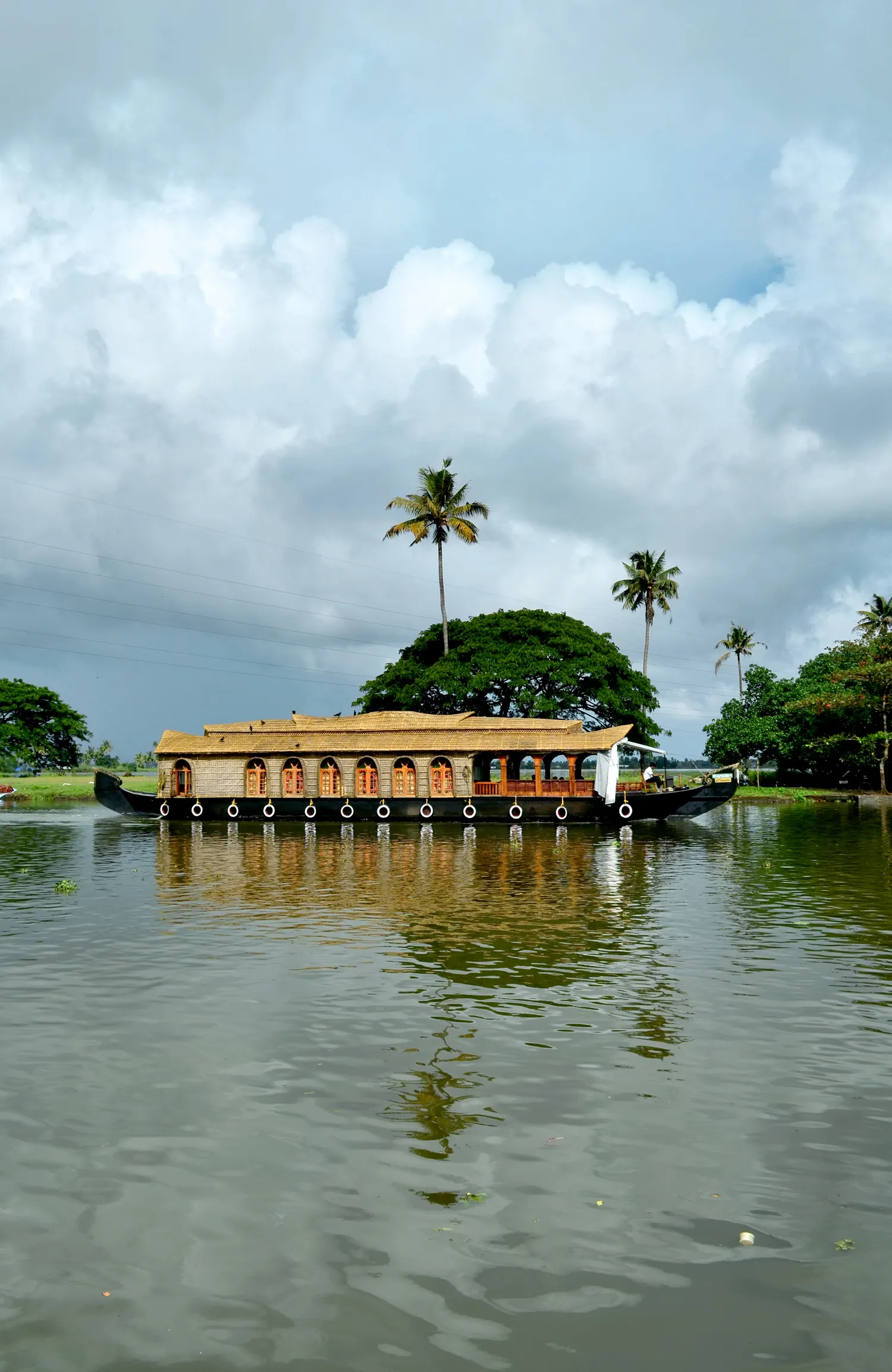
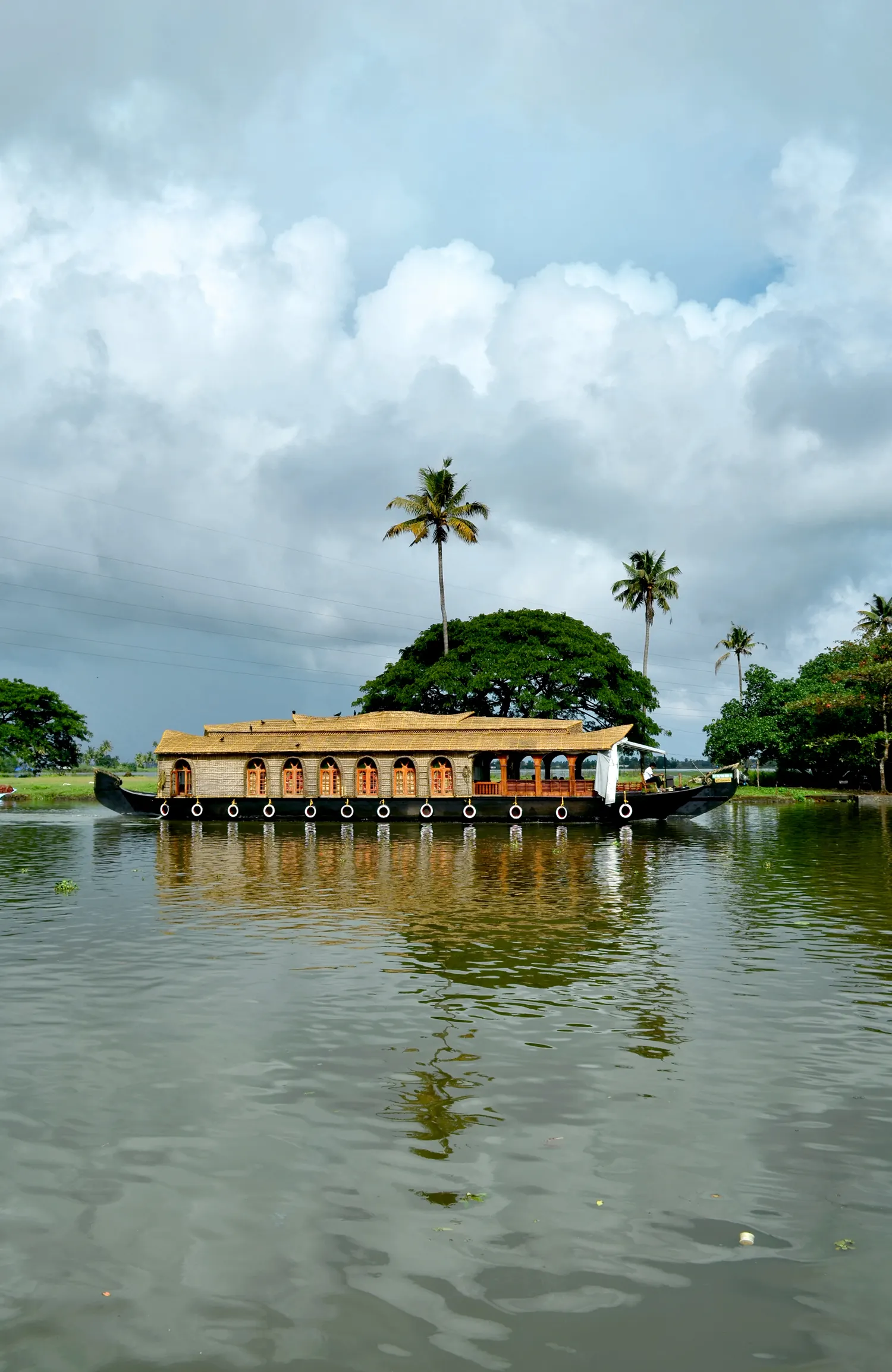
Alappuzha was laid out in the late eighteenth century by Raja Kesavadas, the Travancore diwan, as a canal port for pepper and coir, and the grid of waterways he cut still runs behind the town's old warehouses. Its hinterland, Kuttanad, is one of the few places on earth where farming happens below sea level: paddy fields lie up to two metres under the water outside, held by mud bunds and kept dry by pumps, with duck flocks driven between the bunds by boatmen. The houseboats are converted kettuvallam rice barges, hulls of jackwood planks stitched with coir rope and sealed with cashew resin, and a night on one is the classic Kerala experience.
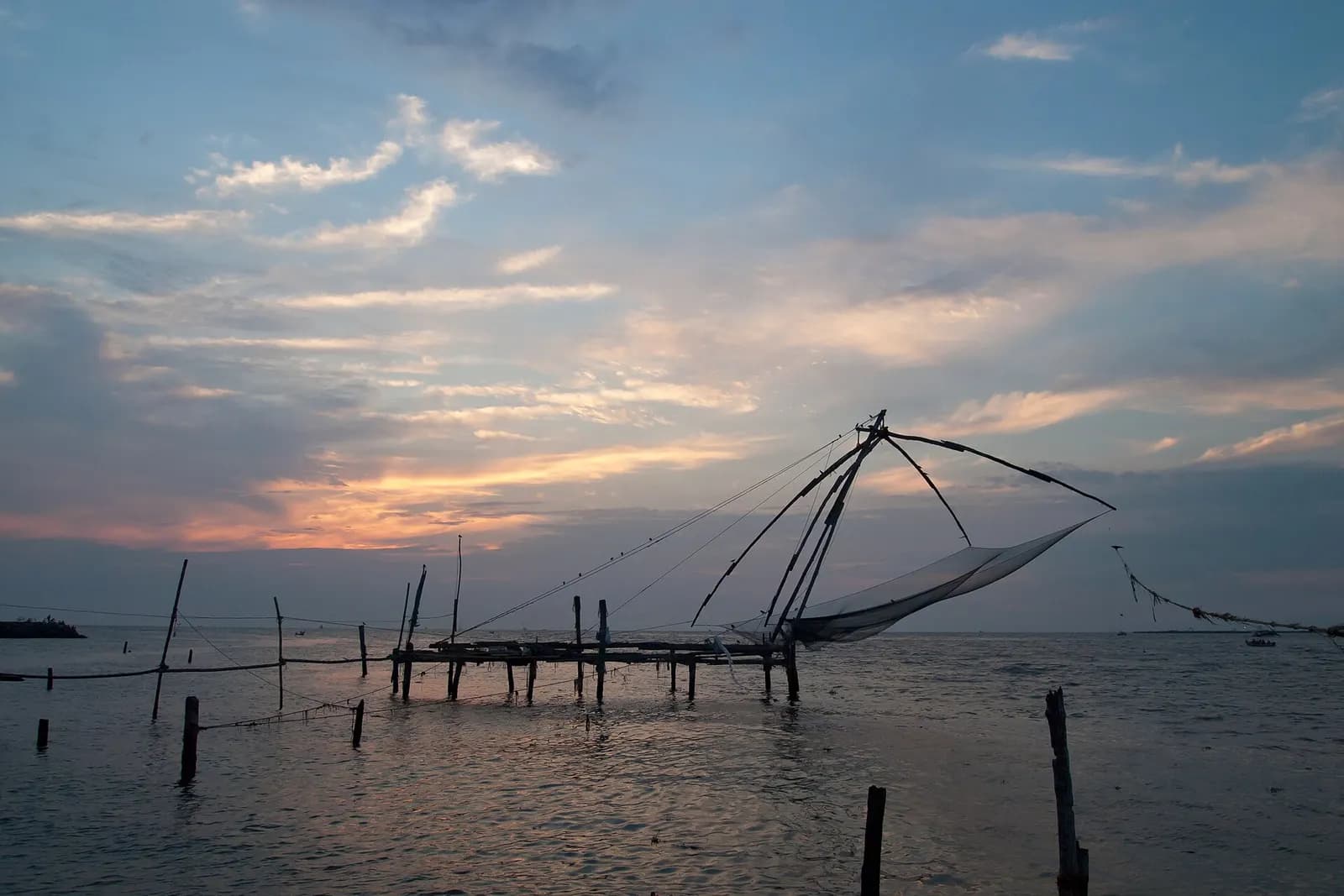
Cast off at noon, drift out onto Vembanad, at ninety-six kilometres India's longest lake, watch the Chinese dip nets and the toddy tappers on their coconut ropes, eat karimeen grilled in a banana leaf, and moor in a paddy channel under the stars. Better still, take a small country canoe into the narrow canals the big boats cannot enter, past Champakulam, whose Syrian Christian church claims one of the oldest foundations in Kerala, and village shops selling only bananas and lottery tickets. On the second Saturday of August the Nehru Trophy Boat Race turns Punnamada Lake into a stadium, with hundred-foot chundan vallam snake boats and more than a hundred rowers to a hull.
 Vegetarian