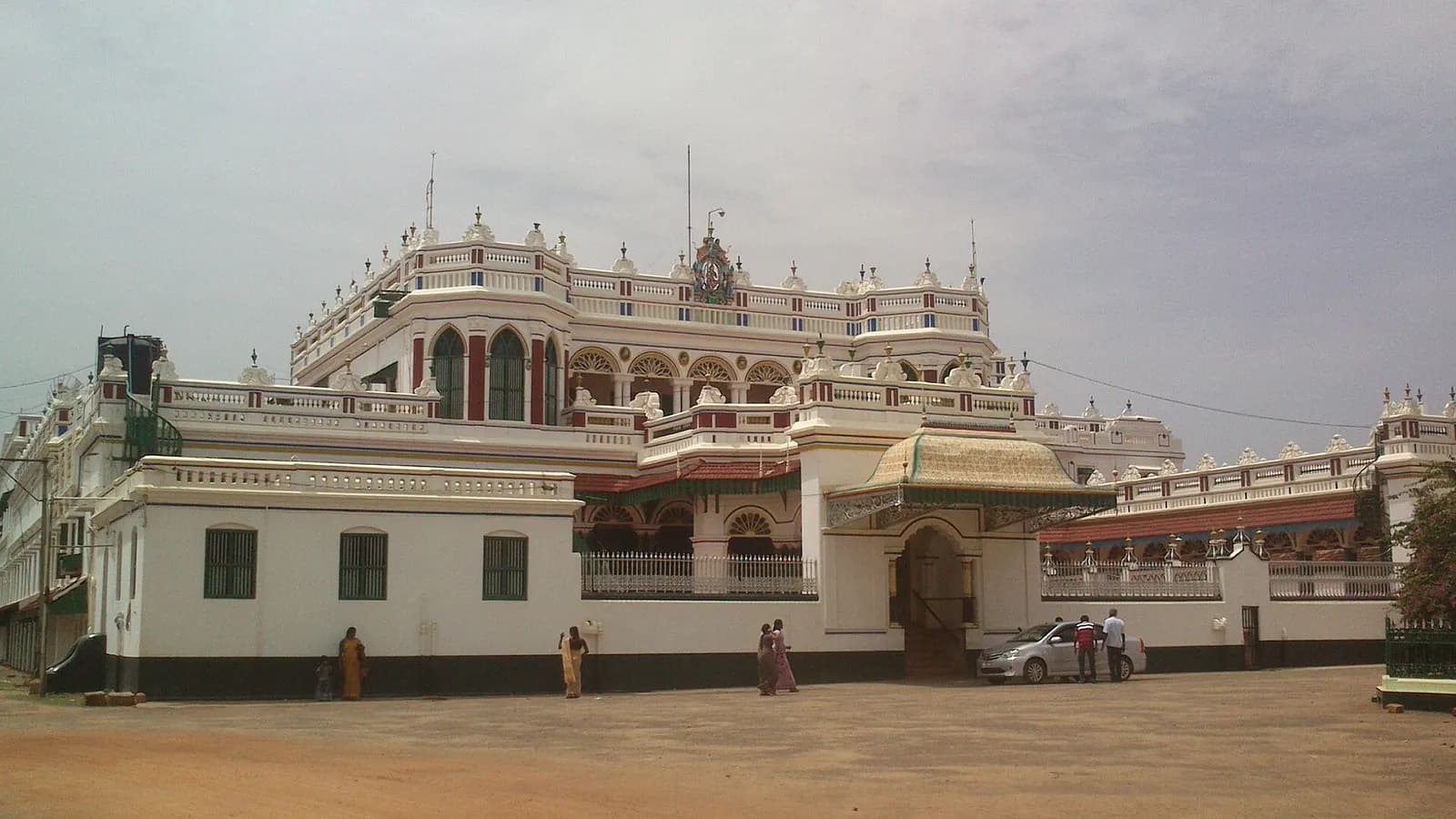
Chettinad is not one town but a cluster of about seventy-five villages across Sivaganga and Pudukkottai districts, the homeland of the Nattukottai Chettiars, a banking community whose money moved through Burma, Ceylon, Malaya and Vietnam in the nineteenth and early twentieth centuries. They spent it on houses. A Chettinad mansion is built around successive open courtyards, with Burma teak pillars, Belgian mirrors, Italian marble floors, cast-iron columns from Birmingham and satin-glazed Athangudi tiles made in the next village from local sand and coloured cement.
Kanadukathan has the densest concentration, its grid of streets lined with facades that are half palace and half warehouse, many of them shuttered for eleven months and opened only for weddings. Karaikudi, the main town, has an antiques market where families sell teak doors, brass vessels and pillars by the metre. Visit a working Athangudi tile unit to watch each tile poured by hand on a sheet of glass, then the seventh-century rock-cut Ganesha at Pillaiyarpatti and the hilltop Murugan shrine at Kundrakudi.
Then eat, because Chettinad kitchens are the real reason many people come: sun-cured meats, masalas pounded with star anise and marathi moggu, kandarappam and paal paniyaram for sweets, and a vegetarian repertoire that runs far past the pepper chicken restaurants sell as Chettinad. Best of all is staying in a restored mansion and being fed by the family cook.
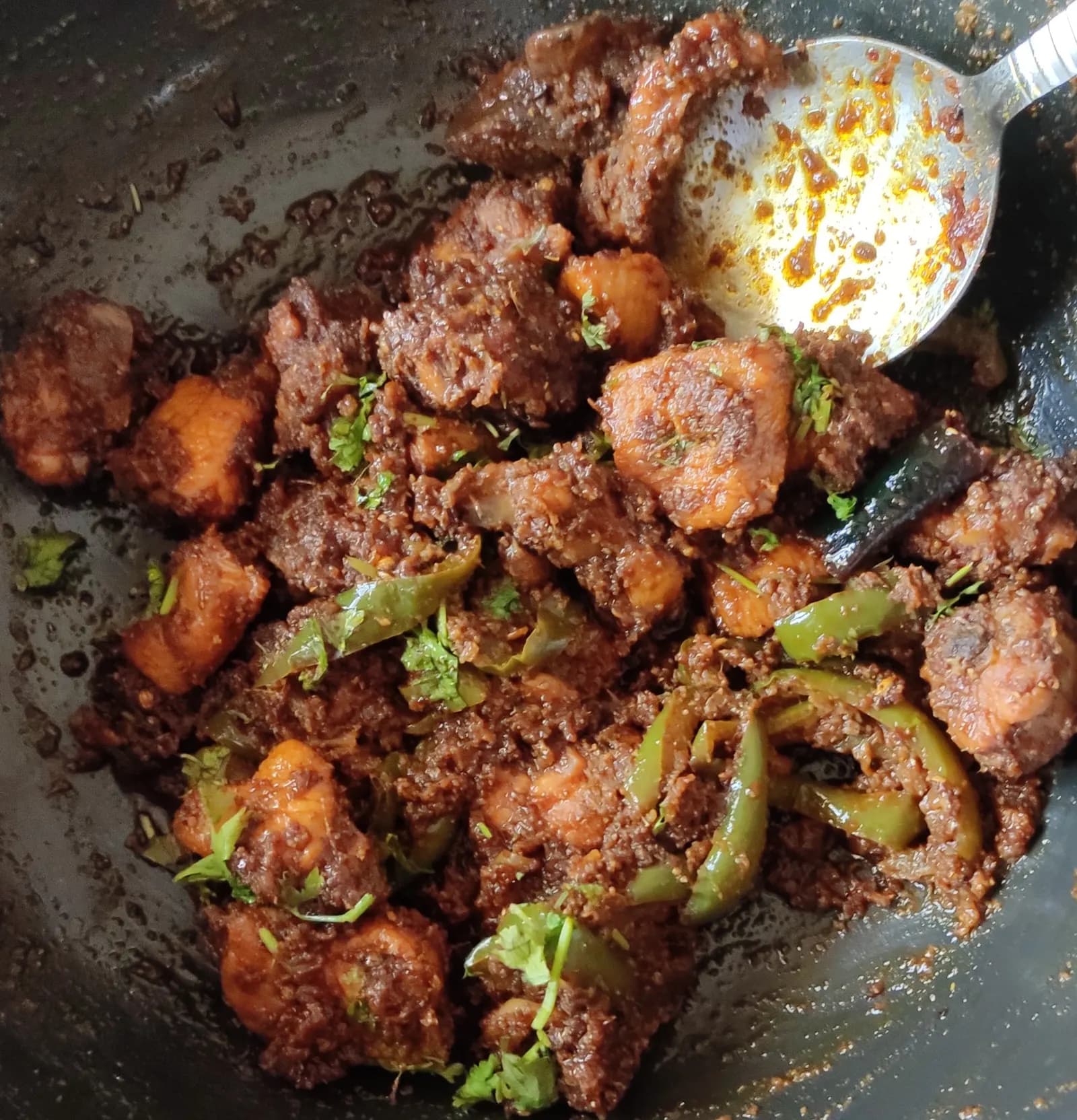 Non-veg