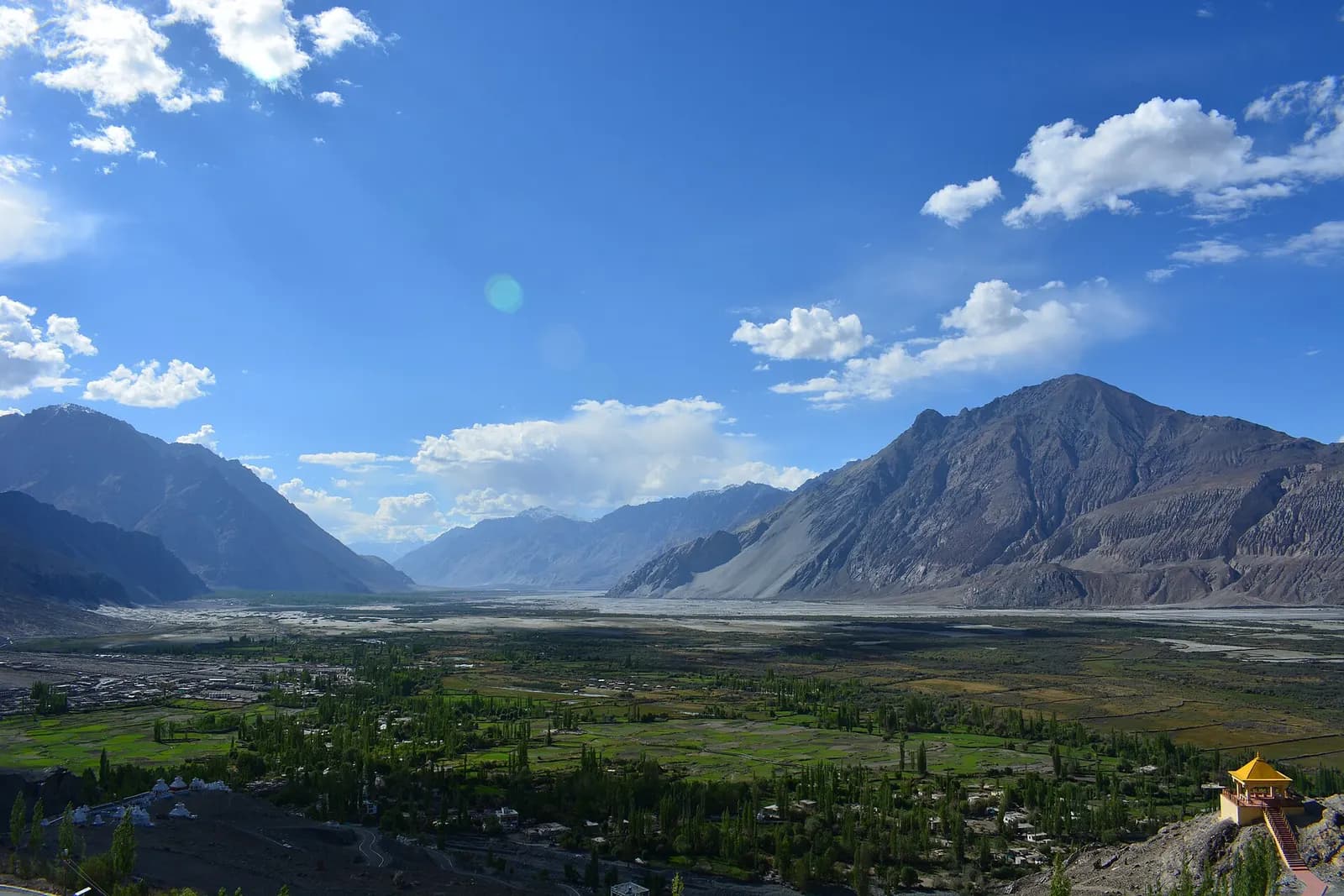
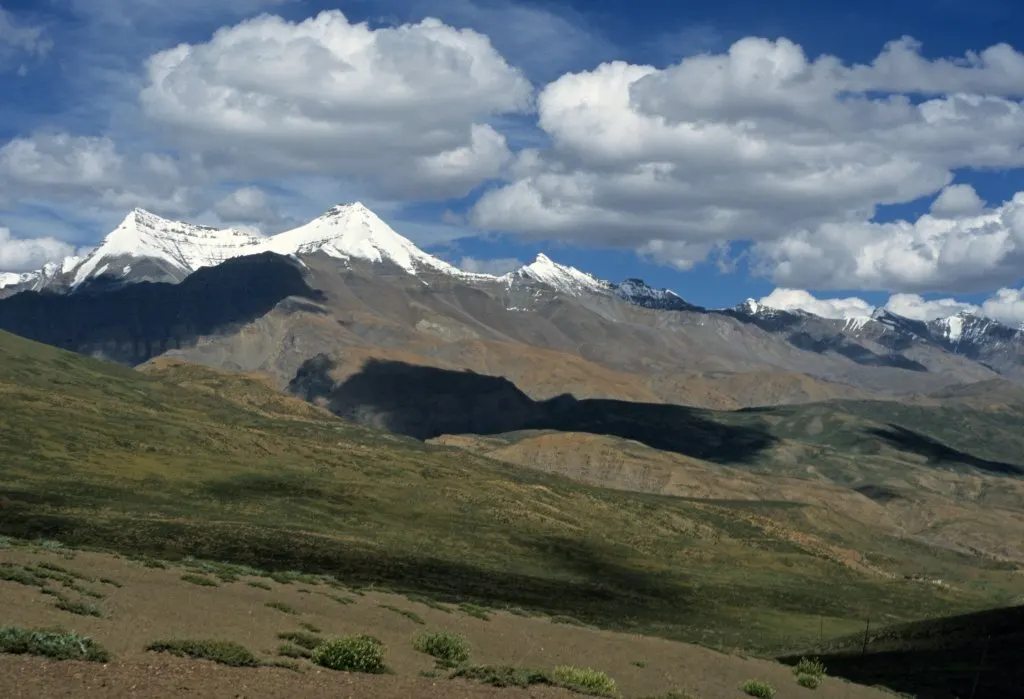
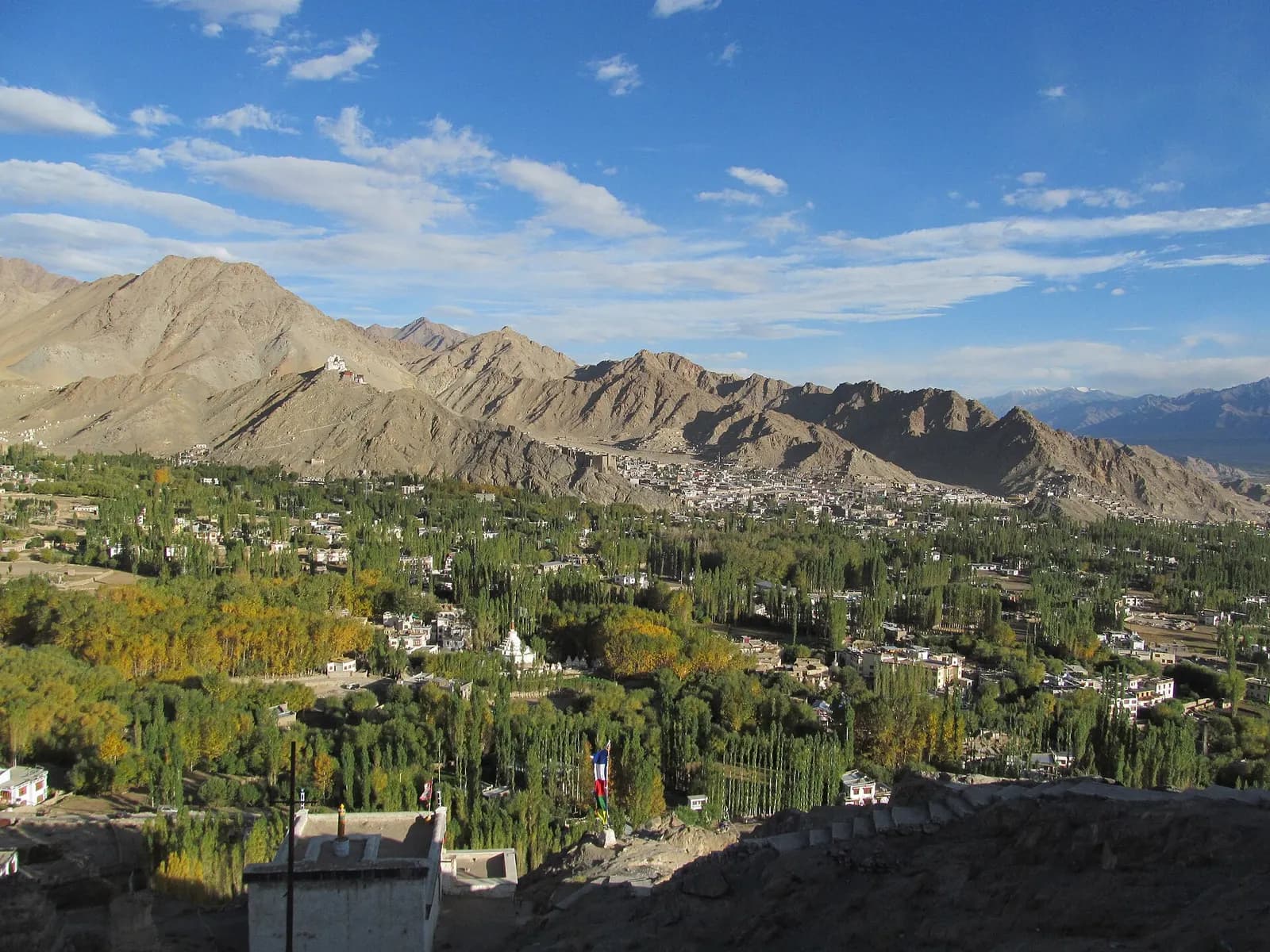
Leh became the capital of Ladakh under the Namgyal kings in the early seventeenth century, when Sengge Namgyal built the nine-storey palace that still leans over the old town like a smaller Potala. For three hundred years caravans from Yarkand, Lhasa, Kashmir and Punjab unloaded pashmina, tea, salt and turquoise in its bazaar, and the mix of Buddhist, Muslim and Kashmiri traders is still visible between the Jama Masjid of 1666 and the gompas on the ridge. The town stands at 3,500 m in a bare brown valley of the Indus, green only where irrigation channels feed barley fields and willow groves.
Days start slow, because they must; the first morning is for walking the Main Bazaar, drinking butter tea and letting your body catch up with the altitude. After that the old town's whitewashed lanes lead up to the palace and on to Namgyal Tsemo, whose red gompa looks over the whole valley. Shanti Stupa is the sunset spot, and the Hall of Fame museum tells the story of the Siachen and Kargil wars.
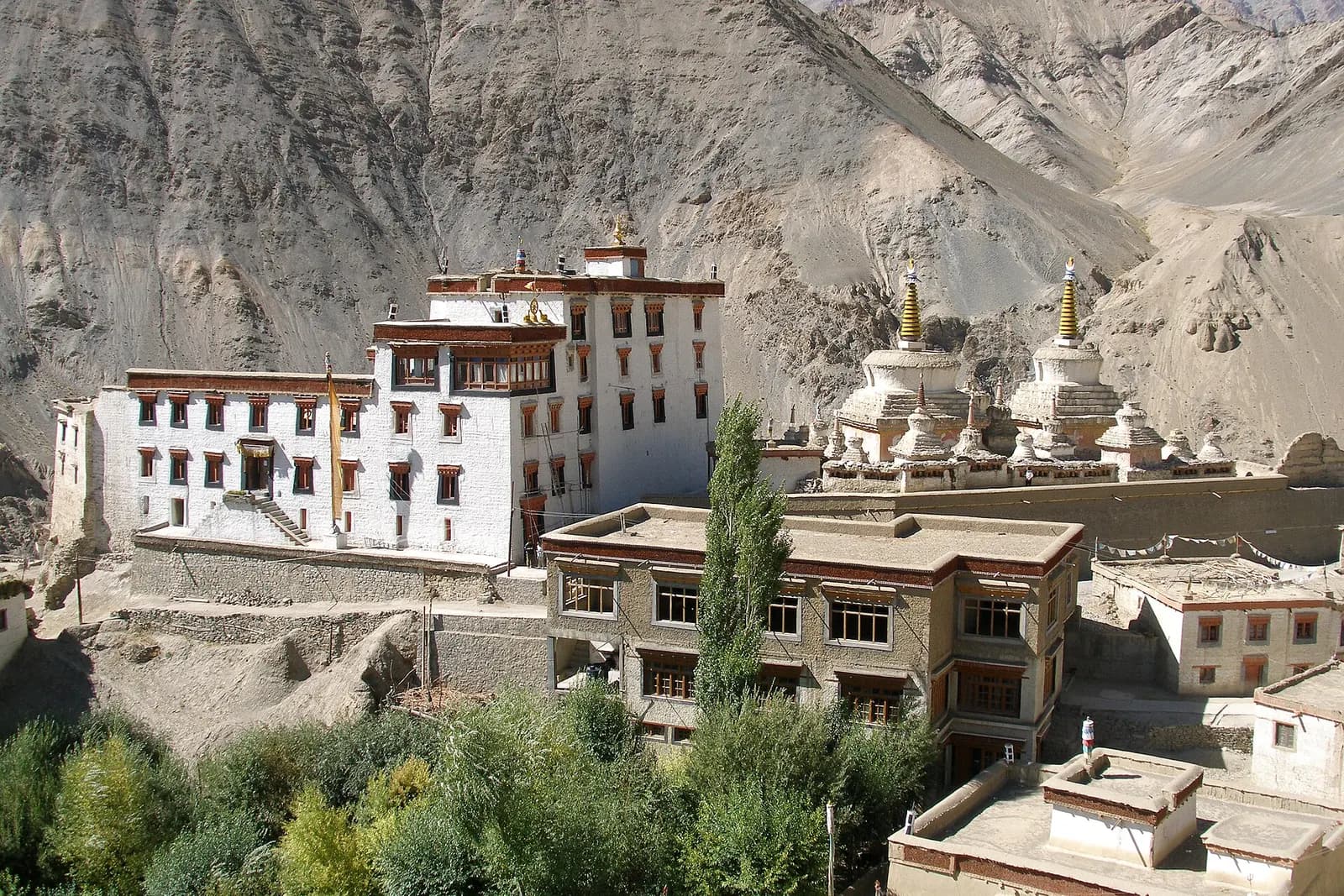
The best excursions lie along the Indus: Thiksey for the six o'clock morning prayers, Shey for the copper Buddha, Hemis for the biggest monastery in Ladakh, and Alchi for eleventh-century murals. Leh is also the place to arrange Inner Line Permits, hire a driver, and buy apricot jam and pashmina before the road climbs to Khardung La.
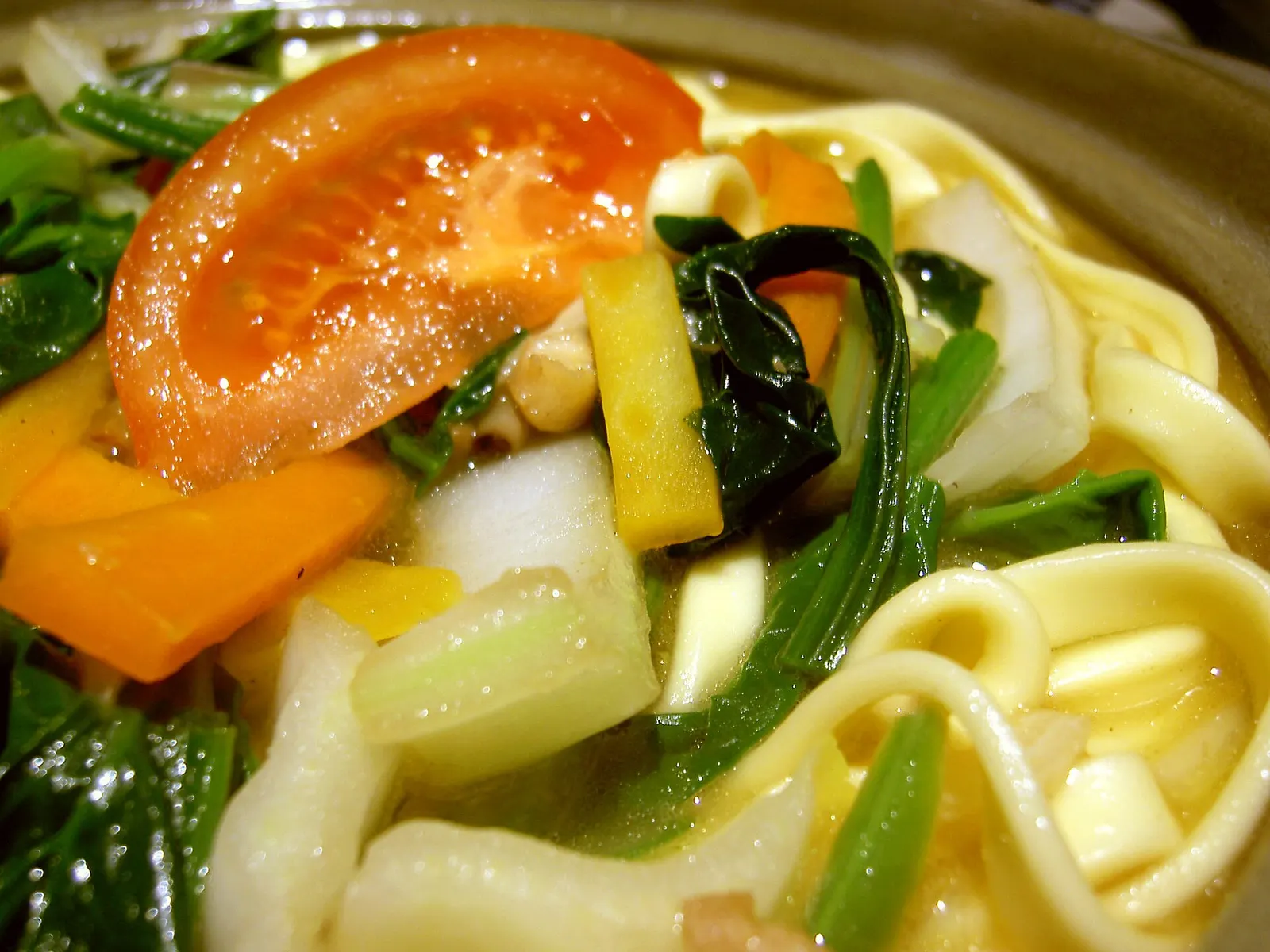 Non-veg