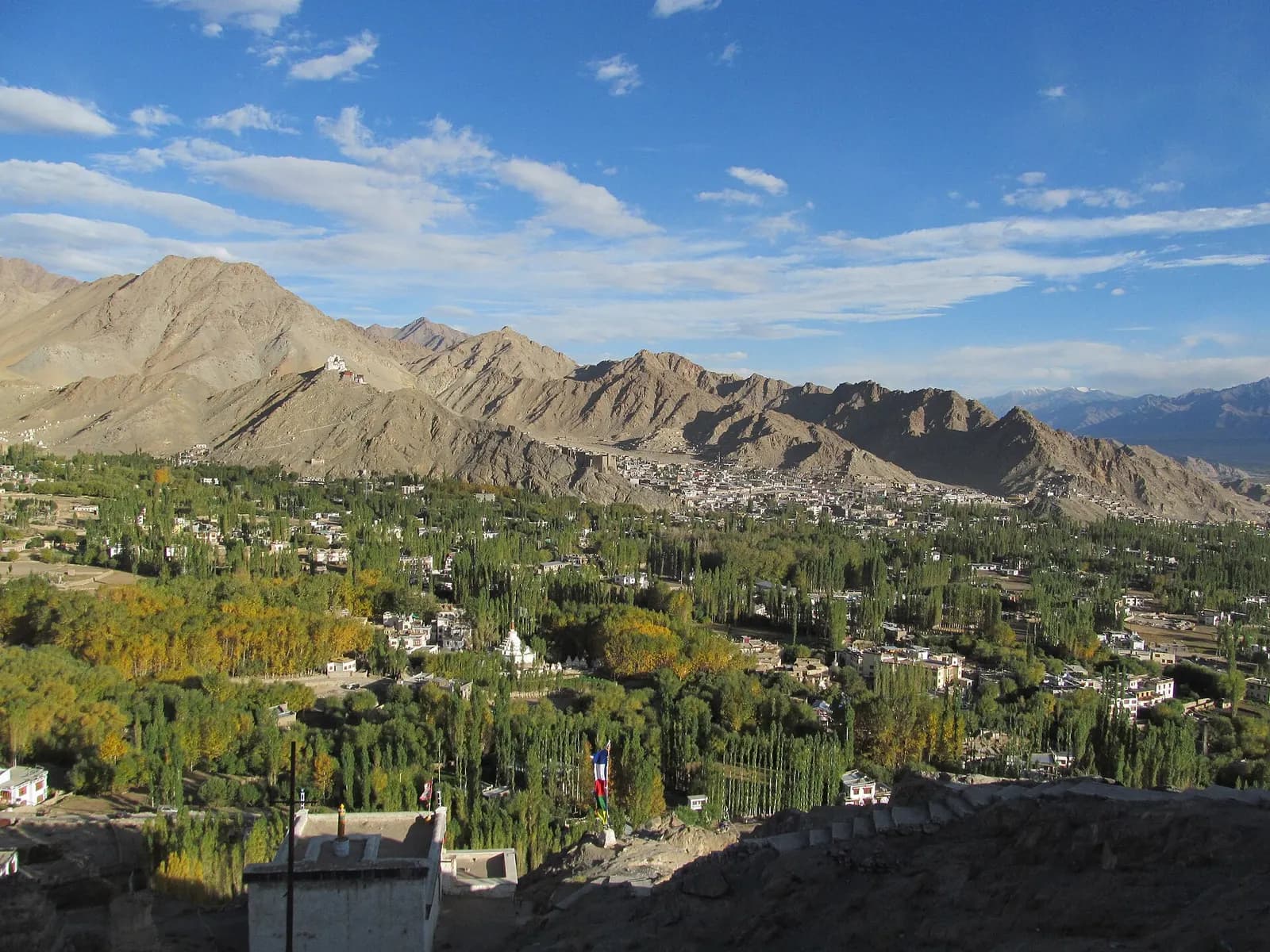
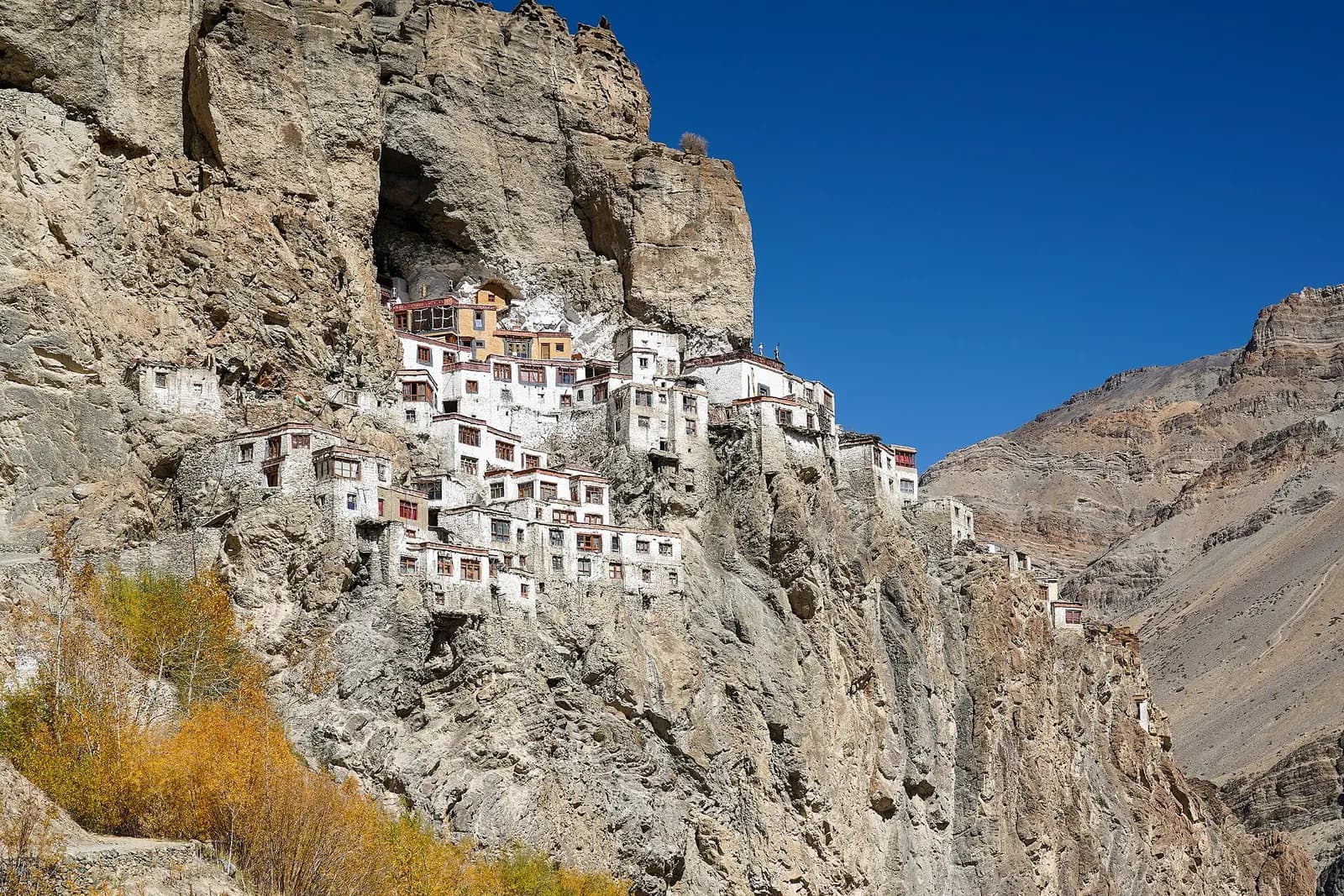
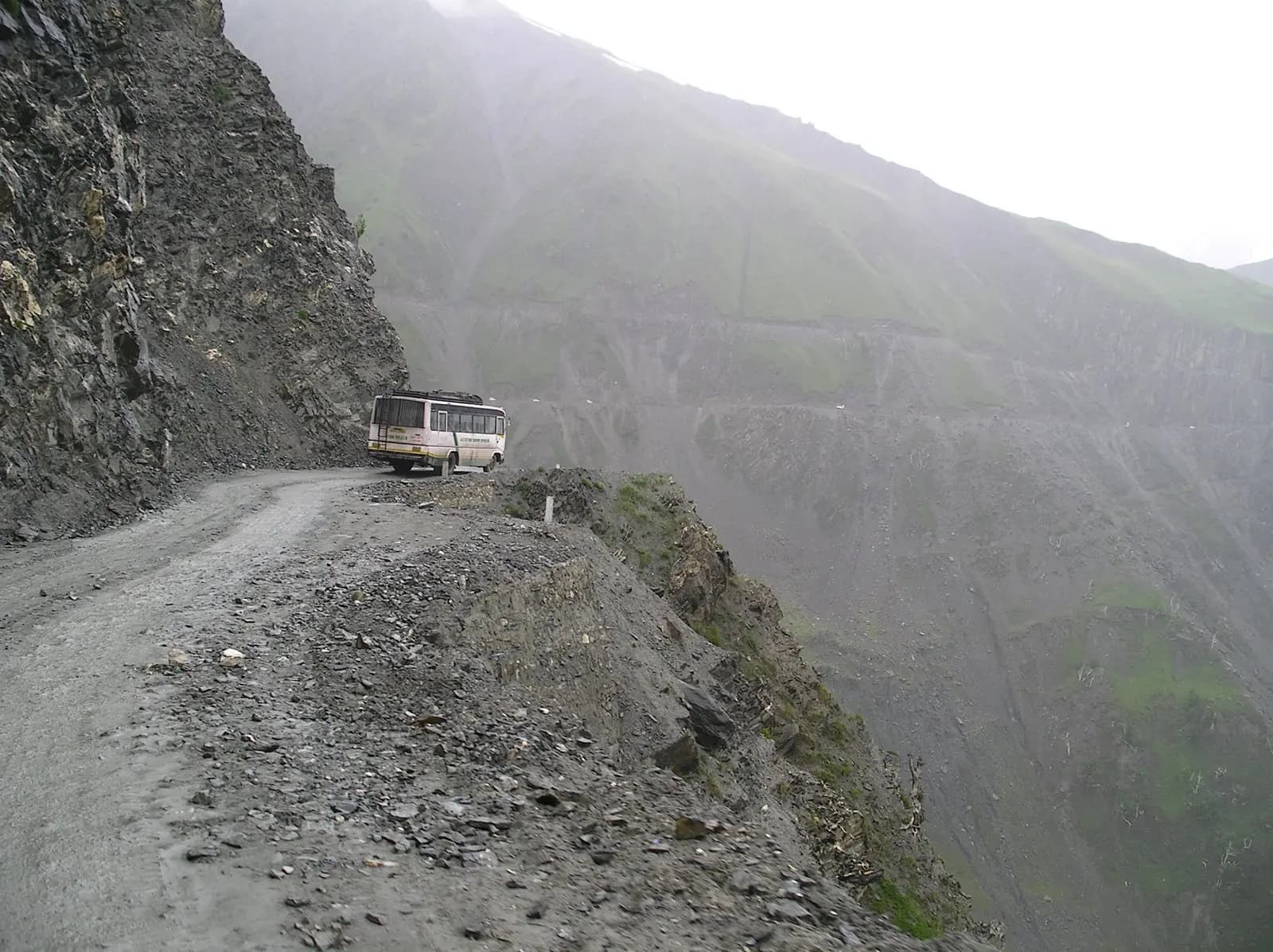
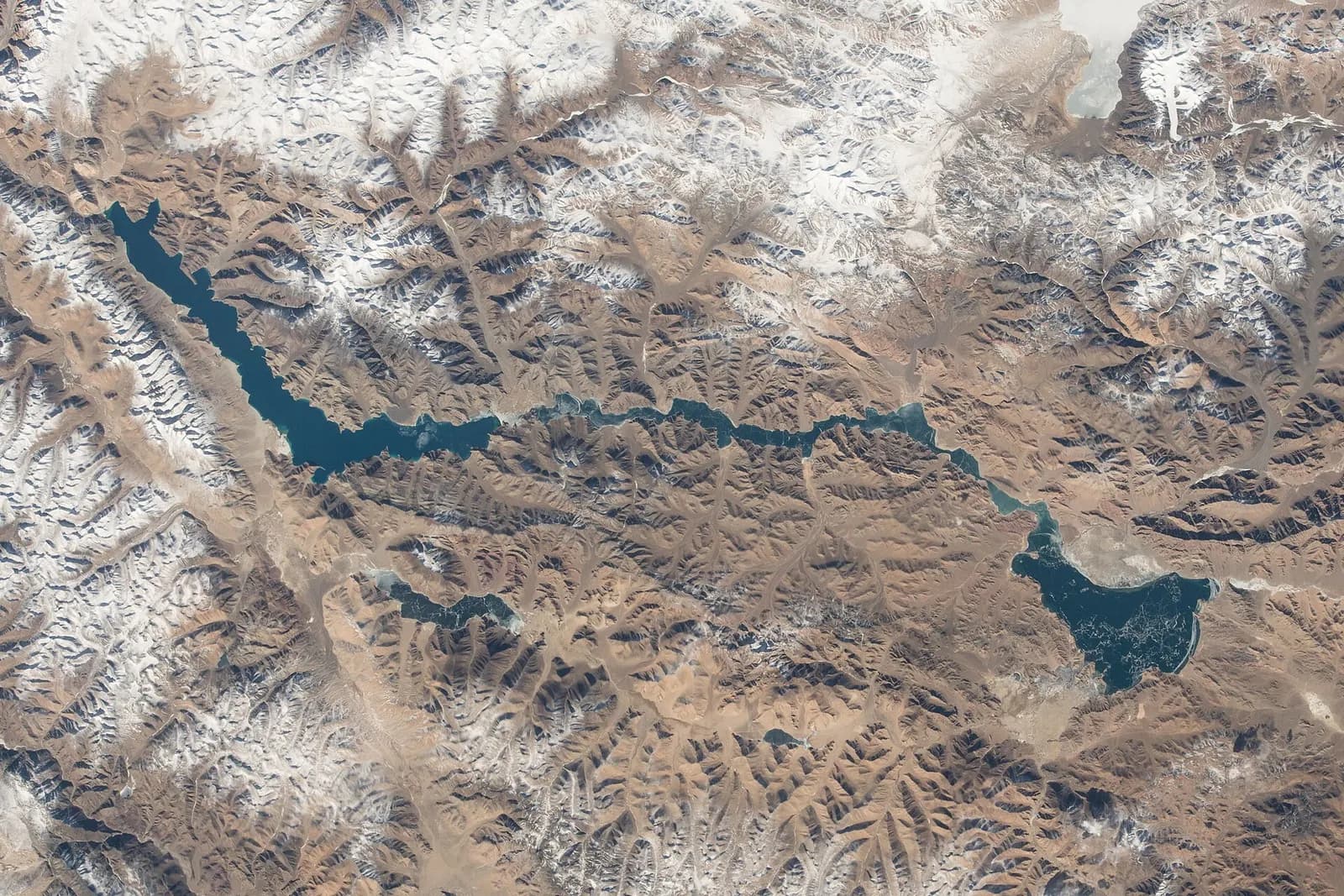
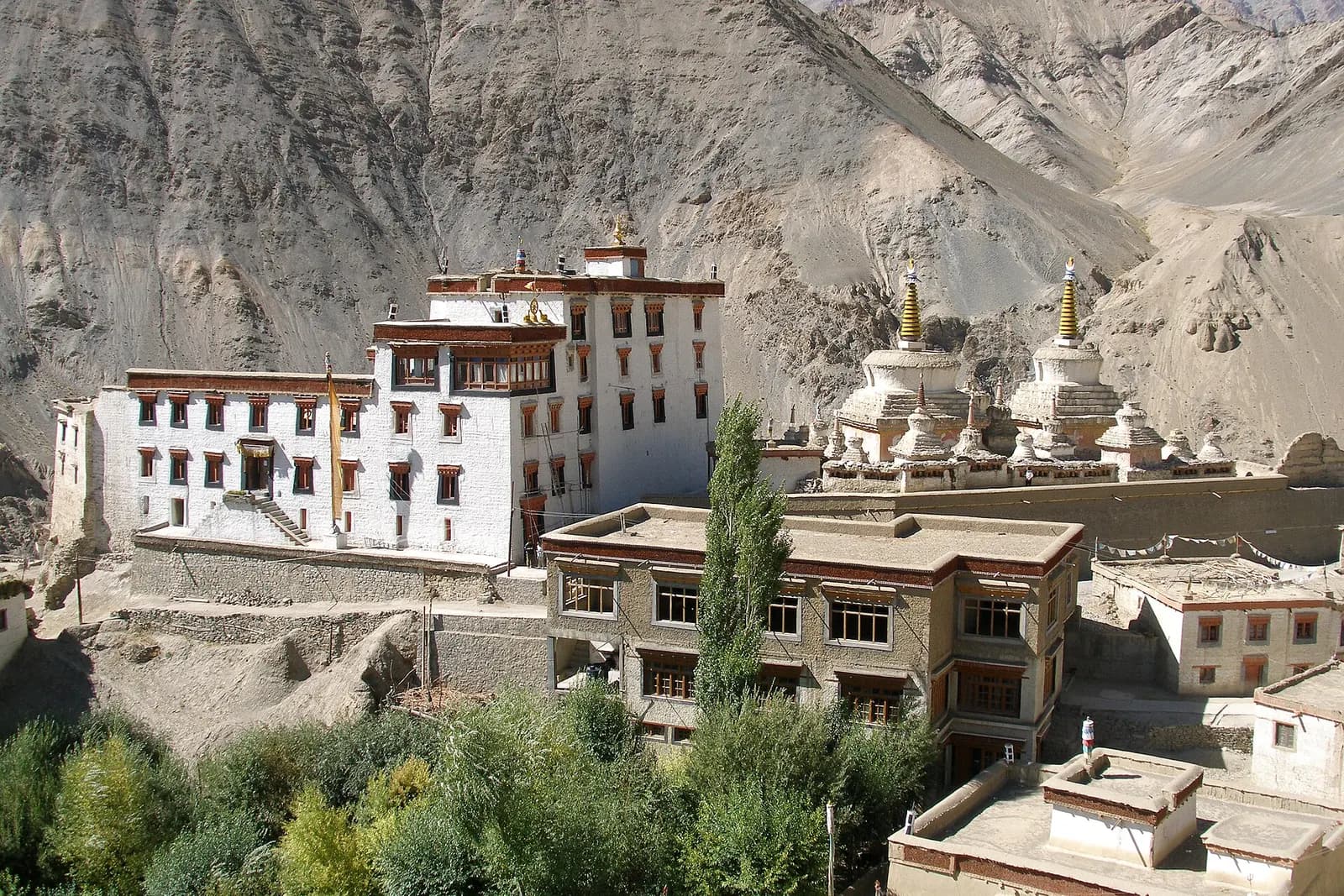
The legend says the Lamayuru valley was once a lake, drained by the Buddhist master Naropa so that a monastery could be built, and the strange landscape below the gompa, fluted ridges of pale sediment that catch the evening light, is offered as proof. Geologists agree about the lake. The monastery was established in the eleventh century, with the great translator Rinchen Zangpo credited with the earliest temples, and it later passed to the Drikung Kagyu order that runs it today.
At its height it held five buildings and around four hundred monks; the surviving Dukhang holds Naropa's meditation cave behind glass, old thangkas and a murmuring line of butter lamps. Lamayuru stands at about 3,510 m on the highway between Kargil and Leh, just below Fotu La at 4,108 m, so almost everyone driving in from Srinagar passes it, though few stay. Staying is the point.
In the late afternoon the tour vehicles leave, the village of forty houses goes quiet, and you can climb to the monastery roof and watch the moonland change from bone to gold to blue. Every June or July the Yuru Kabgyat festival fills the courtyard with masked cham dances. From Lamayuru the road east passes Khaltse, the eleventh-century murals of Alchi and the apricot villages of the Sham valley; west lie the rock-cut Maitreya of Mulbekh and Kargil.
Treks from the village cross the Prinkiti La to Wanla and Hinju, and continue over the Konzke La to the Zanskar at Chilling.
 Non-veg