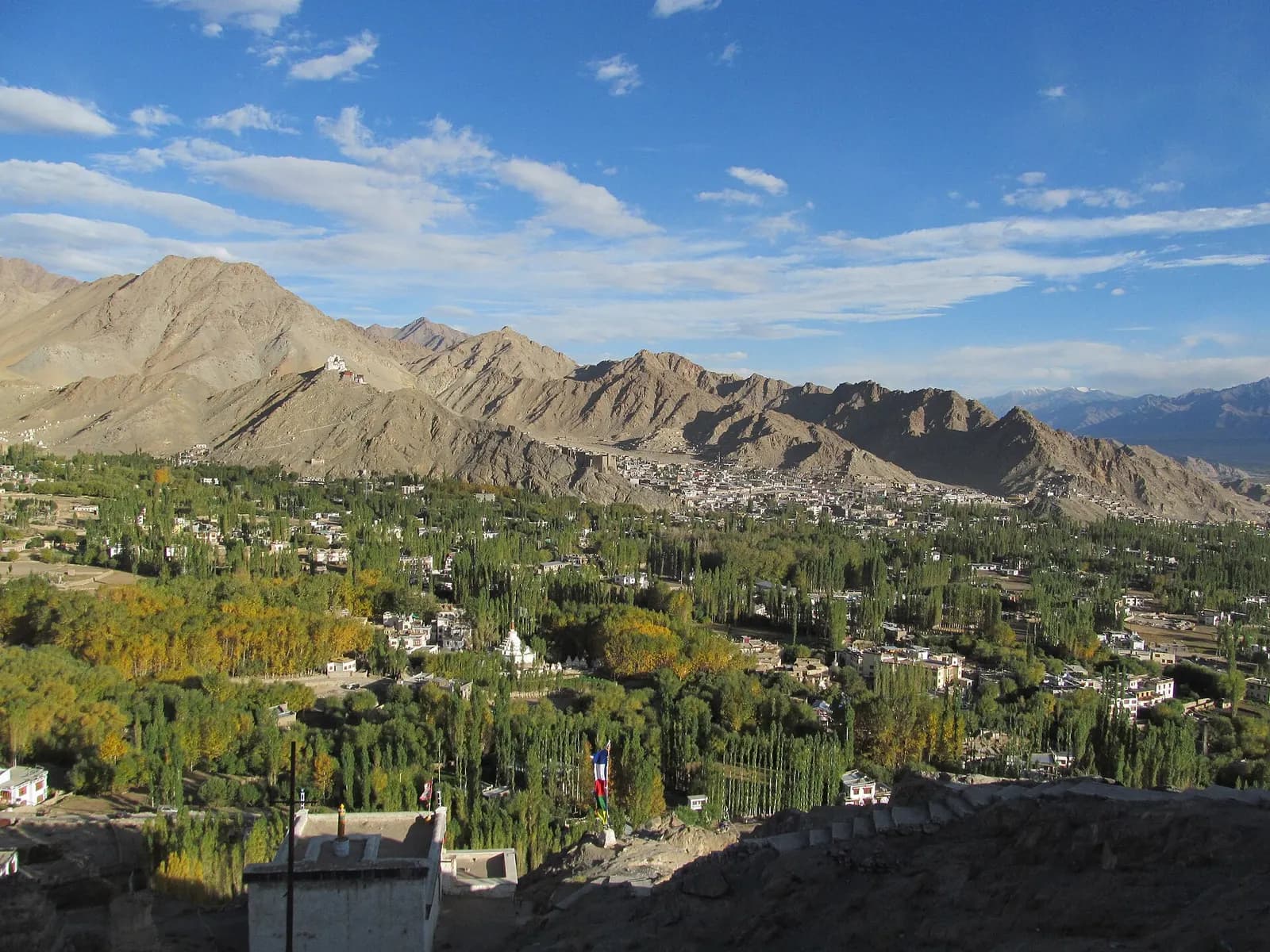
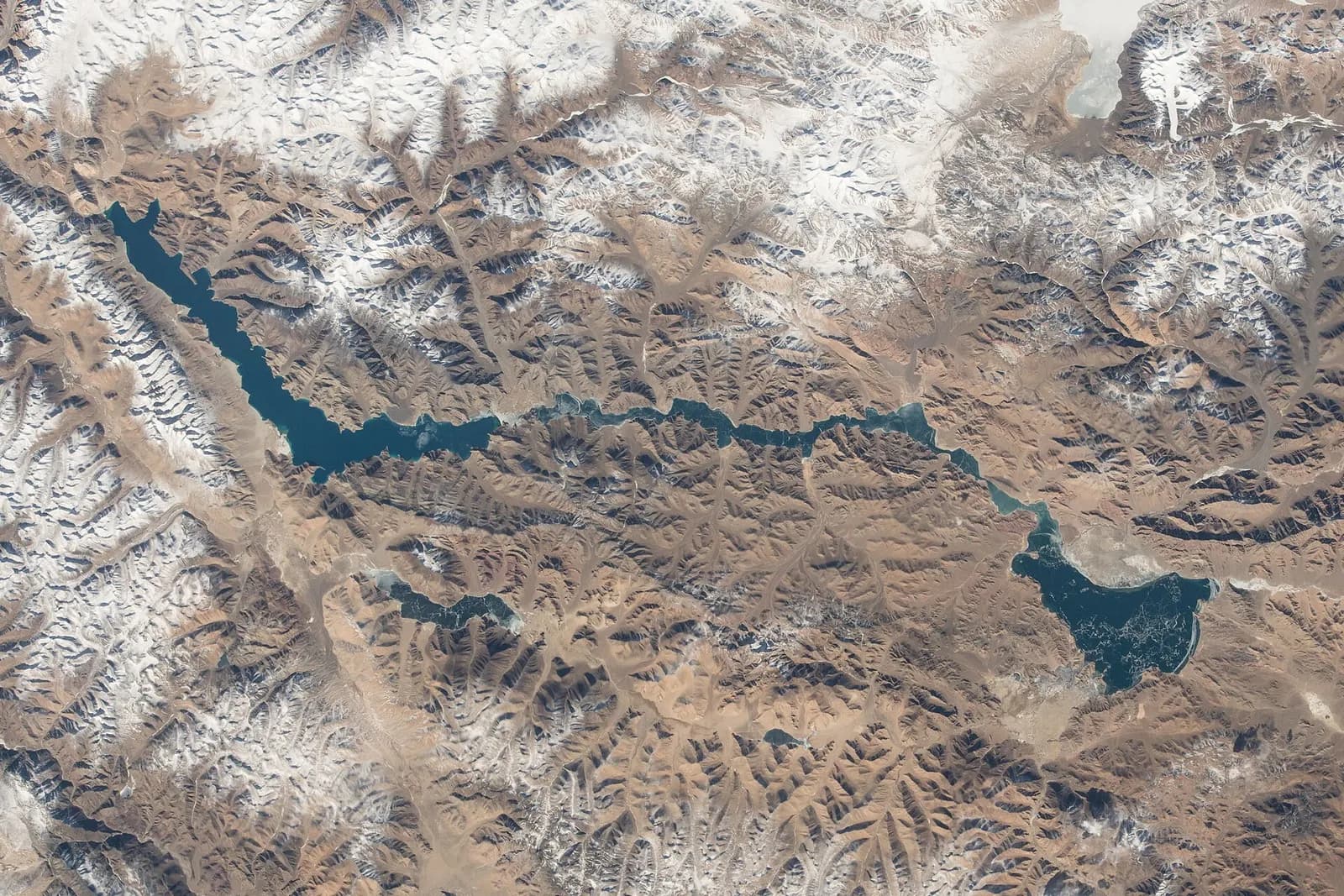
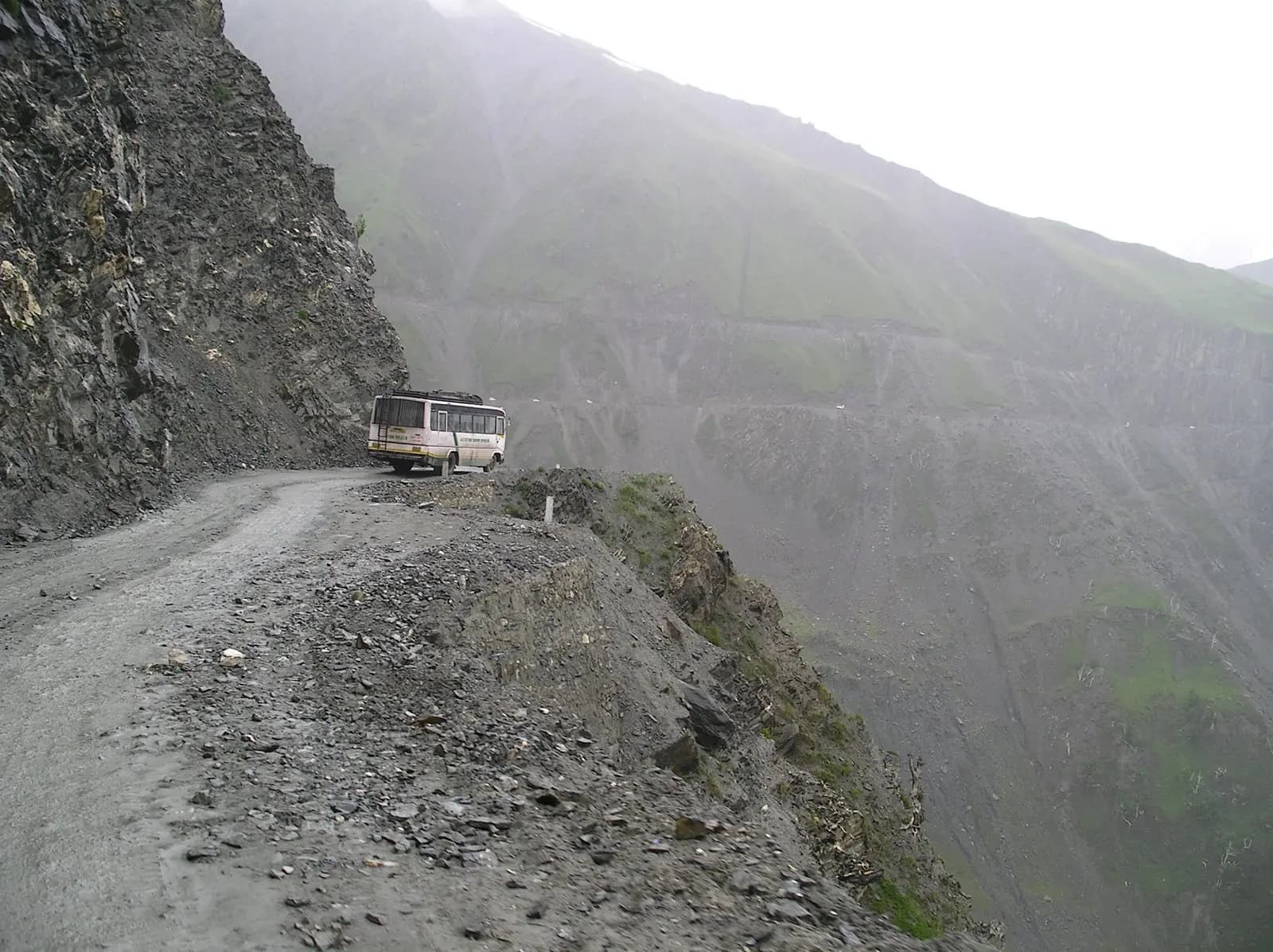
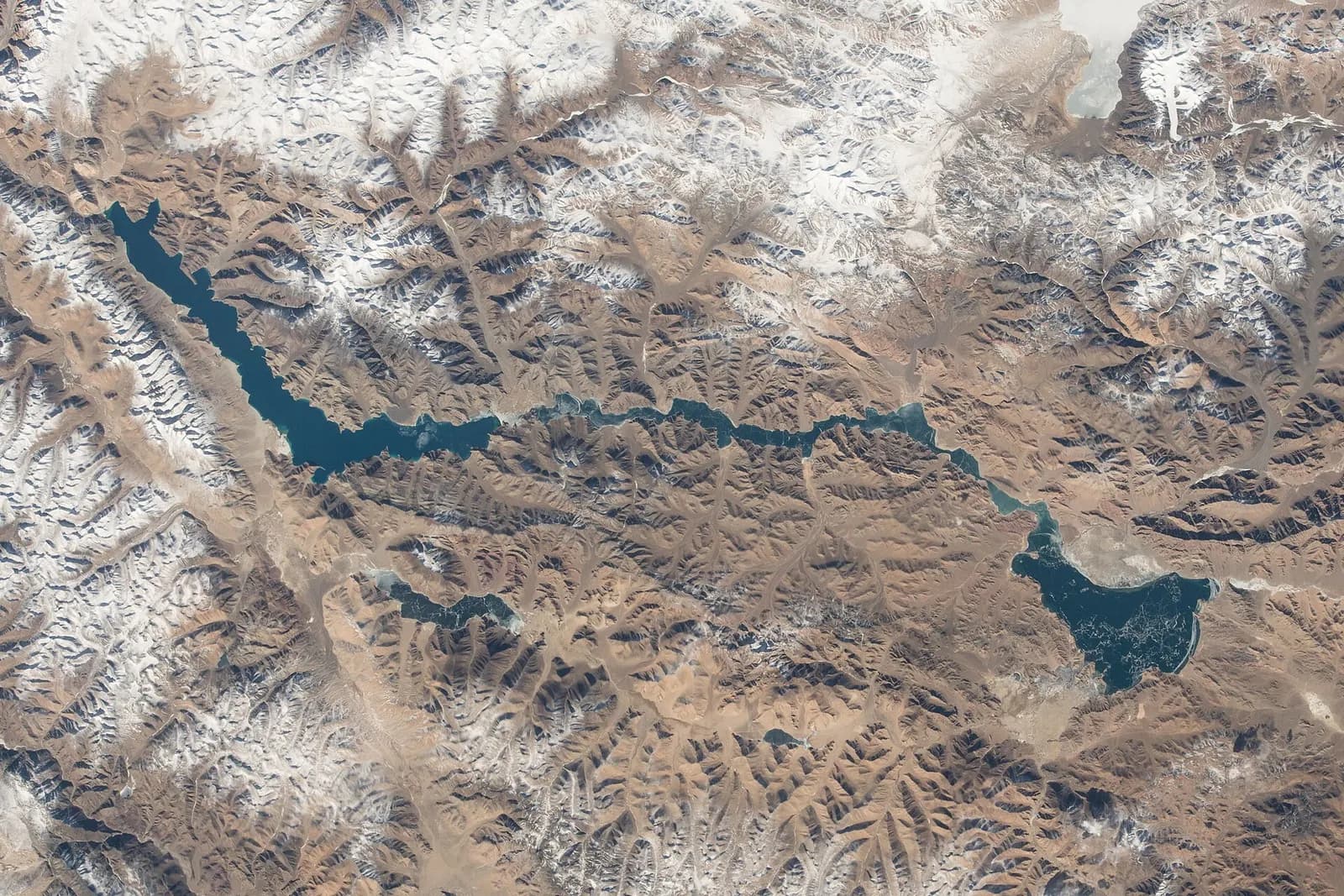
Ladakhis call it Ldumra, the valley of flowers, and after the bare Indus it does feel green: sea buckthorn, willow and apricot orchards along rivers that braid across a floor a kilometre wide. Nubra was the last Indian stretch of the caravan route to Yarkand and Kashgar, and the double-humped Bactrian camels grazing the dunes at Hunder are descendants of the pack animals that walked it. The road from Leh climbs to Khardung La at 5,359 m, one of the highest motorable passes in the world, and drops more than 2,000 m in two hours to Diskit at about 3,100 m.
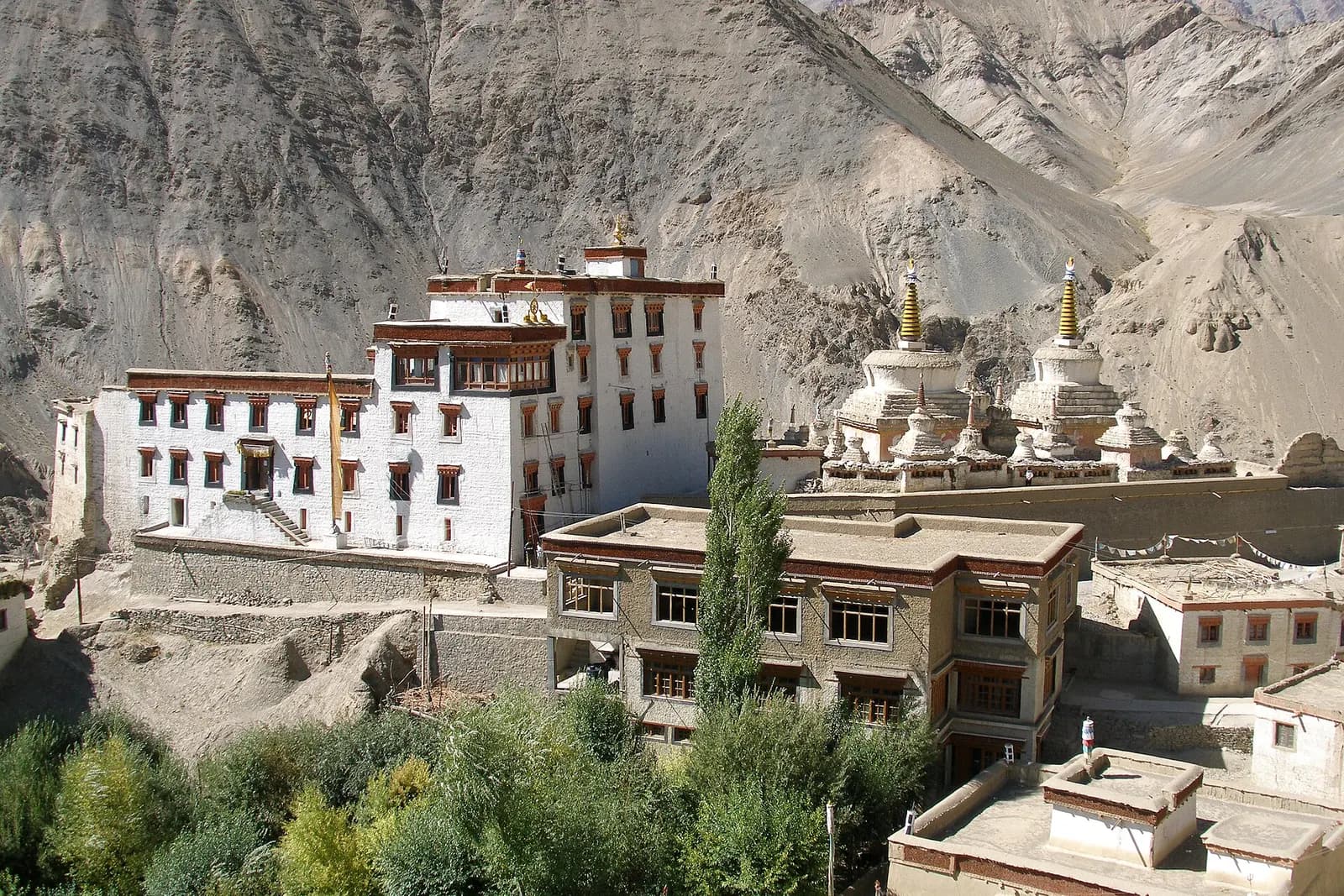
Diskit Monastery, founded in the fourteenth century, hangs off a rock above the village; the 32 m Maitreya Buddha below it, consecrated by the Dalai Lama in 2010, faces down the Shyok towards Pakistan. Hunder's sand dunes are a short drive away, best at sunset when the camels come out and the light goes copper. Across the river, Sumur and the Samstanling gompa sit in orchards, and Panamik's sulphur springs are the last stop before the Siachen base camp road.
Turtuk, 80 km west, only opened to visitors in 2010: a Balti village of stone houses, apricot terraces and a small royal palace, where the language, bread and faces change completely from the rest of Ladakh. Nubra is where Ladakh stops being a plateau and becomes Central Asia.
 Non-veg