Most first trips to the northeast try to cover four states and end up covering highways. This ten-day route stays in two, Assam and Meghalaya, and gives each place enough time to become something more than a photograph: a rhino in wet grass at half past six, a mask-maker in a monastery on a river island, and a bridge of living fig roots that took two generations to grow.
Days 1 to 3: Guwahati and the rhino grassland
Day 1: Guwahati
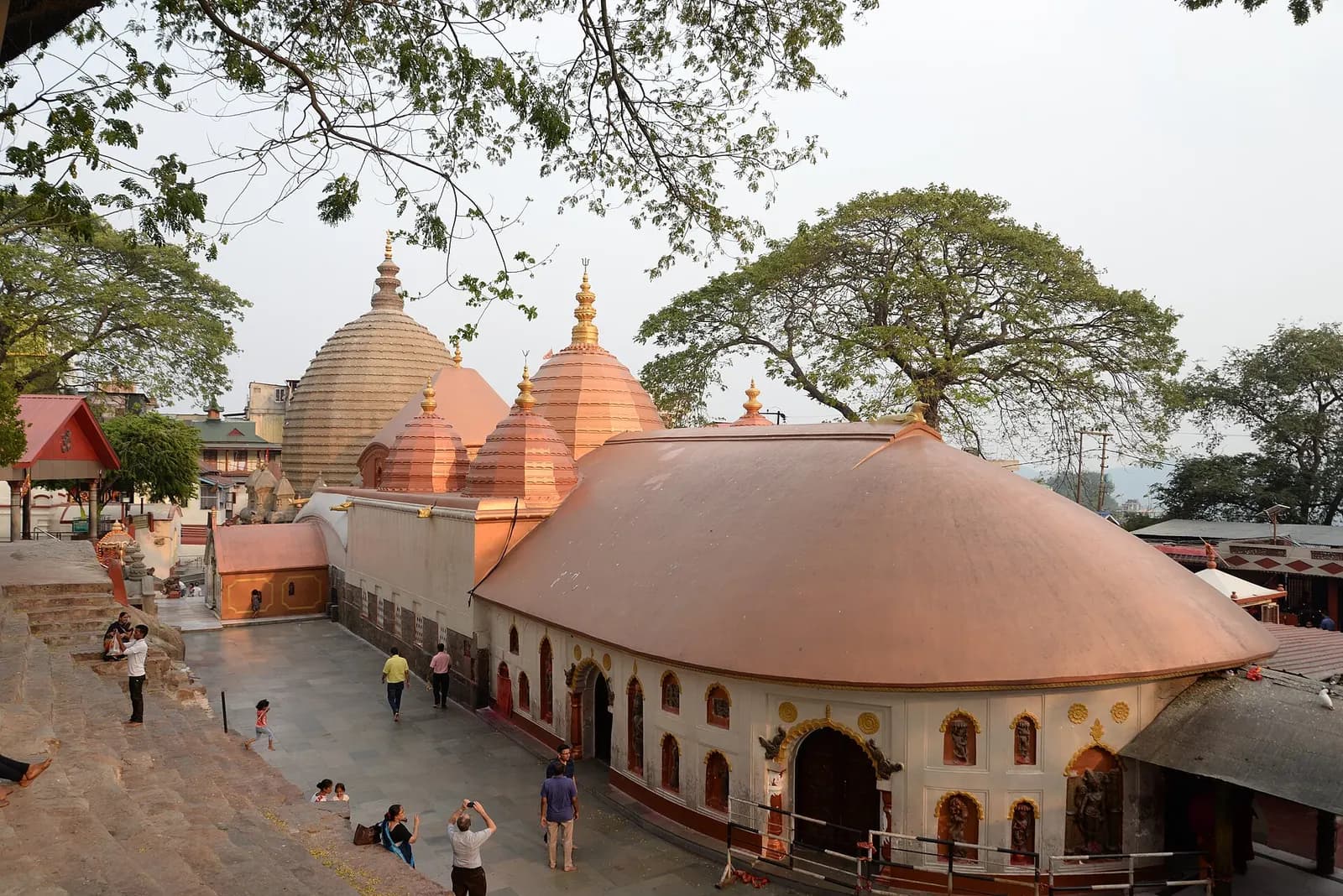
Fly into Lokpriya Gopinath Bordoloi International Airport and go straight up Nilachal hill to Kamakhya, one of the most important shakta temples in India, where the sanctum holds a rock cleft and a spring rather than an image. Take the afternoon on the Brahmaputra: a ferry to Umananda, a small temple island in the middle of the river, and a sunset boat as the water turns the colour of tea. Eat masor tenga, a sour fish curry with tomato and lemon, and pitha for dessert.
Days 2 and 3: Kaziranga
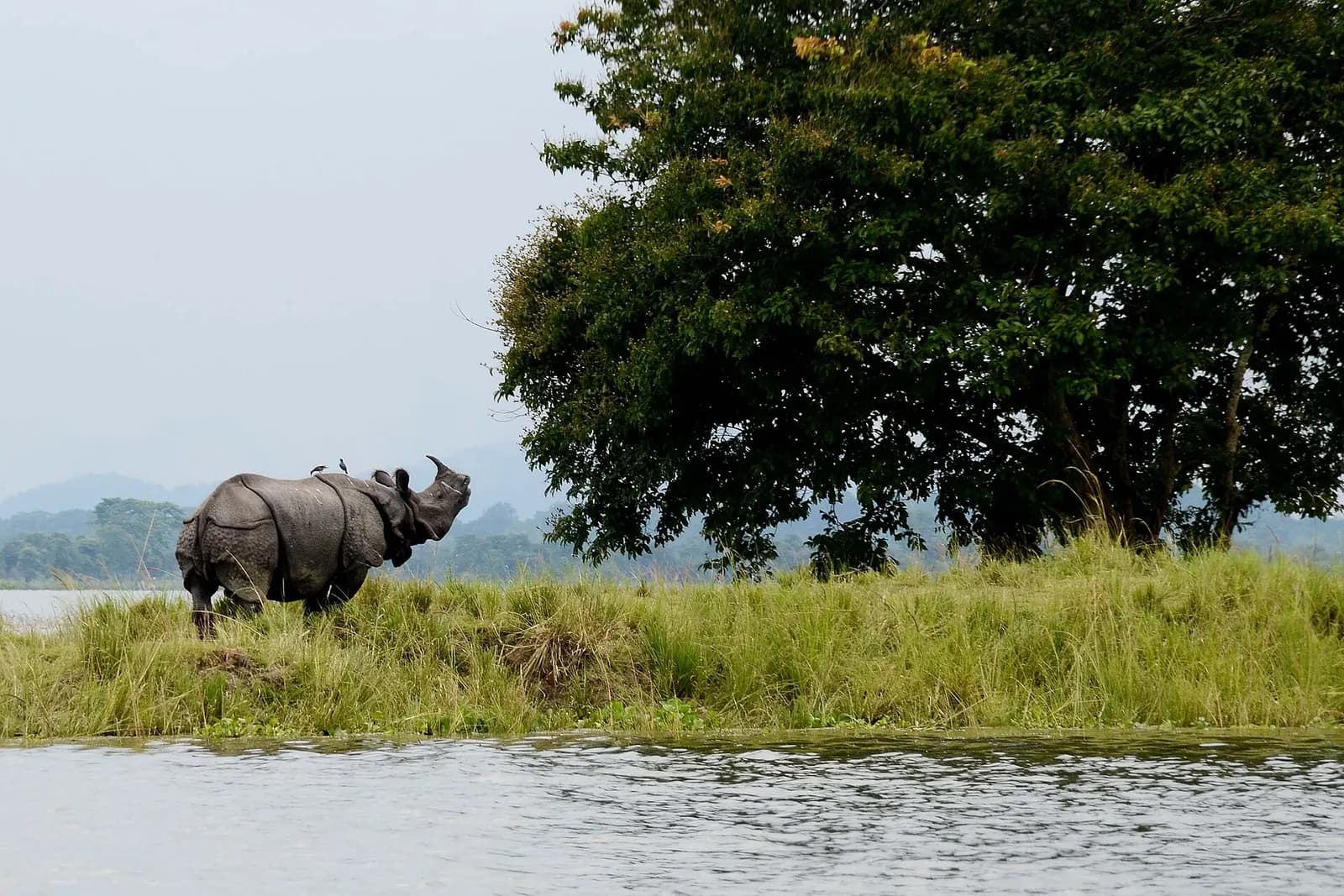
Guwahati to Kaziranga is 195 kilometres on NH27, about five hours with a tea-garden stop. The park holds roughly two-thirds of the world's greater one-horned rhinoceros, more than 2,600 animals at the last count, along with wild water buffalo, swamp deer and one of the densest tiger populations anywhere, though you will rarely see them in that grass.
Kaziranga opens on 1 November and closes at the end of April; the monsoon floods it deliberately, and that flooding is what keeps the grassland alive. Book two jeep safaris rather than one: Bagori in the west for rhino density and open sightlines, Kohora in the centre for elephants and wetland birds, Agoratoli in the east for a quieter, more wooded drive. A jeep costs about INR 3,000 to 4,000 for up to six people, plus park entry of roughly INR 100 for Indians and INR 650 for foreign nationals, plus camera fees. Elephant-back rides at dawn are limited and sell out weeks ahead.
Days 4 to 6: the river island
Days 4 and 5: Majuli
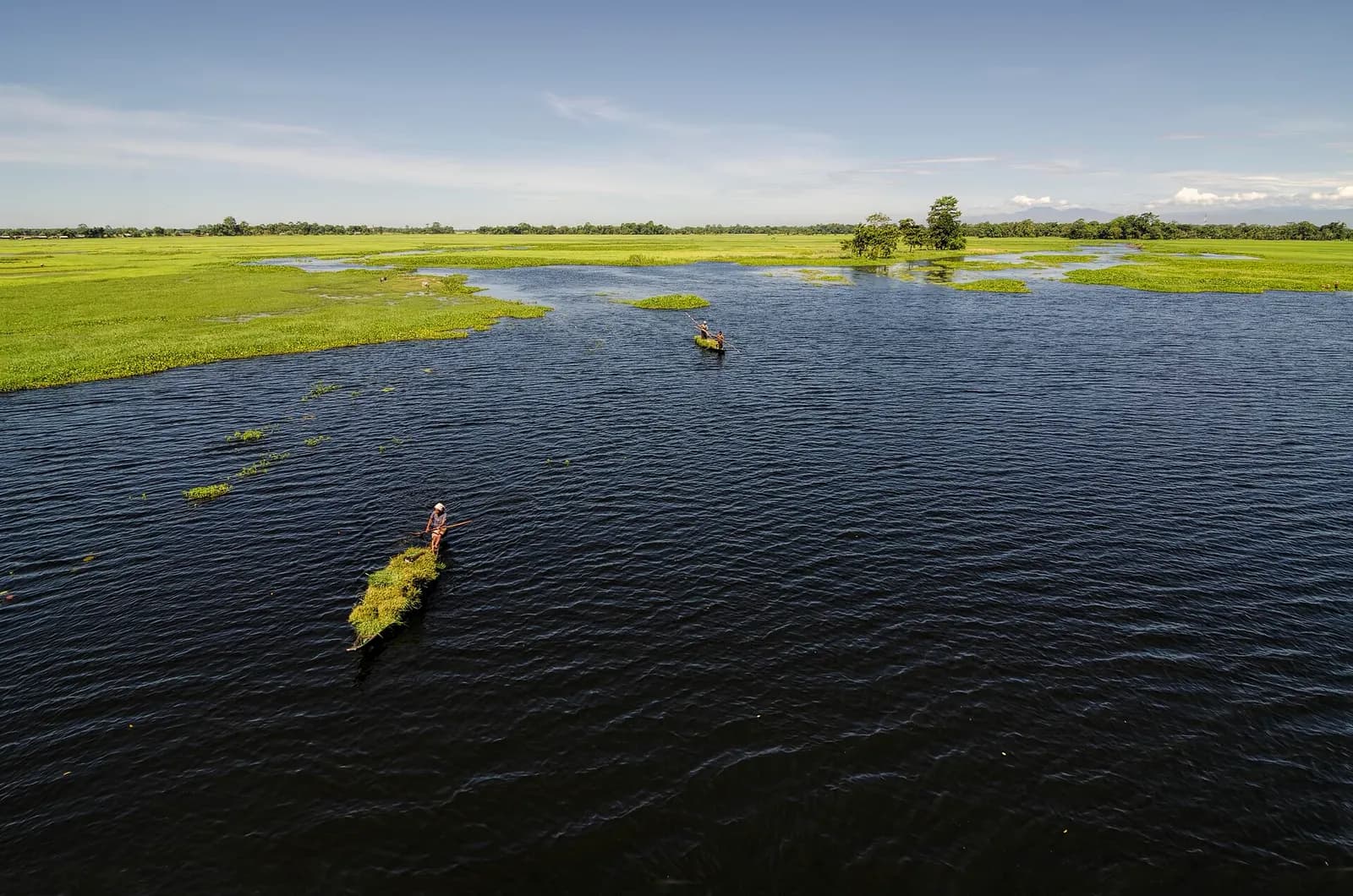
Drive east to Jorhat, then to Neamati Ghat for the ferry across the Brahmaputra to Kamalabari on Majuli, the largest river island in the world. Ferries take about an hour and a quarter and the last one leaves in mid-afternoon, so start early. Once, Majuli covered more than 1,200 square kilometres; erosion has cut it to a few hundred and continues every flood season.
The island's satras are Vaishnavite monastery-villages founded from the sixteenth century onwards by followers of Srimanta Sankardeva. Auniati and Kamalabari hold evening prayers with khol drums and cymbals that build for an hour. At Samaguri, a family has been carving and painting bamboo-and-clay masks for bhaona theatre for generations, and will show you how the jaw articulates. Cycle between them past Mishing stilt houses, potters' villages at Salmora, and rice fields with more birds than people. Stay in a bamboo cottage for INR 1,200 to 2,500 a night.
Day 6: Majuli to Guwahati
The transfer day. Ferry back, then Jorhat to Guwahati is about 310 kilometres and six to seven hours; if you would rather not drive it, there are short flights from Jorhat. Break the drive at a working tea estate near Jorhat, the town that calls itself the tea capital of the world, for a factory walk through withering, rolling and drying.
Days 7 and 8: into the Khasi hills
Day 7: Shillong
Guwahati to Shillong is only 100 kilometres but takes about three hours, climbing into pine hills past Umiam Lake, where a viewpoint on the highway makes the obvious stop. Shillong itself is a hill town of choirs, guitar shops and Khasi matriliny, where property and family name pass through the youngest daughter. Walk Ward's Lake, browse Police Bazaar, and drive out to Laitlum Canyons in the late afternoon for the fall of the hills towards Bangladesh. Eat jadoh, rice cooked with pork and black pepper, at a small Khasi eatery.
Day 8: Sohra and the root bridges
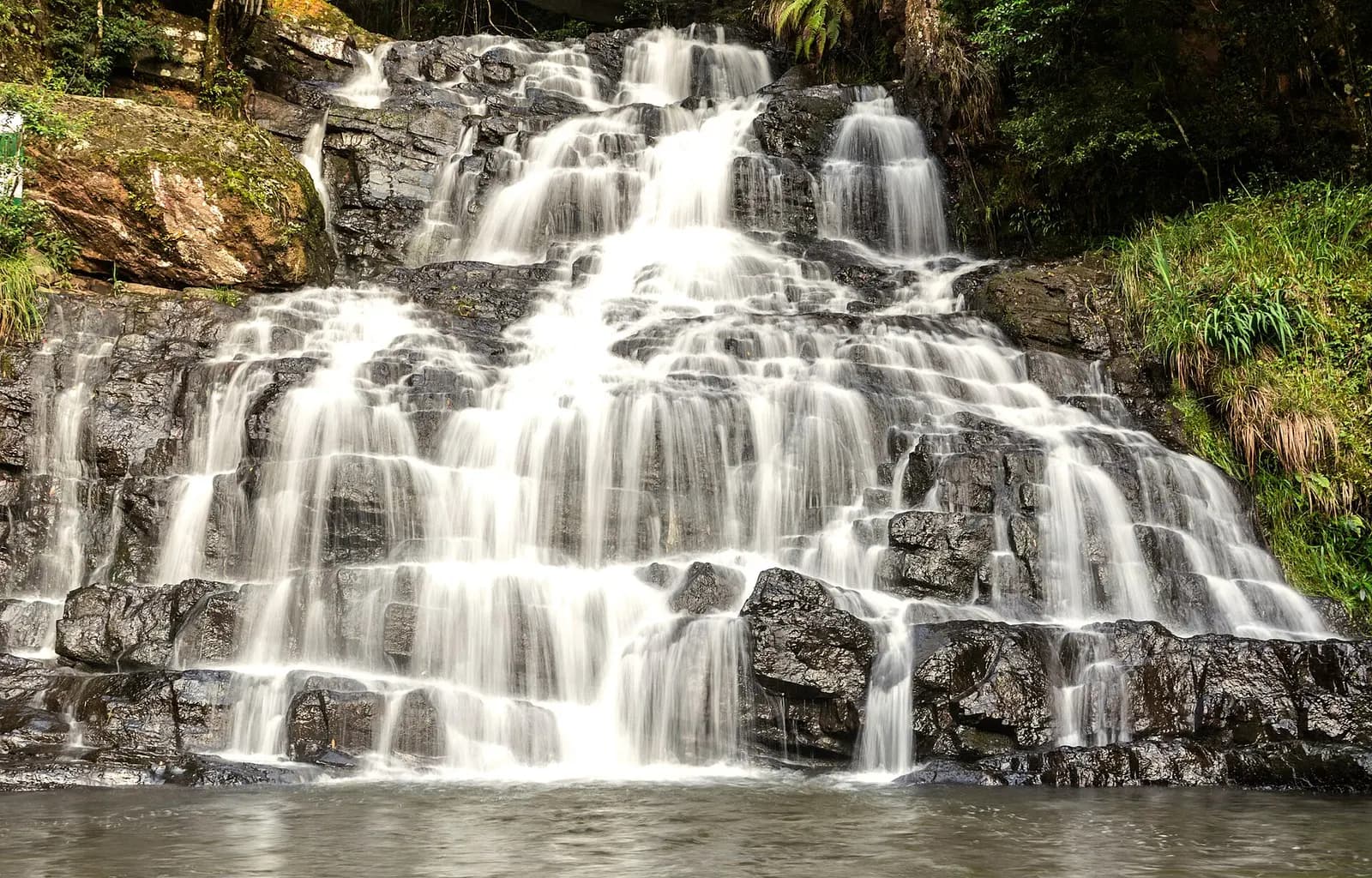
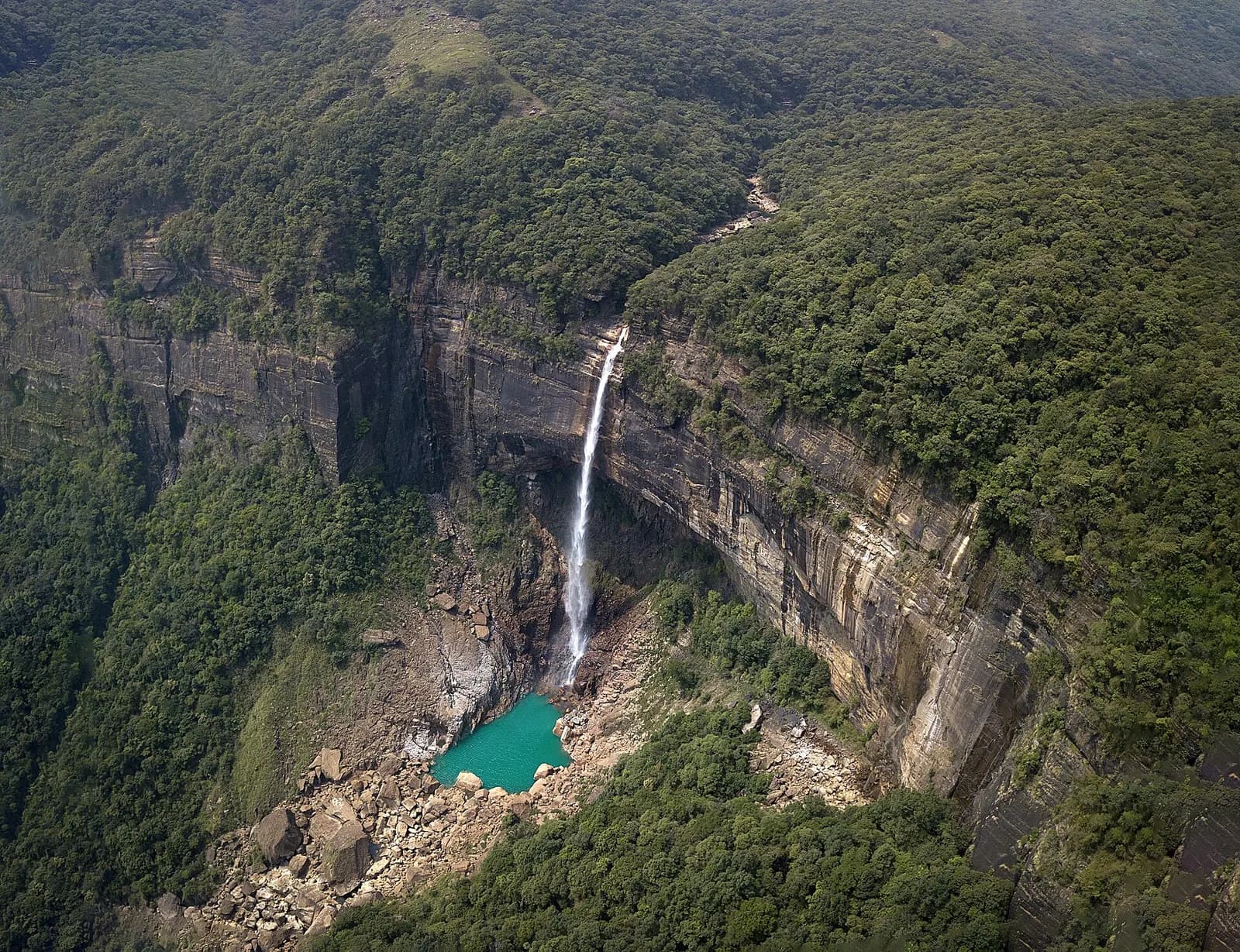
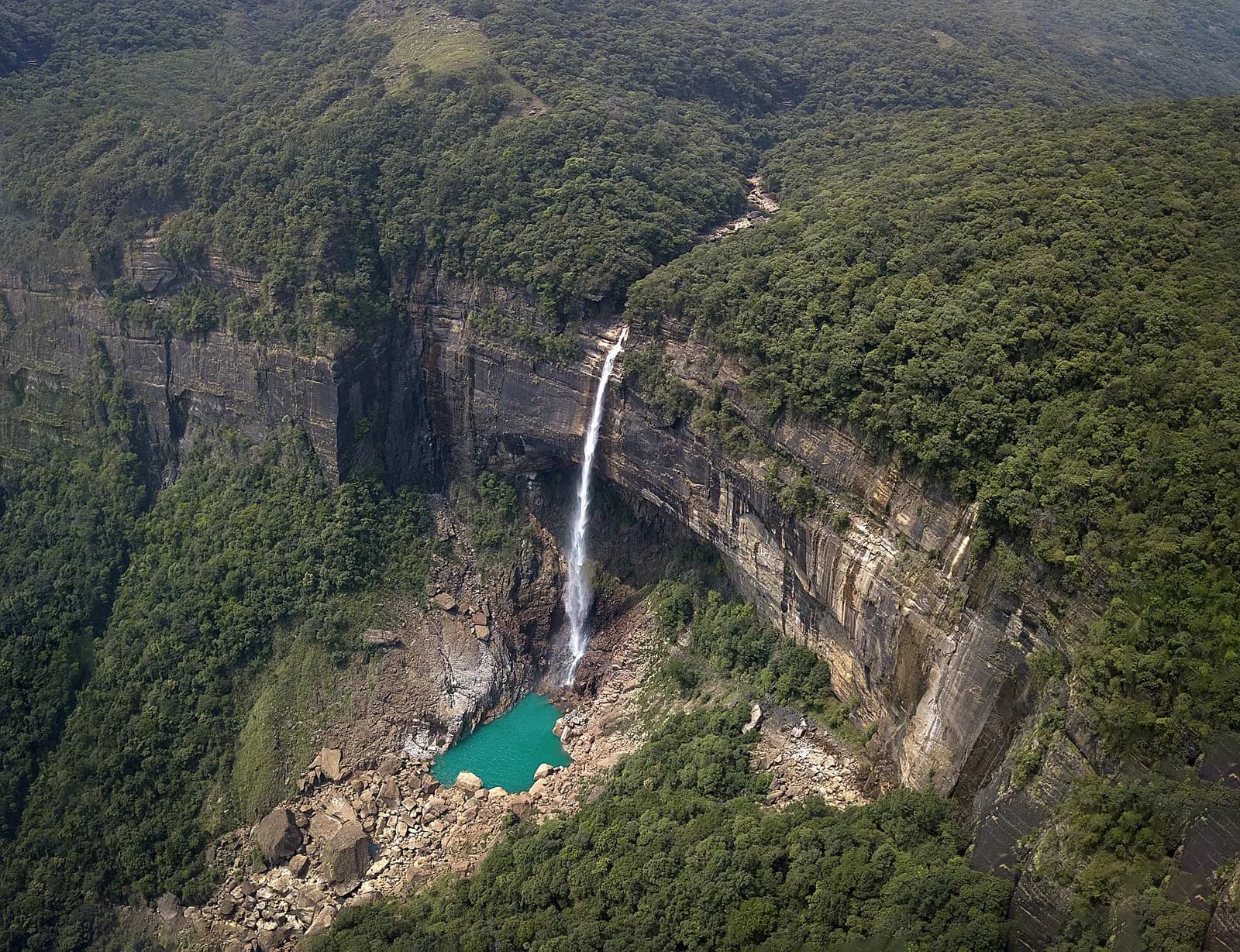
Sohra, still signposted as Cherrapunji, is 54 kilometres and two hours south of Shillong across a plateau of grass and limestone. Nohkalikai Falls drops 340 metres in a single plunge, the tallest in India, and is best in the hour after sunrise before the cloud closes in. Mawsmai and Arwah caves cut into the limestone nearby, and Mawsynram, the wettest inhabited place on earth with close to 11,800 millimetres a year, is an hour to the west.
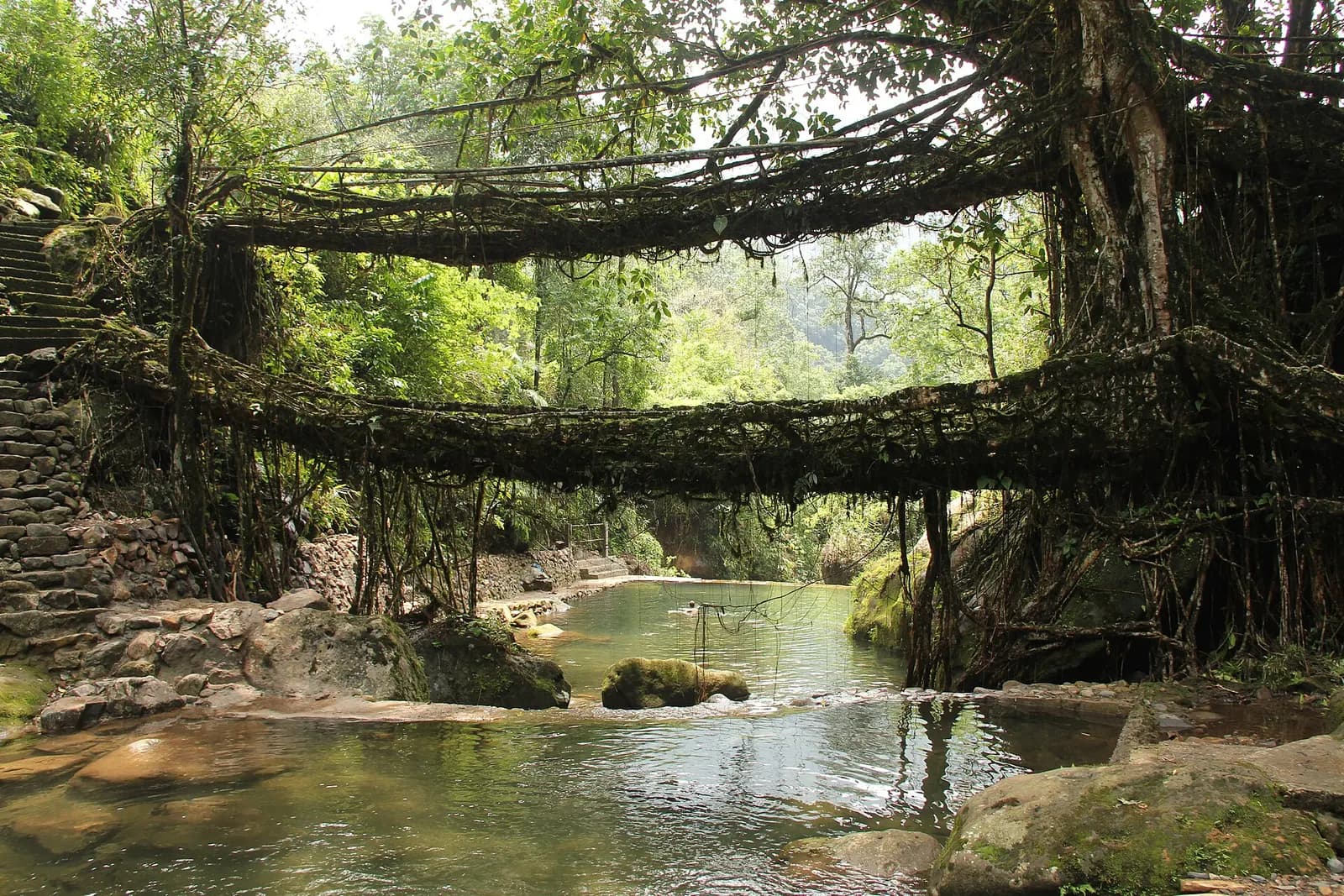
The double-decker living root bridge at Nongriat is the day's real work: about 3,000 steps down from Tyrna and the same back up, three to five hours in all. The bridges are made by training the aerial roots of the rubber fig across streams over fifteen to thirty years, and they get stronger with age. Start by seven, carry two litres of water, and if the descent is too much, the single-span bridge at Riwai near Mawlynnong is a fifteen-minute walk.
Days 9 and 10: clear water, then out
Day 9: Mawlynnong and Dawki
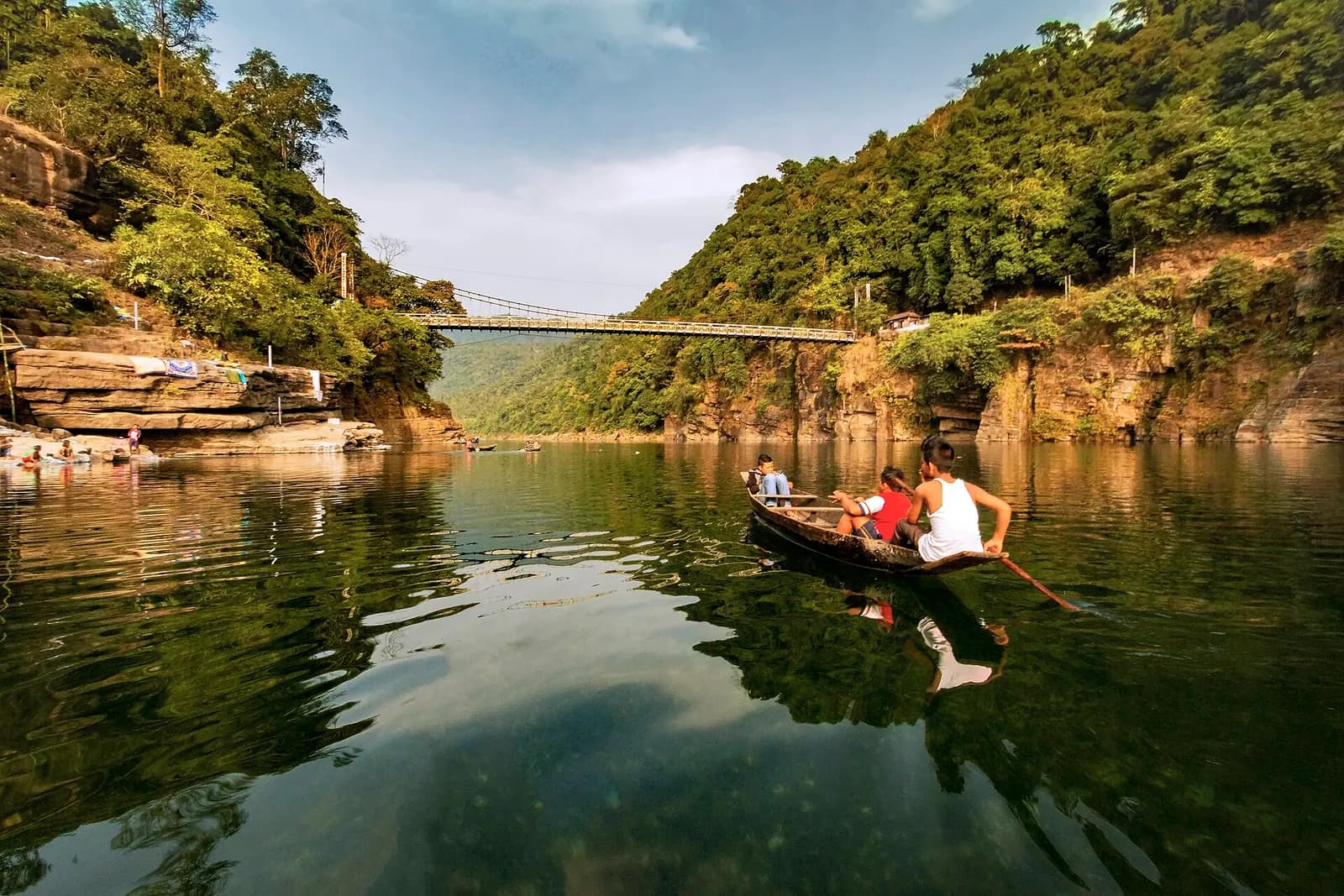
Mawlynnong, about 80 kilometres from Sohra, has been keeping its lanes swept and its waste composted since long before it was named Asia's cleanest village in 2003, and there is a bamboo skywalk over the plains. Half an hour on is Dawki on the Umngot river, where the water from November to March runs so clear that boats appear to float on air. Go early, before the day crowds; better still, stay upstream at Shnongpdeng and camp on the sandbank.
Day 10: back to the plains
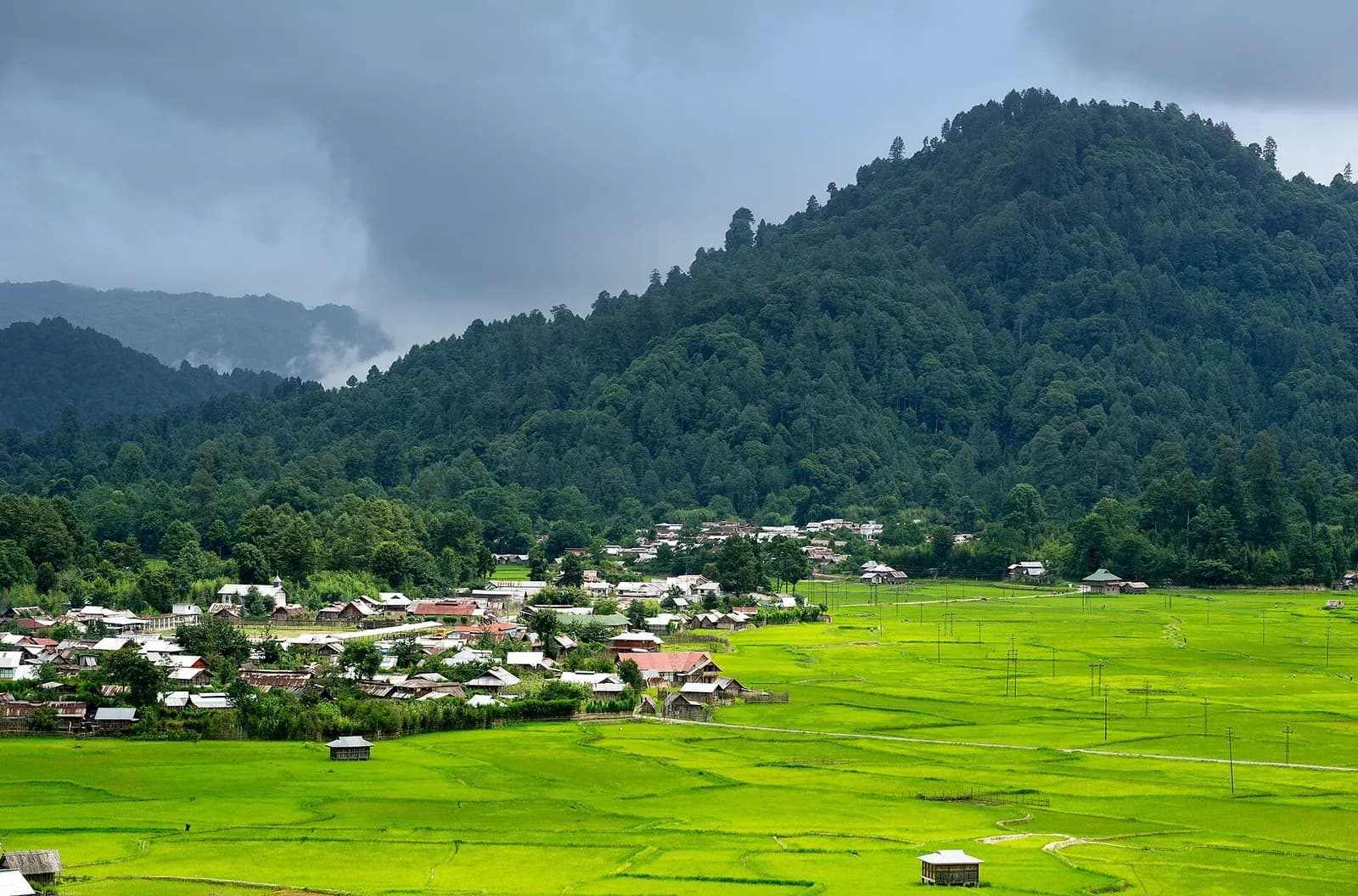
Shillong to Guwahati airport is around 130 kilometres and three and a half hours; leave four hours before your flight. If you have three more days, extend to Ziro Valley in Arunachal Pradesh for Apatani villages and terraced wet-rice fields, or to Tawang over the Sela pass at 4,170 metres.
Practical notes
- Best months: October to April. Kaziranga is shut in the monsoon; Meghalaya's falls are at full volume in September and October, and the Umngot is clearest from November to March.
- Permits: Assam and Meghalaya need none. Arunachal Pradesh, Nagaland, Mizoram and Manipur require an Inner Line Permit for Indian nationals, obtainable online in a day or two.
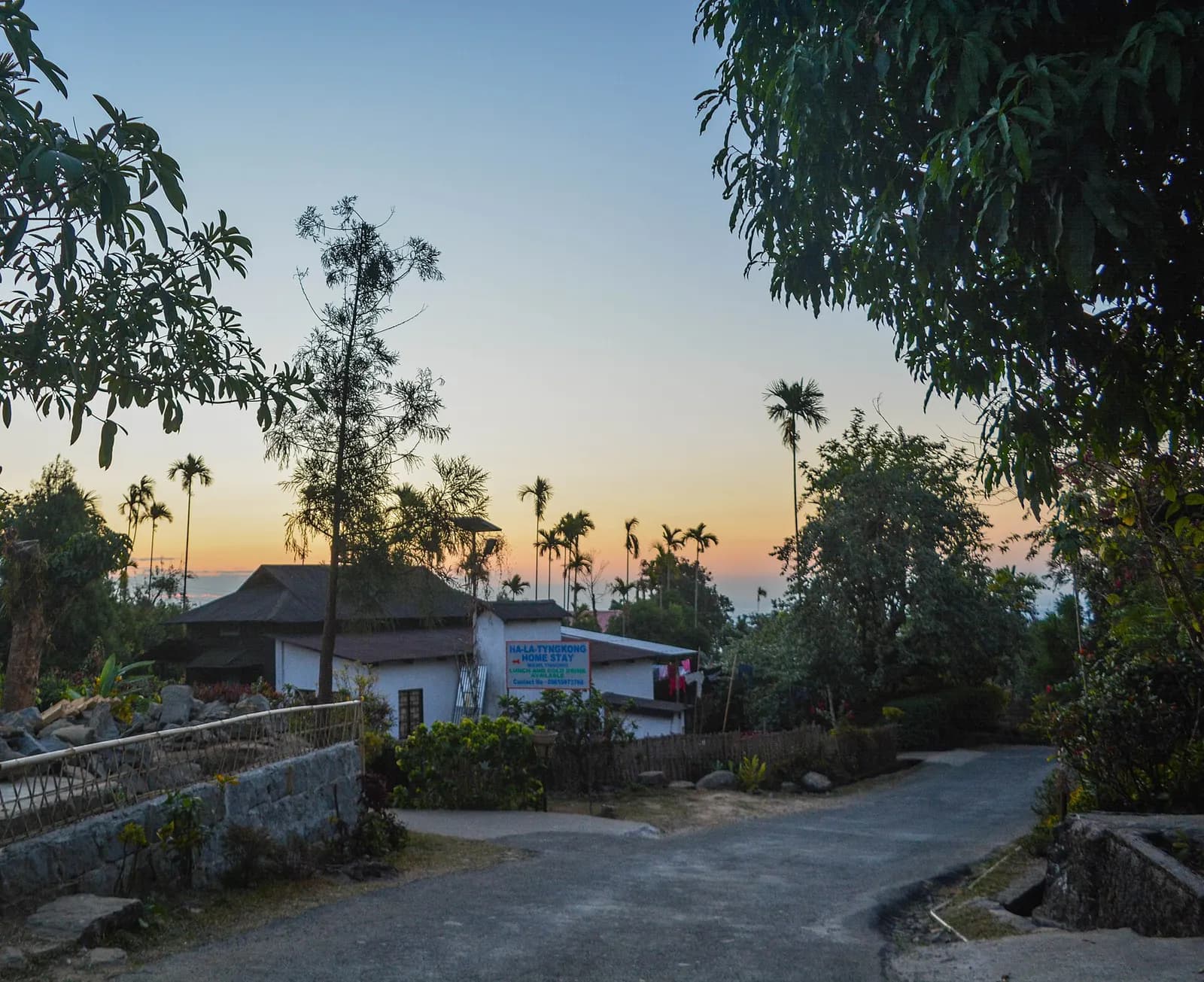
- Costs: a car with driver runs INR 4,000 to 5,500 a day. Homestays are INR 1,500 to 3,000; Kaziranga lodges range far higher.
- Carry cash beyond the towns, and expect patchy mobile data on Majuli and around Nongriat.
FAQs
Is ten days enough for the northeast?
For Assam and Meghalaya properly, yes. Adding Arunachal or Nagaland to the same ten days means two extra long driving days and less of everything, so treat them as a separate trip or a three-day extension.
How hard is the trek to the double-decker root bridge?
Moderate but relentless, with steep steps and high humidity. Reasonably fit walkers manage it; knees dislike the descent more than the climb. Trekking poles and proper shoes make a real difference.
Do I need a permit as a foreign national?
Not for Assam and Meghalaya. Nagaland, Mizoram and Manipur require registration with the Foreigners Registration Office on arrival, and Arunachal needs a Protected Area Permit.
When should I book Kaziranga safaris?
As soon as your dates are fixed, especially for December and the New Year week. Elephant safaris in particular open a limited number of slots each morning.
DEVGAMAN plans this route with drivers who know which Kaziranga range is producing sightings that week, homestays chosen by the people who run them, and enough slack in the days to sit still. Message us on WhatsApp with your travel dates and we will send a version built around you.
Places in this story
Plan this trip
 8 days · 7 nights
Themes:NatureWildlifeCulture
Moderate · Best Nov–Apr
Assam and Meghalaya: Rhinos, Rain and Root Bridges
From the Brahmaputra and Kaziranga's grasslands to the wettest hills on earth
Route: Guwahati & Kamakhya → Kaziranga → Shillong → Cherrapunji (Sohra) +2 more
- Group
- 2–12 (private)
- From
- ₹74,000 pp
Tagsnortheast india · assam · meghalaya · kaziranga · majuli · offbeat · road trip