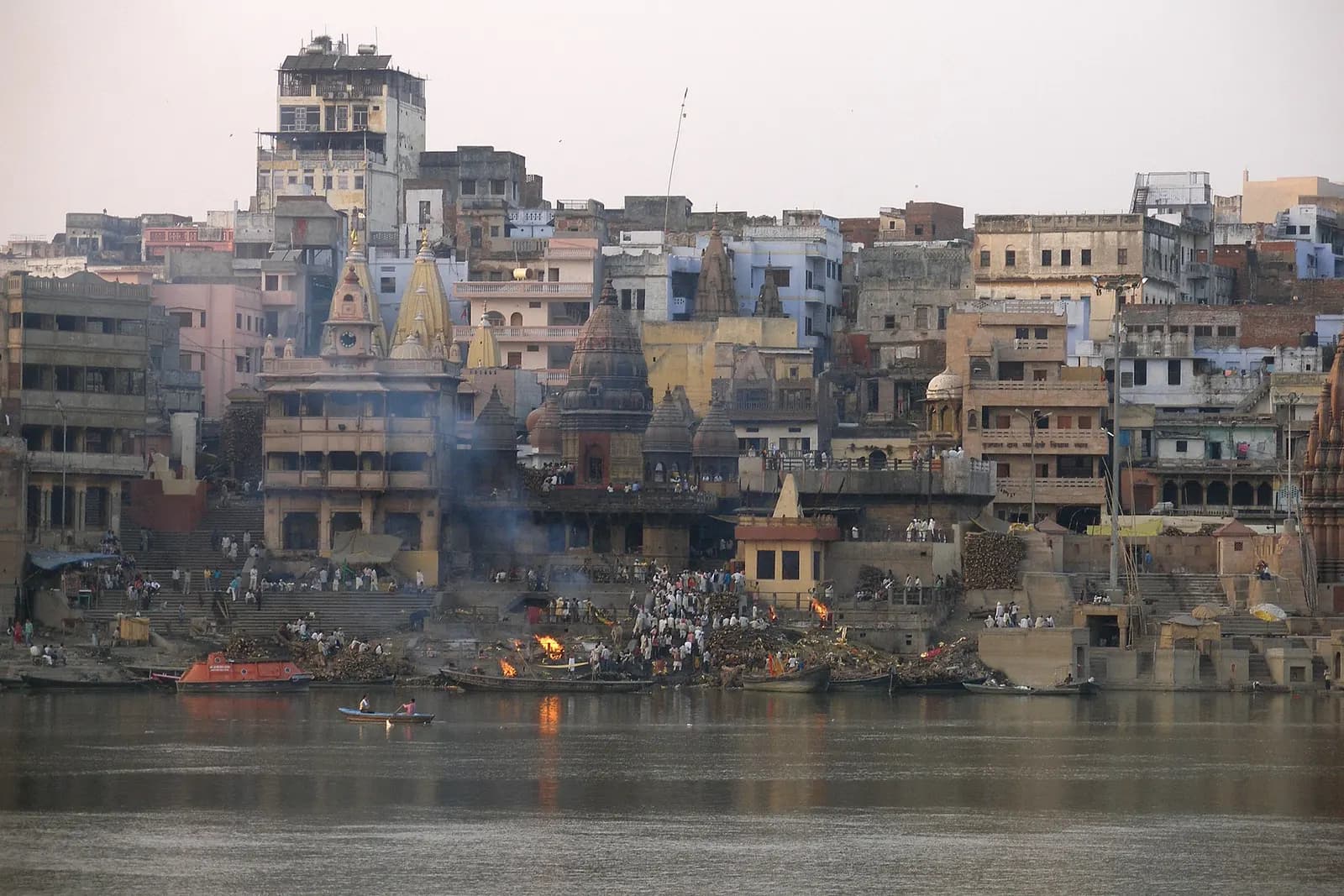
Varanasi is not a sight you tick off. It is a working city of ritual where people are being born, married, blessed and burned within a few hundred metres of each other, in public, all day. The way to understand it is to give it one uninterrupted day on the river, from before dawn until the lamps go out. Here is that day.
Start on the water, before six
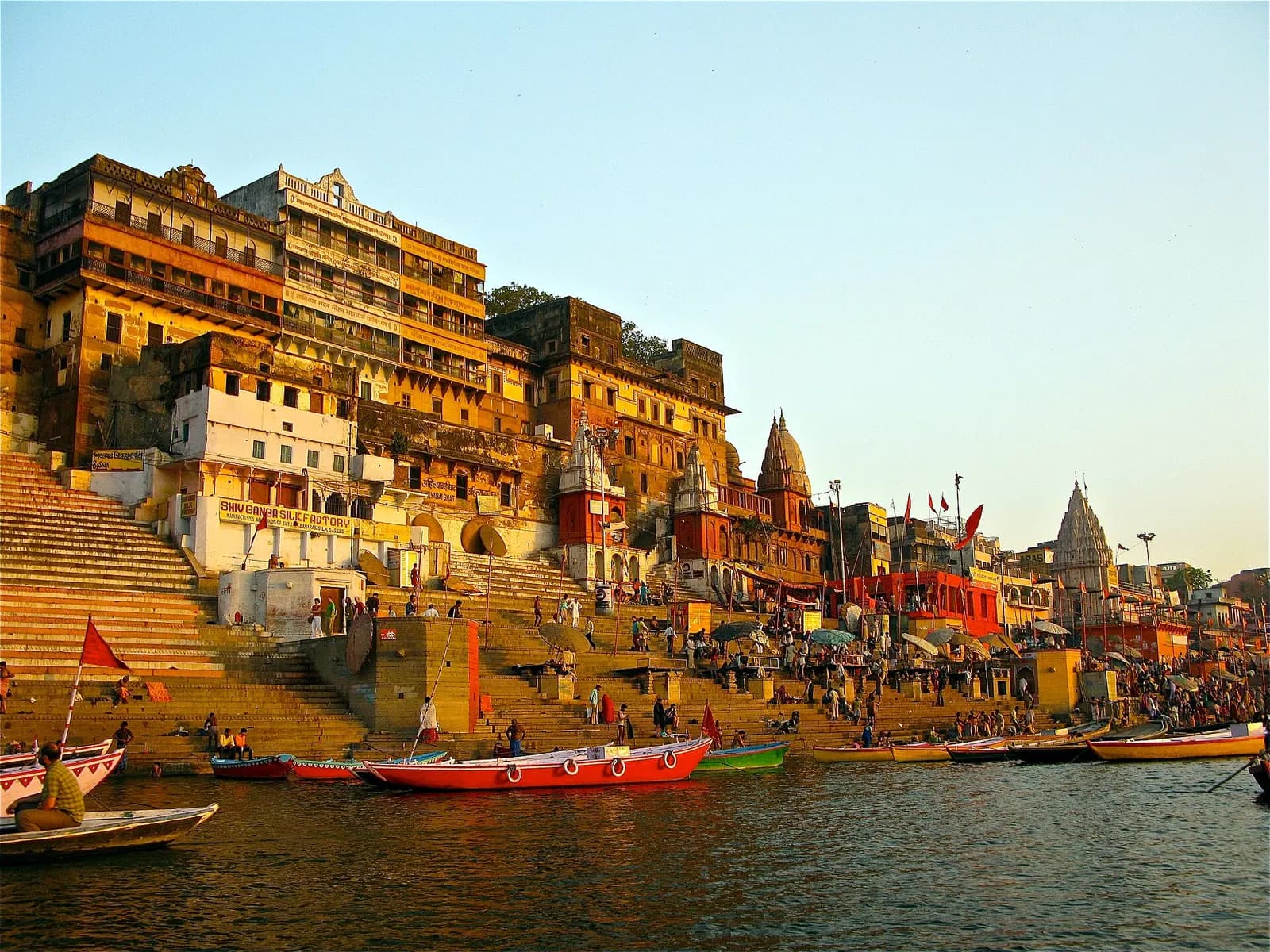
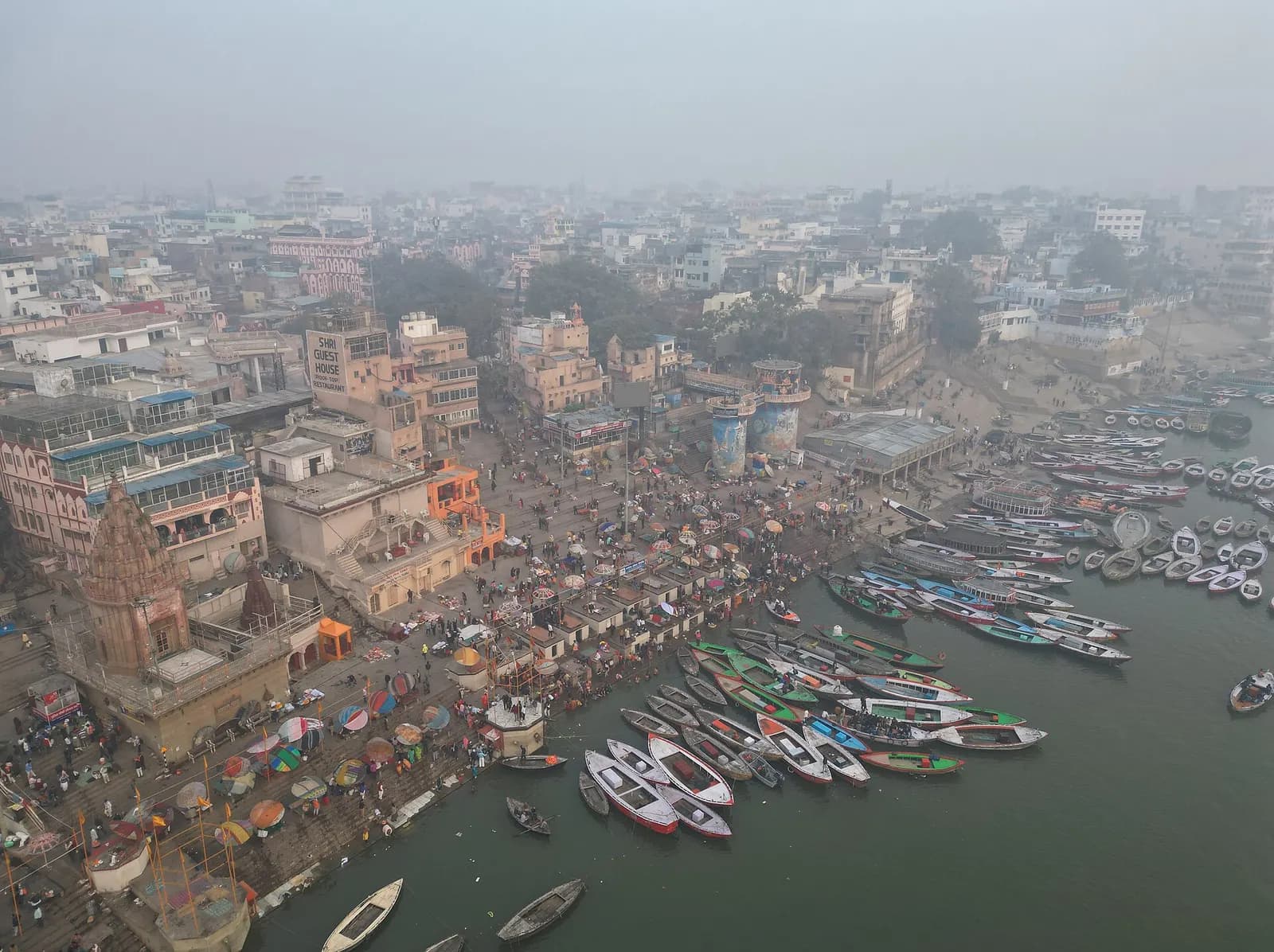
The Ganga runs south to north past Varanasi, a bend that pilgrims read as auspicious, and the whole city faces it from a crescent of stone steps about six and a half kilometres long with some eighty named ghats along it.
Take a boat before sunrise. In winter that means being at Assi Ghat by around six, in summer closer to half past five. A shared boat costs roughly INR 100 to 200 per person; a private rowboat is INR 500 to 1,500 an hour depending on season and how well you negotiate. Ask for oars rather than a motor. Row north with the light coming up behind the far bank, which is bare sand by design, because the dead should have nothing built opposite them.
At Assi itself, the Subah-e-Banaras programme begins at first light: Vedic recitation, a yoga session on the steps and a short concert of Hindustani classical music. It is free, and it is a gentler introduction than being dropped into the crowd at Dashashwamedh.
Walking the ghats from Assi to Manikarnika
After the boat, walk. Assi to Dashashwamedh is about three kilometres of continuous steps and takes an hour with stops, longer if you keep sitting down, which you should.
- Tulsi Ghat, where the poet Tulsidas lived and worked on the Ramcharitmanas until his death in 1623.
- Chet Singh Ghat, with the small fort where the Maharaja of Banaras fought Warren Hastings in 1781.
- Kedar Ghat, striped red and white, busy with South Indian pilgrims from dawn.
- Man Mandir Ghat, where Sawai Jai Singh II of Jaipur built one of his five observatories in the 1730s, its stone instruments still on the terrace.
- Scindia Ghat, where a Shiva temple slipped into the river and now leans half-submerged at the water's edge.
Along the way you will pass wrestlers in mud pits, dhobis beating laundry on stone, barbers shaving heads for mourners, and priests under bamboo umbrellas doing brisk business in blessings.
Manikarnika, and how to behave there
Manikarnika is the main cremation ghat, and its fires have been kept going, by tradition, for centuries. Between Manikarnika and the smaller Harishchandra Ghat, the city cremates a few hundred bodies a day.
Three rules. Do not photograph the pyres or the families, not from the ghat and not from a boat. Do not accept a guided walk from anyone who intercepts you on the steps; the standard approach is a tour of the wood stacks followed by a large demand for a donation to a hospice. And stand well back, on the higher steps, out of the working line between the river and the fires. If you keep those three, nobody will mind your being there. Watching is not the intrusion. Turning it into a spectacle is.
The lanes behind the ghats and Kashi Vishwanath
The galis behind the ghats are a metre or two wide, unmapped in any useful sense, and full of shrines, silk shops, sweet stalls and the occasional bull that will not move. Getting lost in them is the point. Rickshaws stop at Godowlia crossing, and from there everything is on foot.
Kashi Vishwanath is one of the twelve jyotirlingas and the reason the city exists. The present temple was rebuilt in 1780 by Ahilyabai Holkar of Indore, and its spire was gilded with gold given by Maharaja Ranjit Singh in the 1830s. Since December 2021 a broad stone corridor has connected the temple straight down to Lalita Ghat, which has changed the approach entirely. Phones and bags are not allowed inside; there are lockers at the entrances. The 3 am mangala aarti is the most atmospheric slot and needs a ticket bought in advance.
The Ganga aarti at Dashashwamedh
At dusk, seven priests in matching dhotis face the river on raised platforms at Dashashwamedh Ghat and perform an hour of choreographed fire worship with tiered brass lamps, conch shells, incense and peacock fans. It starts around six in winter and closer to seven in summer.
Get there an hour early. You have three options: the steps behind the platforms, free but packed; a boat moored offshore, which costs a few hundred rupees per person and gives you the view the photographs are taken from; or a rooftop or balcony on a nearby building, quieter and further back. The boat is the best of the three, especially if you buy a small leaf lamp to float from it.
What to eat in Banaras
Banaras eats early and sweetly. Breakfast is kachori with a thin potato sabzi and a hot jalebi, from any of the stalls in Kachori Gali near the Vishwanath lane, and it costs under INR 100. Mid-morning, a thick lassi in a clay kulhad with a lid of malai. Afternoon is for chaat: tamatar chaat, a soupy tomato dish you eat from a leaf bowl, and palak chaat with crisp spinach, at the shops around Godowlia.
If you are here between November and February, look for malaiyo, a saffron-scented milk froth collected from the night dew and sold by the plate before ten in the morning. It disappears by March. And whatever the season, end a meal with a Banarasi paan folded in front of you.
Sarnath, and the other half of the story
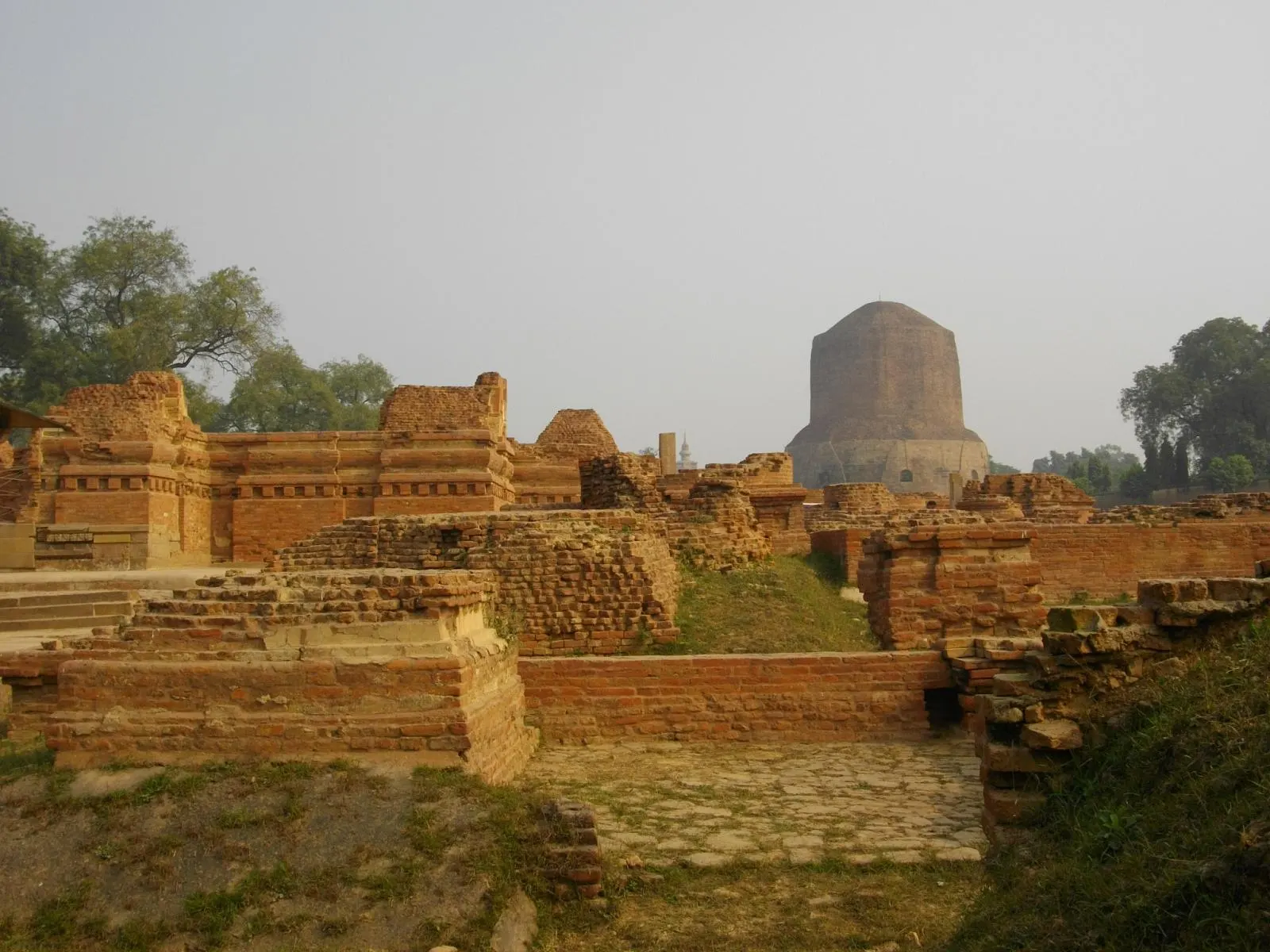
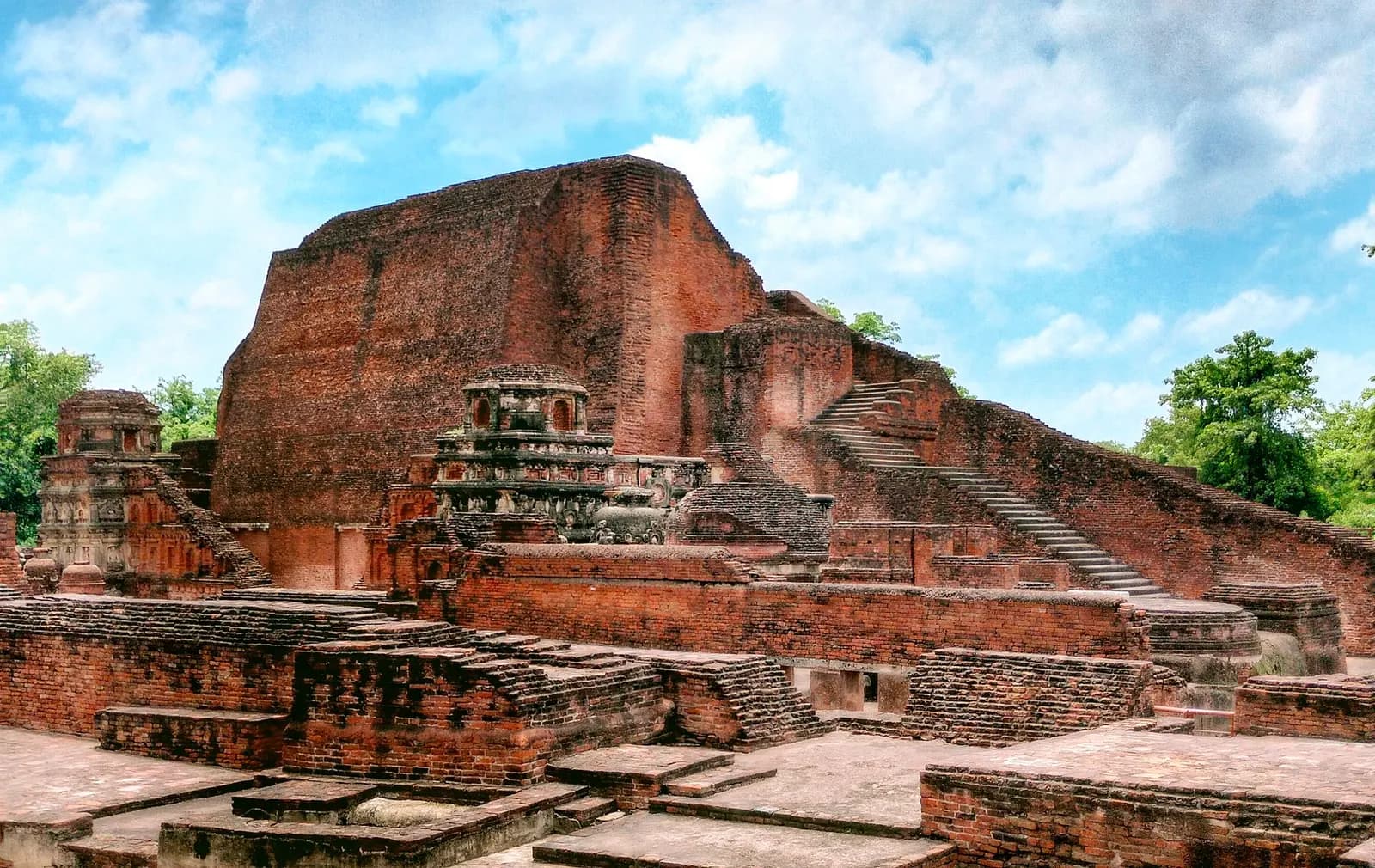
Ten kilometres northeast, Sarnath is where the Buddha gave his first sermon after his enlightenment at Bodh Gaya. The Dhamek Stupa, a 43 metre cylinder of brick and carved stone, marks the spot, surrounded by the excavated foundations of monasteries and the stump of an Ashokan pillar. The archaeological museum next door holds the Lion Capital of Ashoka, the original of the Indian state emblem, and is closed on Fridays.
Half a day covers it. Go in the afternoon, when the deer park is shaded and the Sri Lankan and Thai temples are open.
When to come, and how to arrive
November to February is the best window, with mornings around ten degrees and afternoons in the low twenties, though late December and January bring fog. March is pleasant. April to June is brutal, past 44 degrees. During the monsoon, from July to September, the river rises up over the lower steps, boats are restricted and the aarti moves to higher ground.
Two dates are worth planning around: Dev Deepawali on the November full moon, when every ghat is lined with lamps, and Mahashivratri in February or March. Lal Bahadur Shastri airport at Babatpur is 26 km from the ghats, and fast trains from Delhi take about eight hours.
FAQs
How many days do I need in Varanasi?
Two nights, three if you can. That gives you two sunrises on the river, one full day walking the ghats and lanes, and an afternoon at Sarnath. One night means choosing between the dawn boat and the evening aarti, and you should not have to.
Is it safe to take a boat, and should I bathe in the river?
The rowboats are safe in normal conditions and life jackets are usually available; boating is restricted when the river is high in monsoon. As for bathing, water quality varies a great deal along the ghats. Most visitors sprinkle water rather than immerse, and that is what we would suggest.
What should I wear?
Cover shoulders and knees. Shoes come off at temples, so wear something you can slip out of, and expect the steps to be wet and slippery early in the morning.
Can I combine Varanasi with Bodh Gaya?
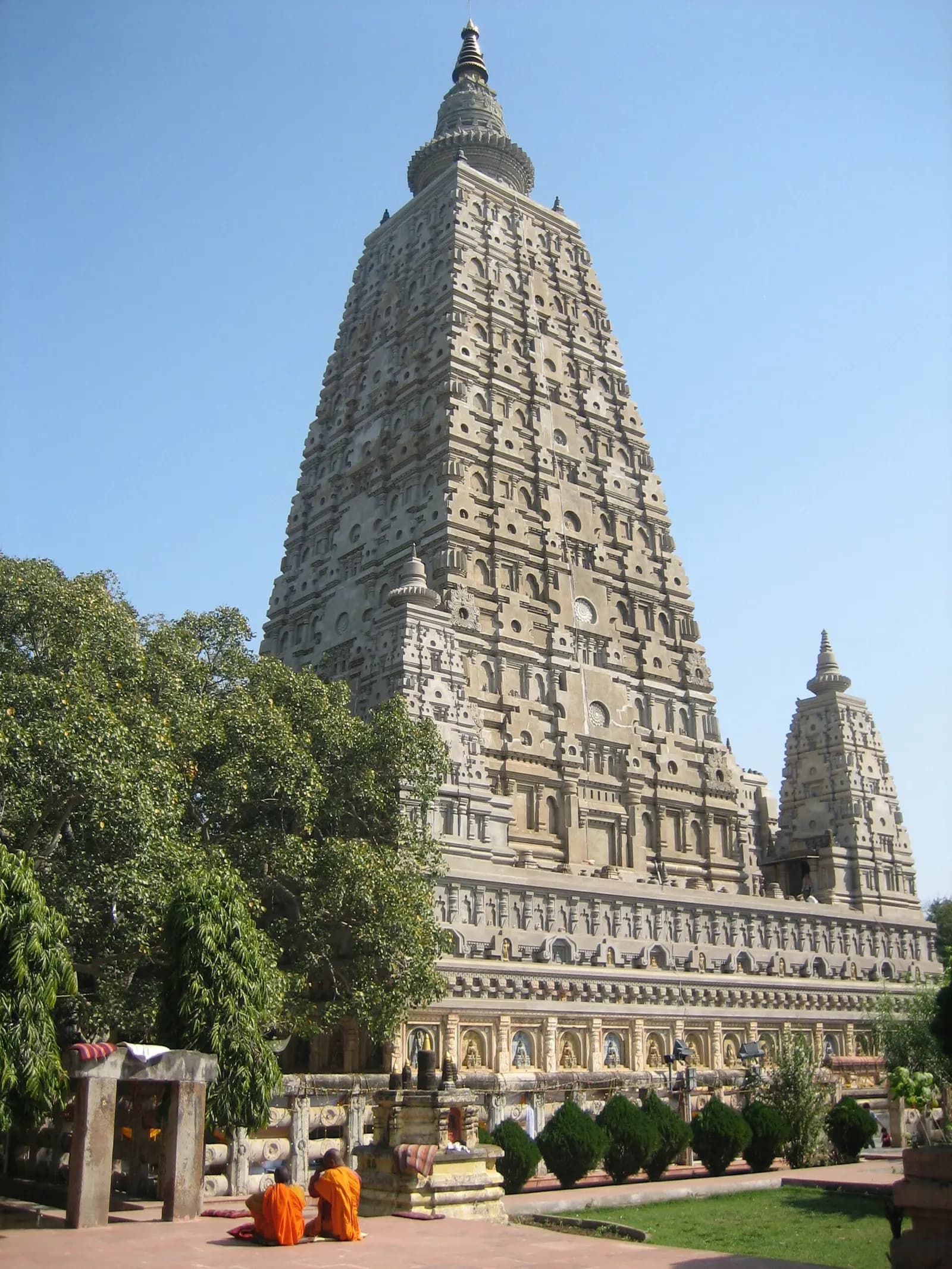
Yes, and it makes a coherent trip. Bodh Gaya is about 250 km away, five to six hours by road, and pairs naturally with Sarnath, Nalanda and Rajgir for anyone following the Buddhist circuit.
We plan Varanasi with local boatmen and guides we have worked with for years, which is the difference between watching the city and being let into it. Message DEVGAMAN on WhatsApp with your dates and we will build the day around you.
Places in this story
Plan this trip
 6 days · 5 nights
Themes:SpiritualCultureHeritage
Easy · Best Oct–Mar
Varanasi and the Ganga Spiritual Trail
Six days from the ghats of Kashi to the Sangam and the Saryu
Route: Varanasi → Sarnath → Prayagraj → Ayodhya
- Group
- 2–12 (private)
- From
- ₹49,000 pp
Tagsvaranasi · ganga · ghats · spiritual · uttar pradesh · sarnath · food