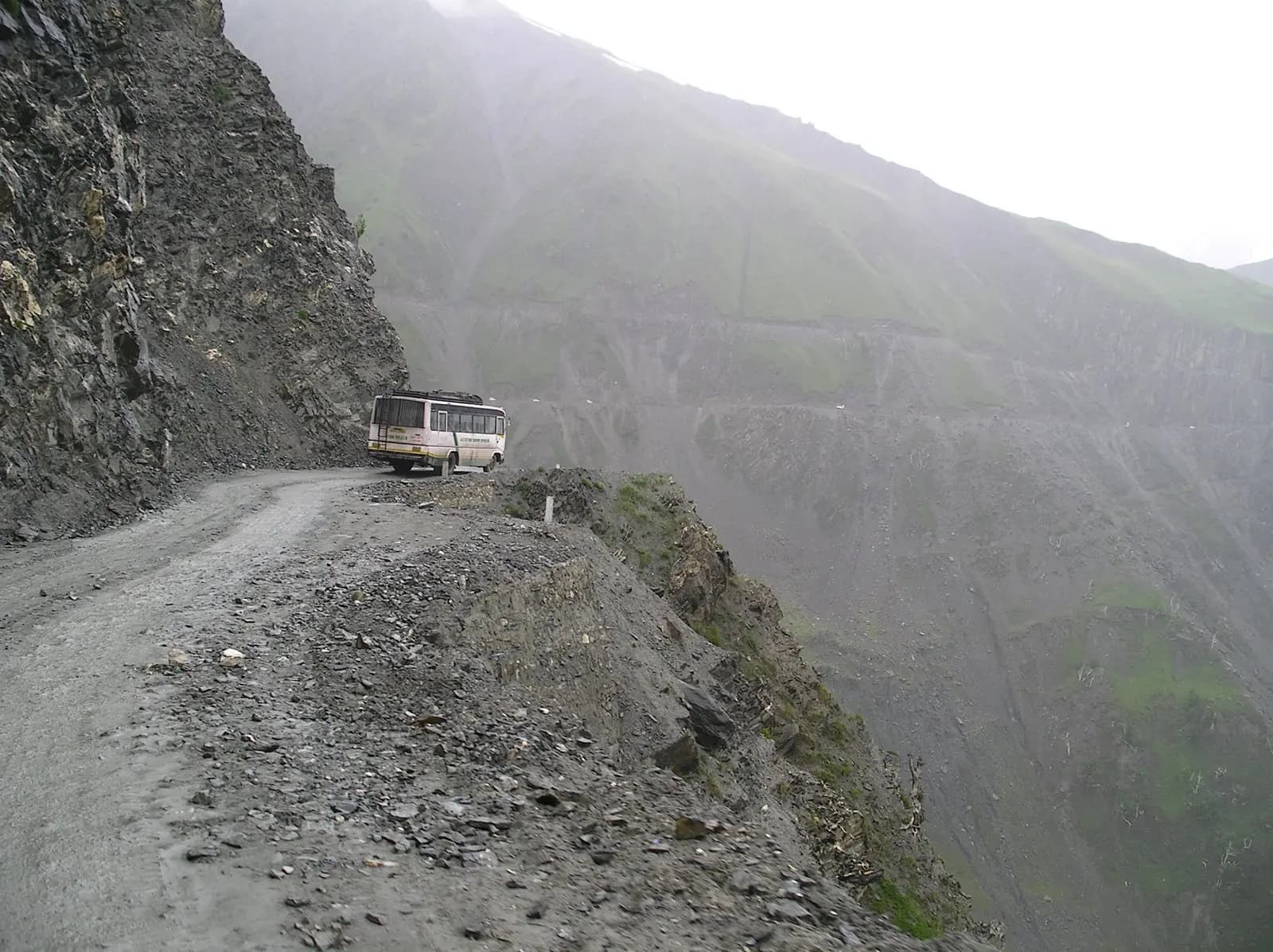
For centuries Sonamarg was the last halt for caravans leaving Kashmir for Ladakh, Gilgit and the Silk Road beyond the Zoji La. The pass, at about 3,530 m, is still the only road link between the valley and Leh, and until the Z-Morh tunnel opened in early 2025 the meadow itself was cut off by snow every winter. The name refers either to the gold of autumn grass or to the wealth that once passed this way.
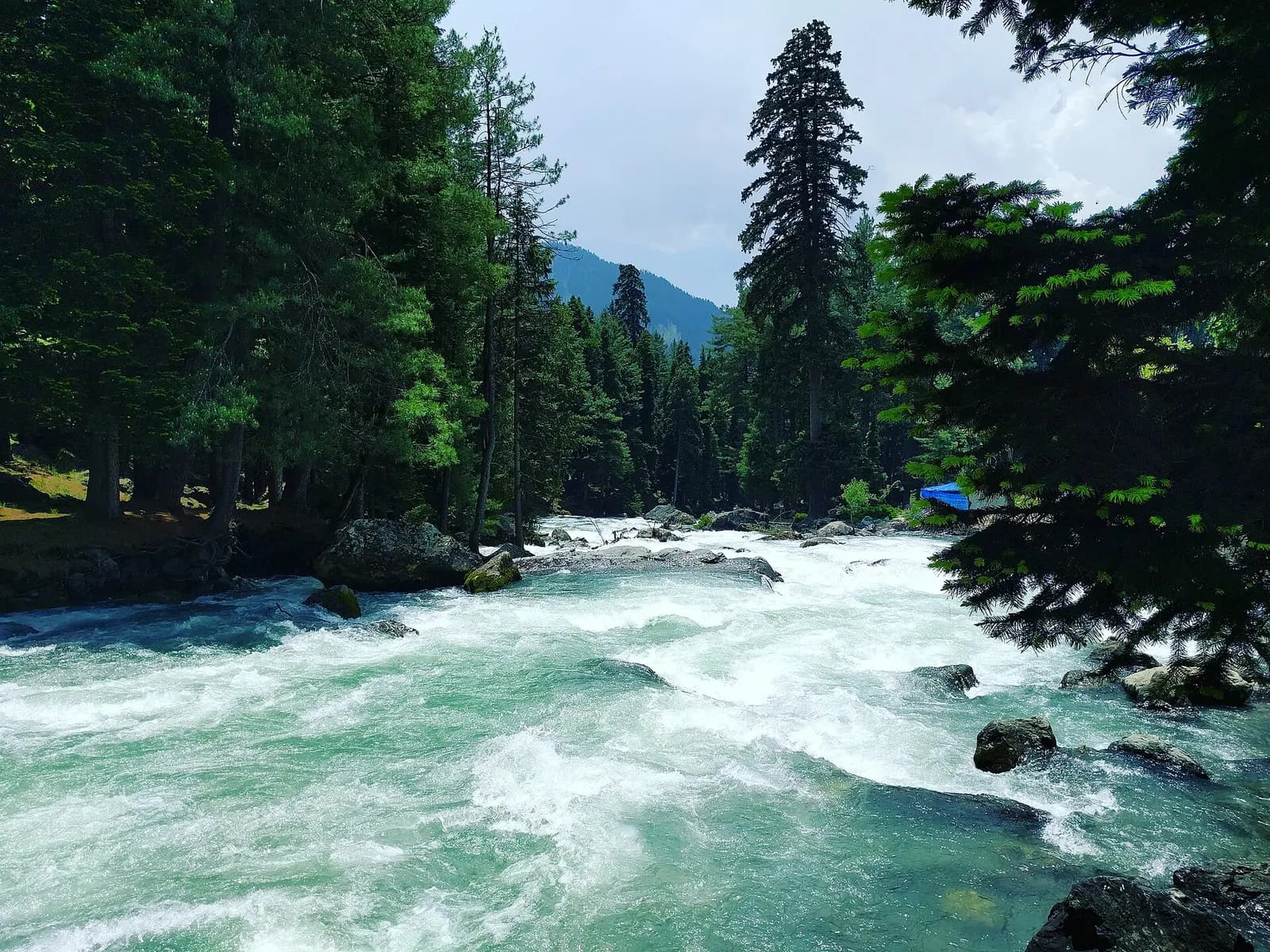
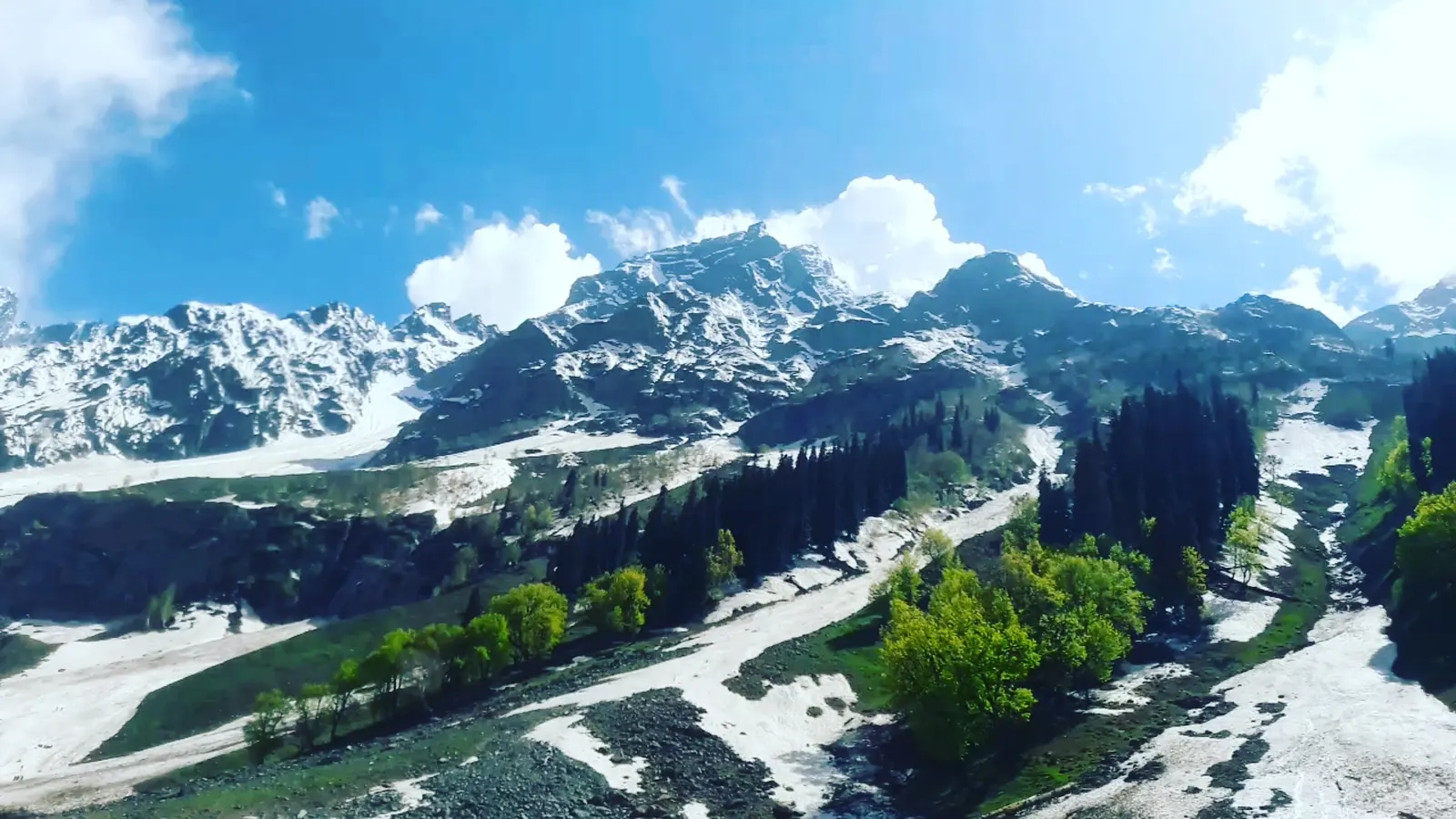
The Sindh river comes down fast and grey-green from the mountains, and the village of hotels and tents sits at 2,730 m beside it. The first outing is nearly always the Thajiwas glacier, three kilometres away by pony or on foot, where snow lies in the gullies through summer and children sledge in July. Beyond it the valley opens into the country of the Kashmir Great Lakes trek: Nichnai, the twin lakes of Vishansar and Krishansar, the pass at Gadsar, and finally Gangabal under the peak of Harmukh.
Baltal, 15 km east, is the northern base camp for the Amarnath cave, so in July and August the road fills with pilgrims and the army. Outside those weeks Sonamarg is quiet, cold at night and very bright by day, with rafting on the Sindh between May and September and trout in the side streams. Its role as the hinge between Kashmir and Ladakh gives the place a sense of departure that no other valley in the region has.
 Drink
Drink