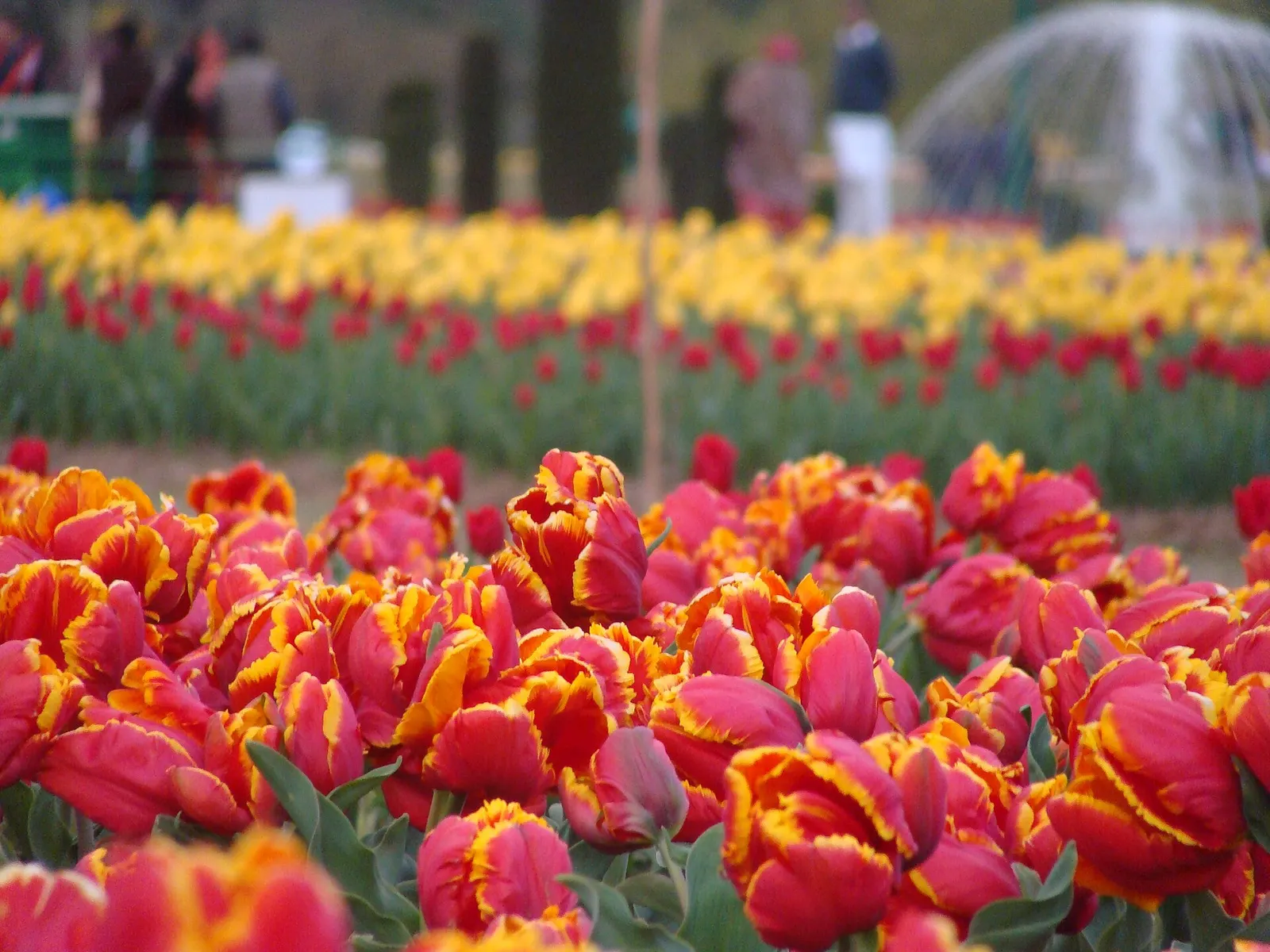
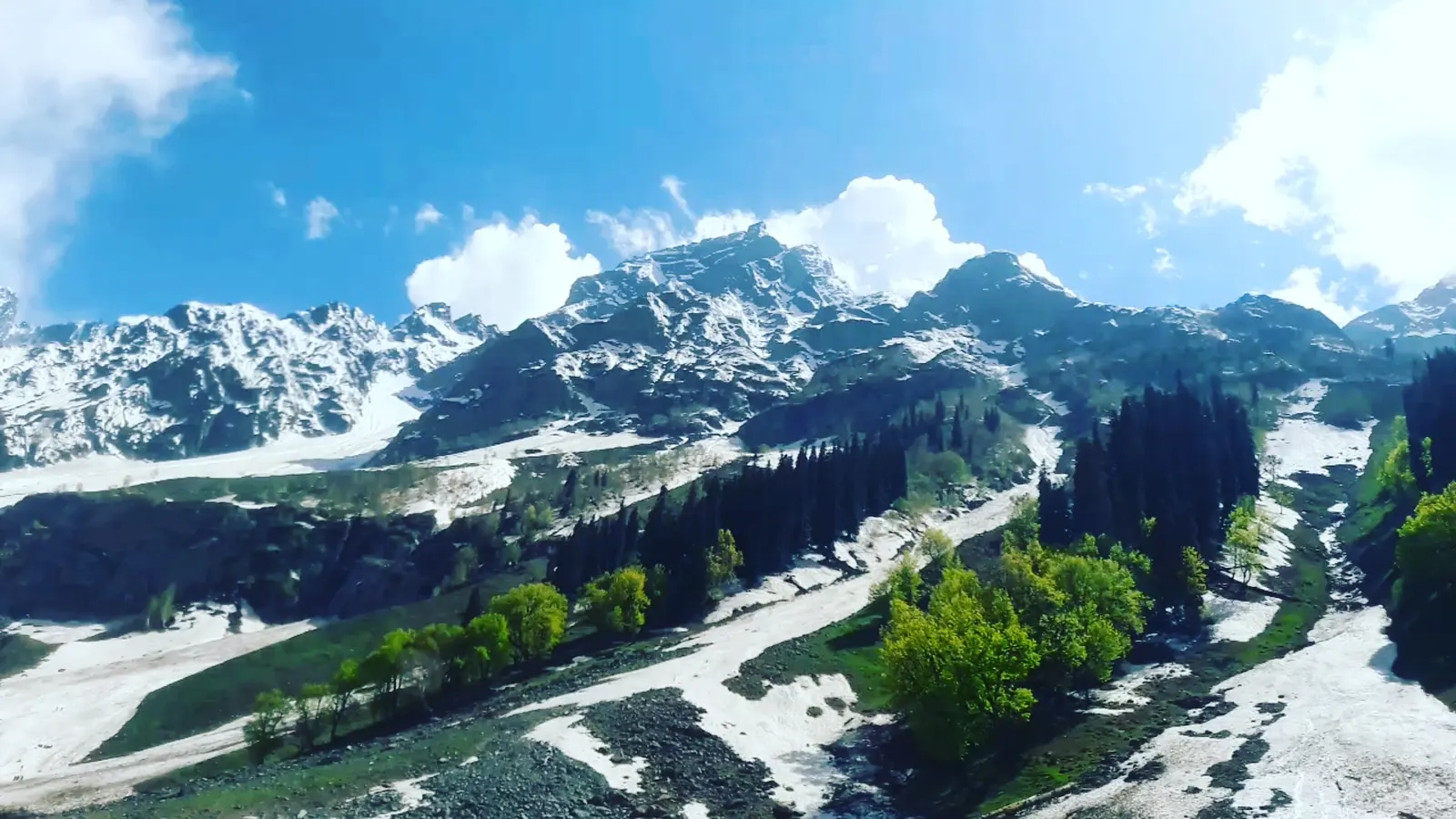
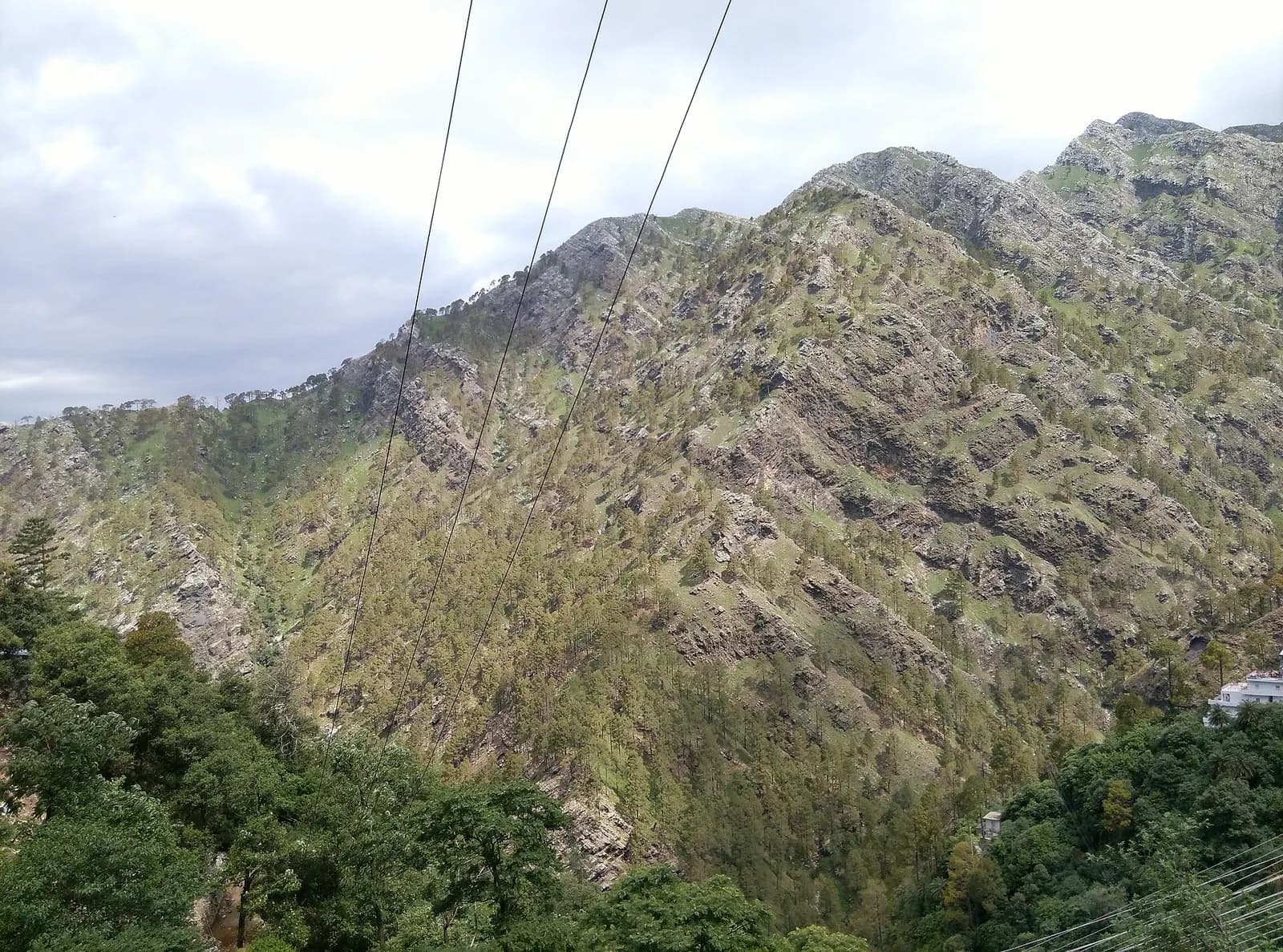
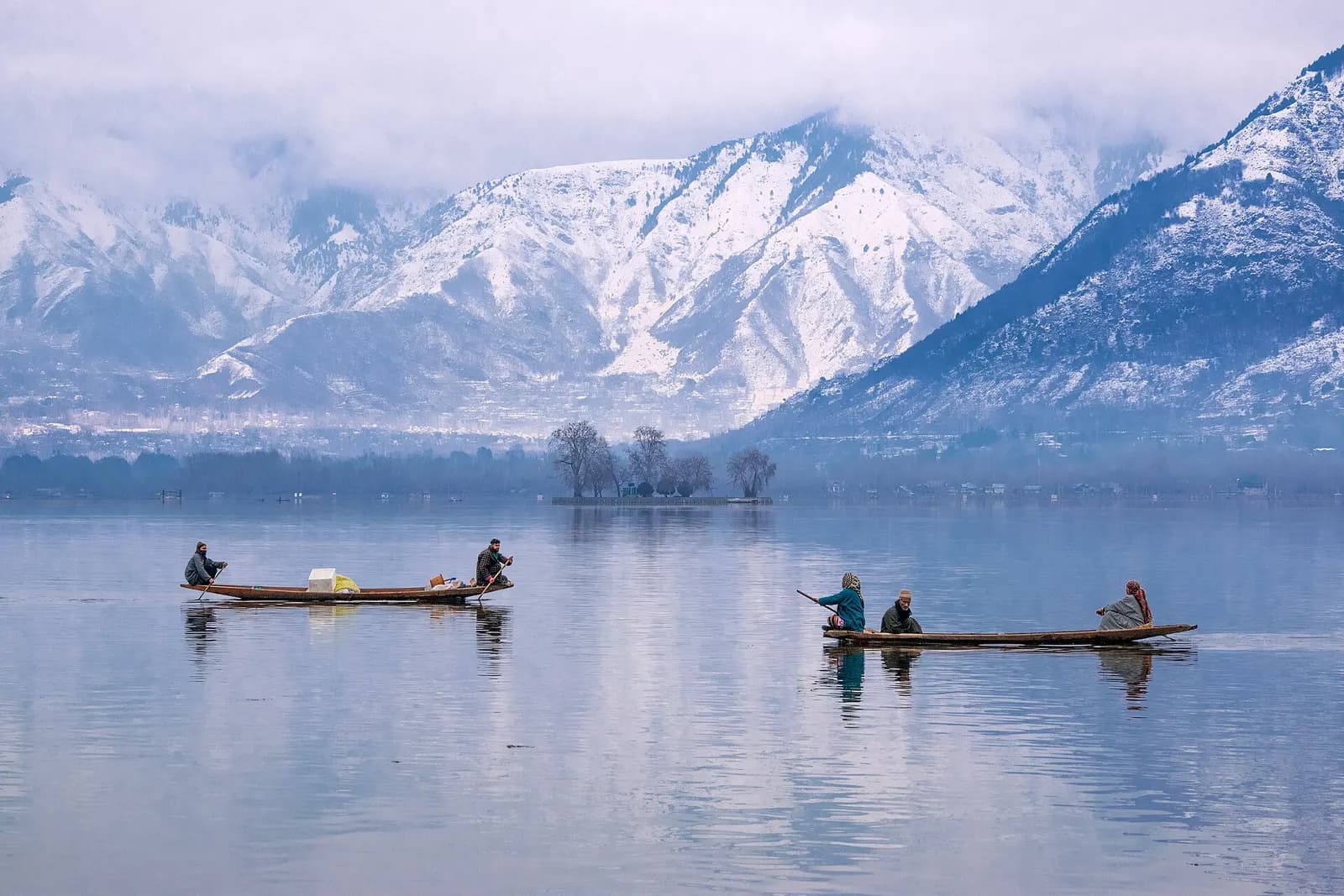
The meadow was Gaurimarg, named for Shiva's consort, until the sixteenth-century Chak ruler Yusuf Shah renamed it Gulmarg for the wildflowers that still cover it between June and September. Jahangir came here to collect blooms for his gardens; the British came to escape the plains, building St Mary's Church in 1902 and laying out a golf course that, at 2,650 m, remains one of the highest in the world. Gulmarg is a bowl, not a ridge, so the town sits in a ring of pine and fir with the Pir Panjal rising behind it.
The Gulmarg Gondola is the reason most people come. Its first stage rises through forest to Kongdoori at about 3,080 m; the second climbs above the treeline to Apharwat at roughly 3,980 m, where on a clear day you can see Nanga Parbat across the Line of Control. Between December and March the slopes below hold deep, dry powder and the town fills with skiers, sledge-wallahs and snowmen; Kongdoori has the beginner runs, Apharwat the serious descents.
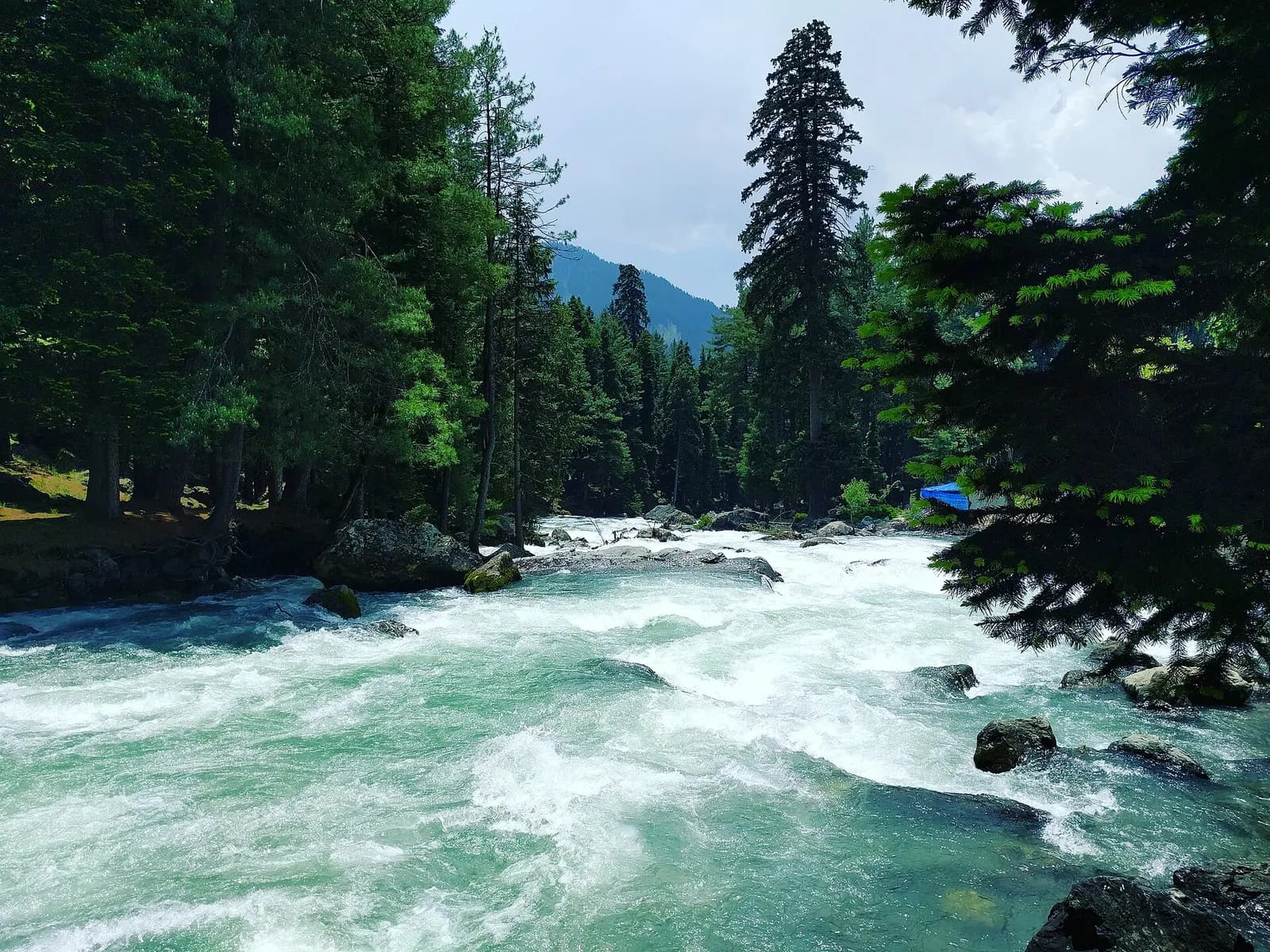
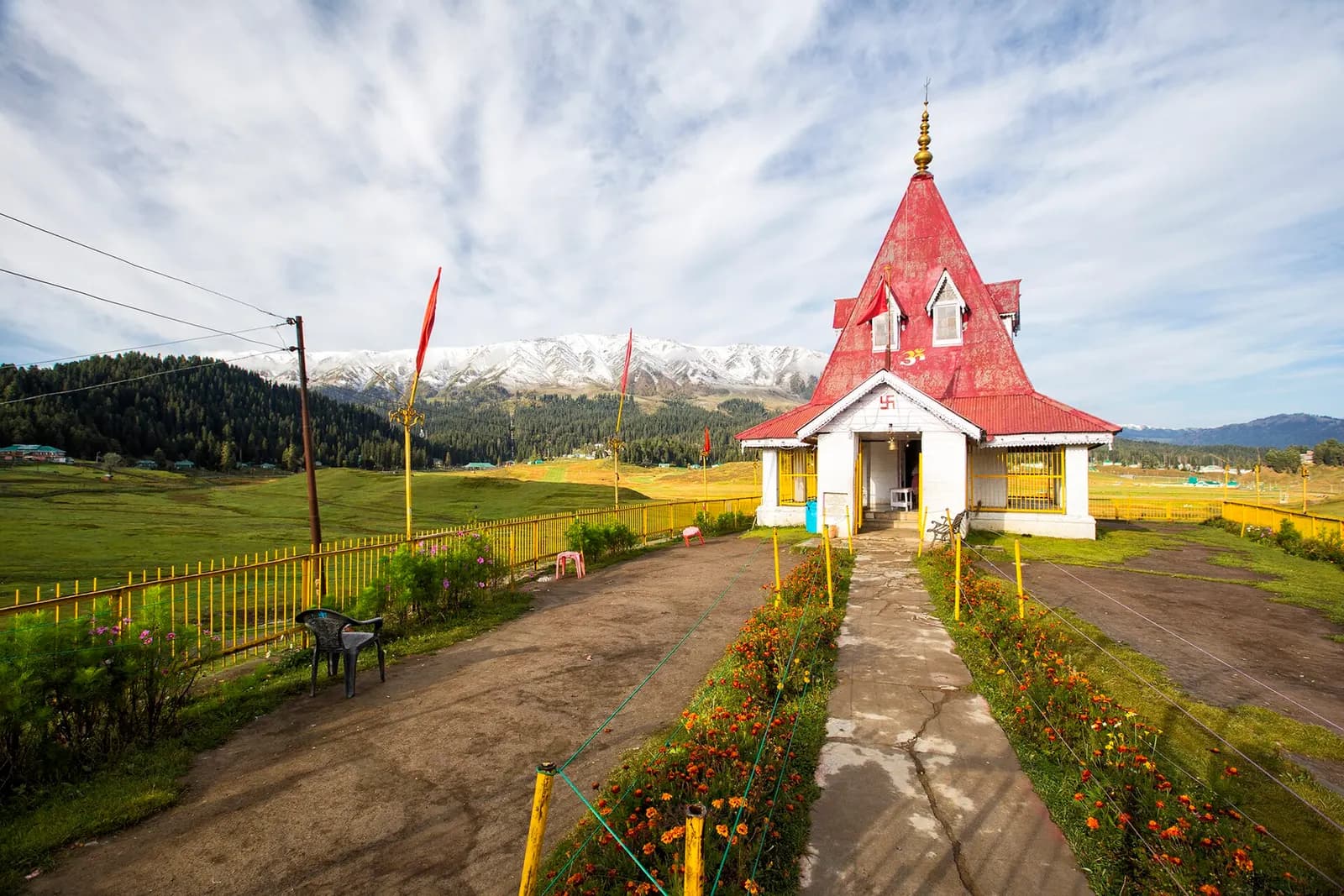
In summer the pattern changes: ponies carry families to Khilanmarg, walkers head for the frozen bowl of Alpather Lake, and Strawberry Valley and the Ningle Nallah stream make easy half-day outings. The Maharani Temple on a knoll above the meadow and the fifteenth-century shrine of Baba Reshi at Tangmarg add a little quiet to a very lively hill station.
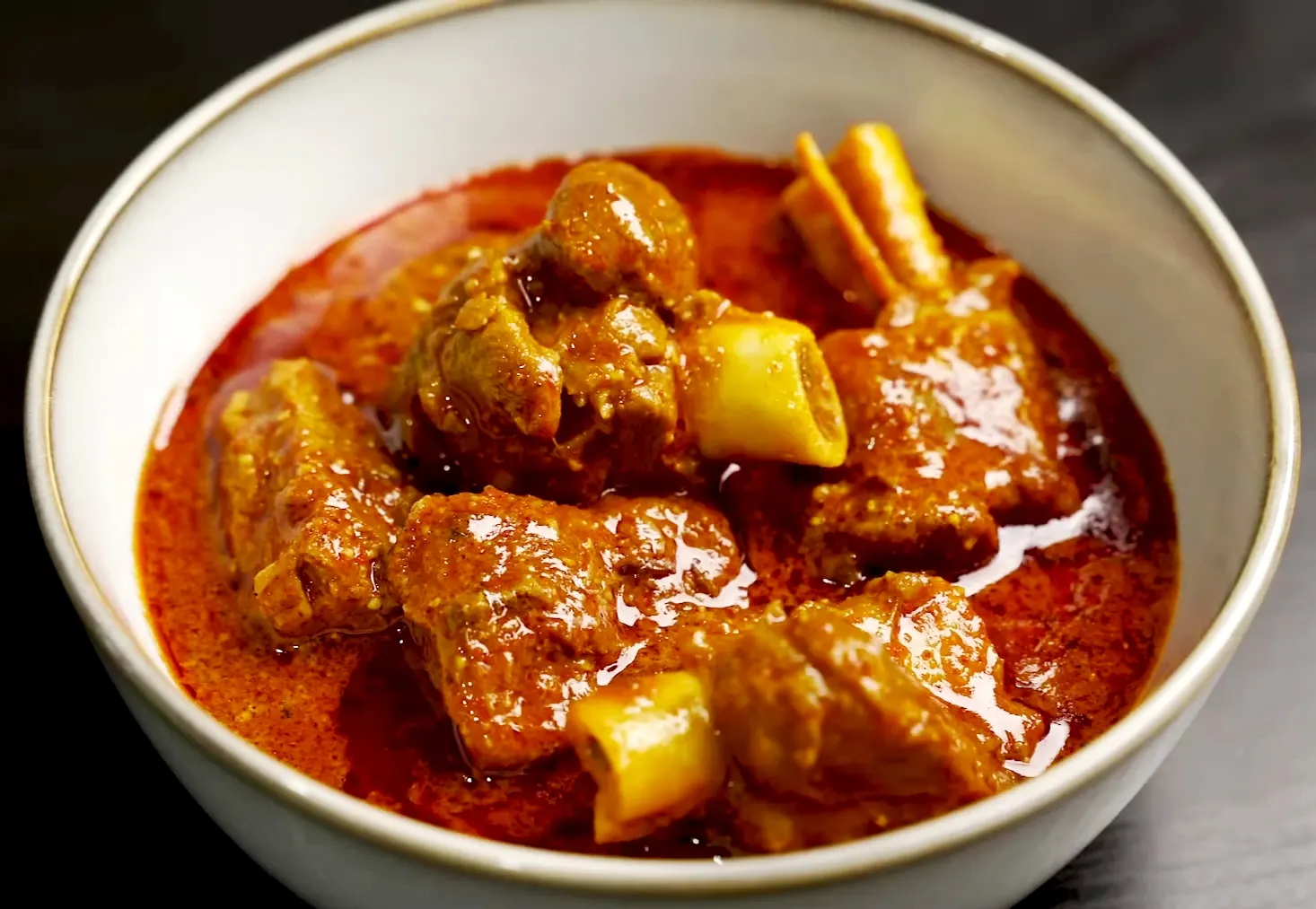 Non-veg