The name means village of shepherds, and Gujjar and Bakarwal herders still bring their flocks through Pahalgam every summer on the way to high pastures. The valley lies 95 km southeast of Srinagar, past the saffron fields of Pampore and the ruined sun temple of Martand, at the point where the east and west branches of the Lidder meet. The Mamleshwar temple on the far bank, a small stone Shiva shrine attributed to the twelfth century, is older than everything around it.
Pahalgam is above all a base. The road east climbs 16 km to Chandanwari, where the Amarnath Yatra begins its walk to the cave each July and August, passing through Betaab Valley, named after the 1983 film shot in its meadows. The road north follows the west Lidder 12 km to Aru, a hamlet of wooden houses that is the trailhead for the Kolahoi glacier and the Tarsar and Marsar lakes.
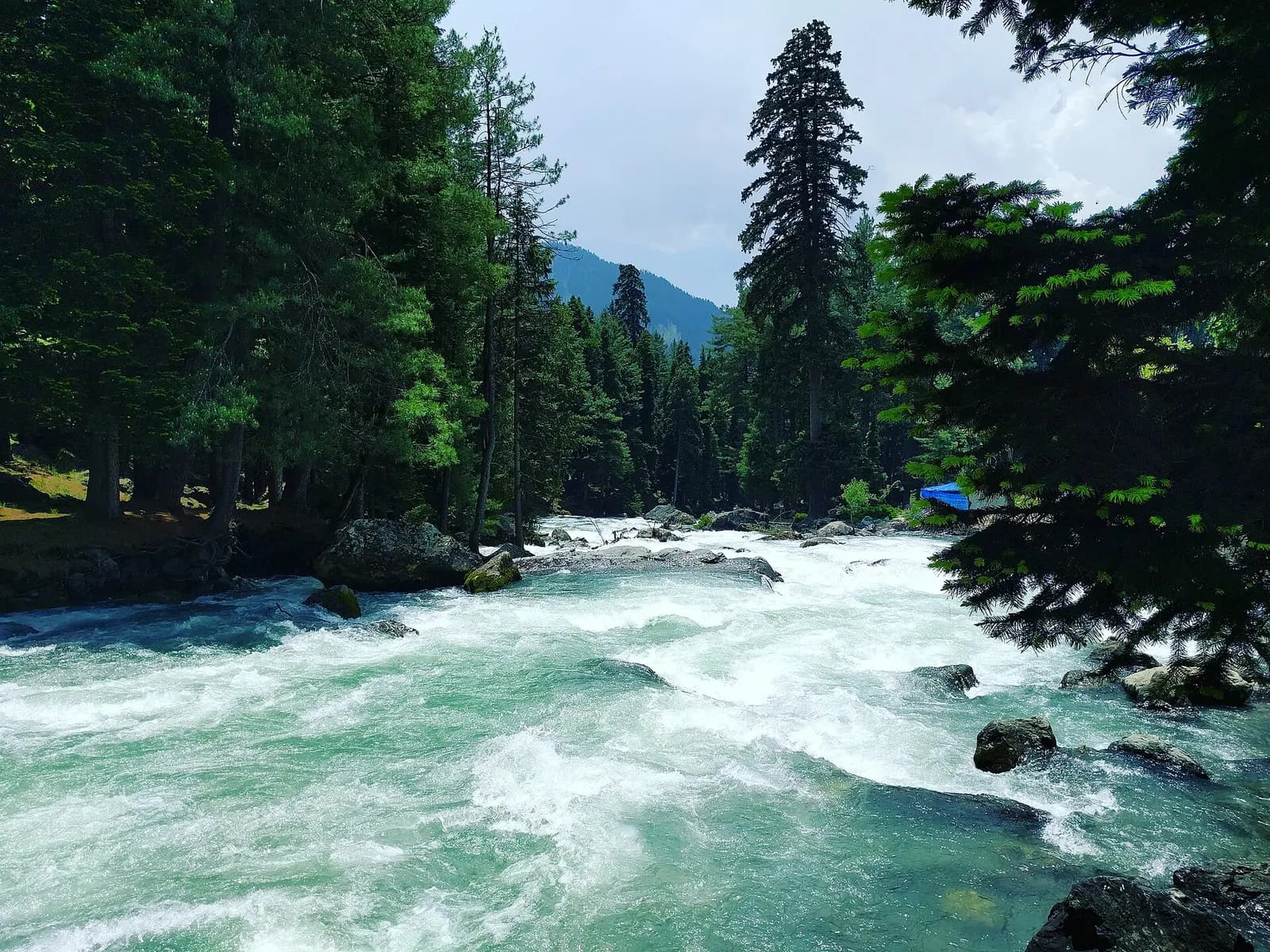
Baisaran, a bowl of grass above the town ringed by pines, is reached only on foot or by pony. A day here is mostly spent by water: fishing for brown trout on a permit from the fisheries office, rafting a short stretch of the Lidder, or sitting on a rock outside the golf course watching the river run milky green. Pahalgam matters as the gentlest way into the high Himalaya of Kashmir, and as the gate to one of India's oldest pilgrimages.
 Non-veg