DEVGAMAN

North India · Valley

Tirthan Valley

Trout streams, kath-kuni towers and the Great Himalayan National Park

31.63° N · 77.43° E

Best months to be here

  • January
  • February
  • March — a best month
  • April — a best month
  • May — a best month
  • June — a best month
  • July
  • August
  • September — a best month
  • October — a best month
  • November — a best month
  • December

Best: Mar–Jun

At a glance

Region
North India
Kind of place
Valley · Timeless
Ideal stay
3 days
Altitude
1,600 m
Coordinates
31.63° N, 77.43° E

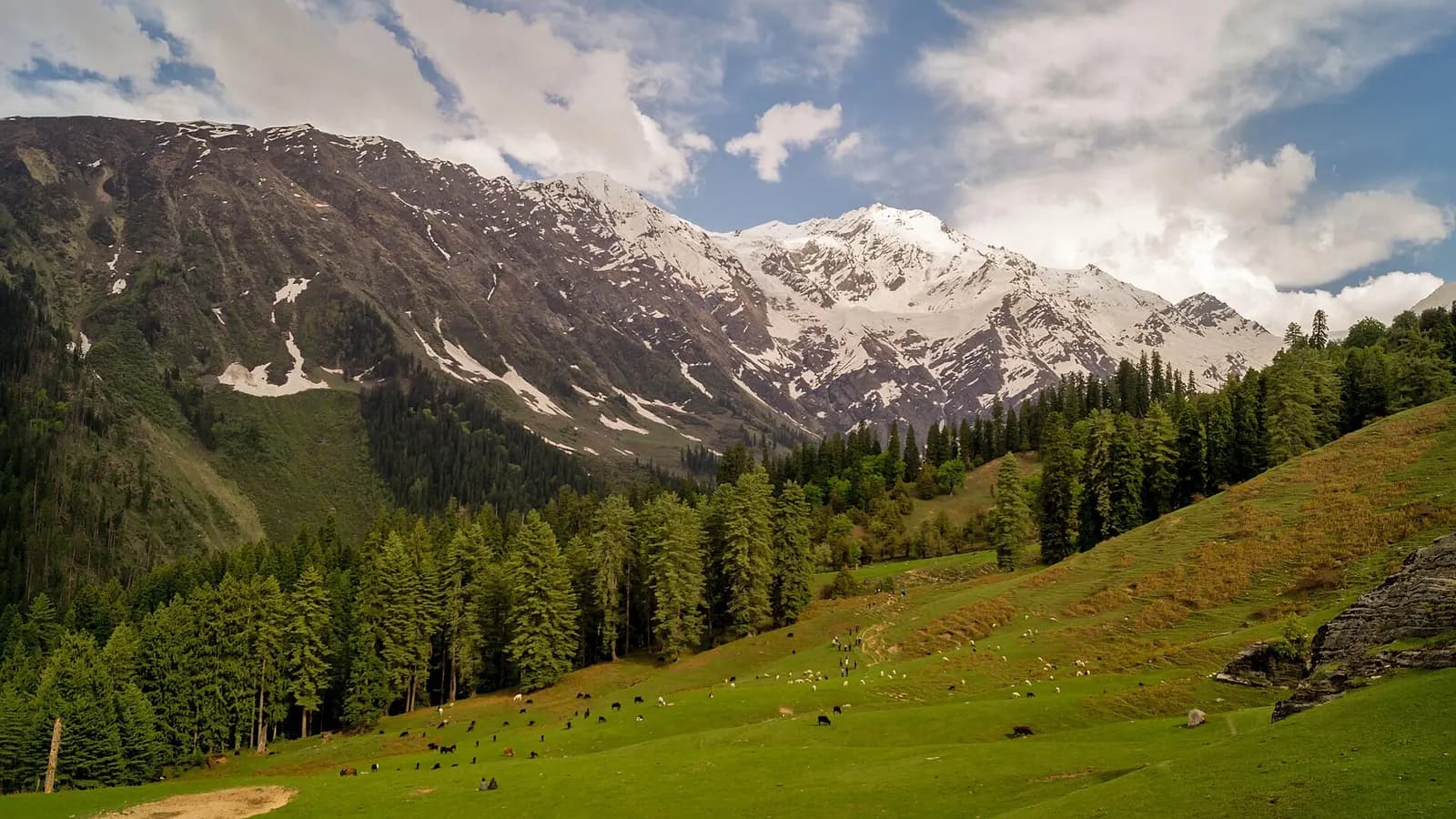
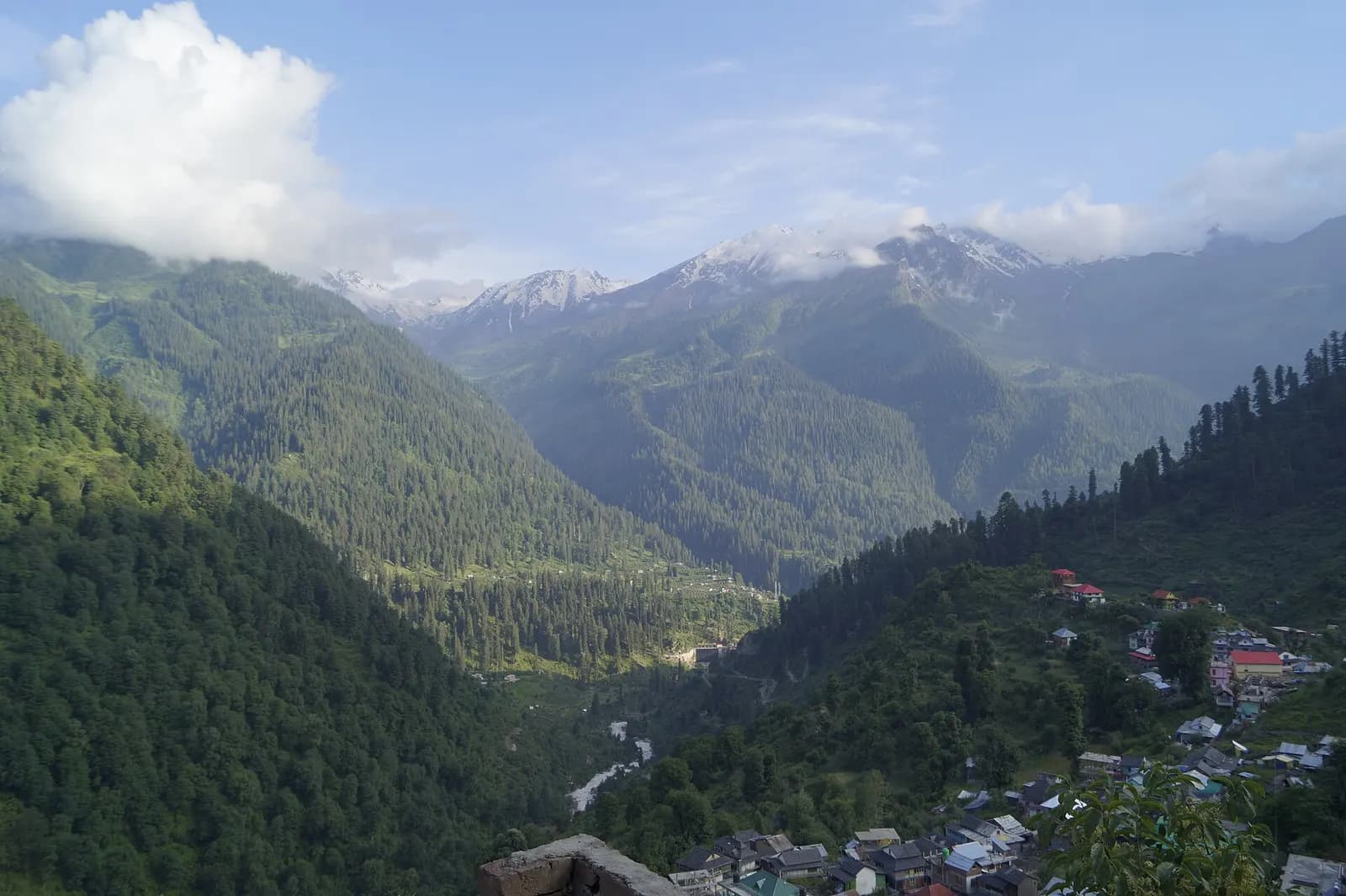
Turn off the Manali highway at Aut and the road climbs beside a river the colour of bottle glass. This is the Tirthan, born in the glaciers of the Great Himalayan National Park and running through a valley that tourism forgot until a decade ago. The park itself, 1,171 sq km of deodar, oak and alpine meadow inscribed by UNESCO in 2014, begins at Gushaini; day walks go to the Rolla campsite along the river, longer routes climb to Shilt and the Tirath source.

Blue sheep, Himalayan tahr and, rarely, the snow leopard live inside, and the western tragopan, the state bird, calls in April. Jibhi, ten kilometres up a side valley, is where most visitors stay, in slate-roofed timber homestays with a waterfall behind. From Jibhi the road climbs to Jalori Pass at 3,120 m; a five-kilometre forest walk from the pass reaches Serolsar Lake and the shrine of Budhi Nagin, and a shorter one the meadow of Raghupur Fort.

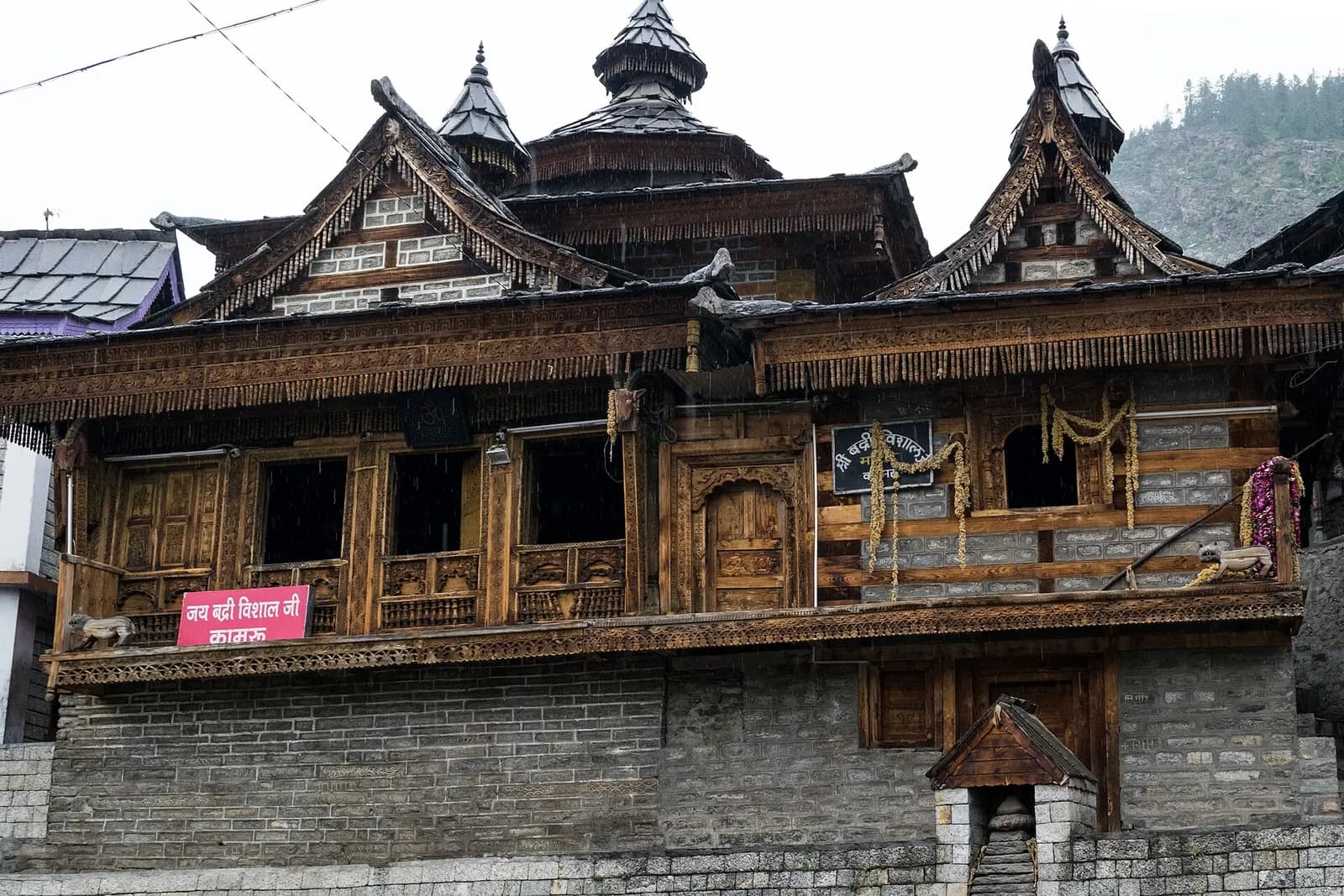
Near Banjar stands Chehni Kothi, a 40-m tower of stone and deodar built in the kath-kuni style without mortar, a fortress-shrine still guarded by a village. The valley's other pleasure is trout: brown and rainbow, fished with a permit from March to October and served pan-fried in every guesthouse. Days here are river sound, woodsmoke, apples drying on roofs, and the kind of quiet that resets a city nervous system in about two days.
What not to miss in Tirthan Valley

  1. Great Himalayan National Park entry at Gushaini
  2. Jibhi waterfall and its wooden homestays
  3. Jalori Pass and Serolsar Lake
  4. Chehni Kothi tower near Banjar
  5. Shringa Rishi temple at Bagi

Best Mar–Jun

Best time to visit Tirthan Valley

March to June and September to November; snow closes Jalori Pass from December to February, when Jibhi is silent and white.

Give Tirthan Valley 3 days and it repays the time; with fewer you are choosing between Great Himalayan National Park entry at Gushaini and Jibhi waterfall and its wooden homestays. We build the hours around the weather — early starts when it is hot, long afternoons when it is not.

  • Ideal stay — 3 days
  • Season — Mar–Jun
Plan a trip here

On the ground

Things to do in Tirthan Valley

The days we would actually plan for you, in the order that suits the light.

  • Day trek to Rolla inside the national park with a local guide
  • Fly-fishing for trout on the Tirthan (permit from the fisheries office)
  • Jalori–Serolsar Lake forest walk
  • Kath-kuni village walk through Bathad and Bahu
  • Cook a Himachali dham with your homestay family

At the table

What to eat in Tirthan Valley

  • Pan-fried Tirthan trout
  • Siddu with ghee
  • Chha gosht
  • Lingri (fern) pickle
  • Fresh apple juice from the orchards

Getting there

How to reach Tirthan Valley

Bhuntar (Kullu–Manali) airport 50 km; turn off at Aut on the Manali highway, Gushaini is 33 km; Chandigarh railhead 240 km; Delhi 500 km (overnight bus to Aut).

Airport pickups, station transfers and the driver for the days here are all part of what we arrange — including the hour you should leave, which is usually earlier than you think.

Travel tips from our trips

  • Park entry permits and guides are arranged at the Sai Ropa office; overnight trekking inside requires a guide and porter
  • Trout fishing needs a daily permit from the Himachal fisheries department; no fishing November–February during spawning
  • Mobile coverage is patchy beyond Banjar; Jio works best, and most homestays have Wi-Fi
  • Roads from Aut are narrow and single-lane in places; hire a small car or a local taxi rather than a large SUV
  • Nights are cold even in May; homestays provide quilts but carry a fleece for evenings by the river

Next door

Near Tirthan Valley

Places that join Tirthan Valley without a long drive — the way a real week is built.

Parvati river rushing through the pine-forested Parvati Valley near KasolValley
Themes:AdventureOffbeatNatureFood

Himachal Pradesh

Kasol & Parvati Valley

Hot springs, pine forests and a river that never sleeps

Ideal stay
3 days
Best time
March to June and mid-September to November; the July–August monsoon brings landslides and a dangerously swollen river
Manali town and the Beas valley below snow-covered peaks of the Pir PanjalHill station
Themes:AdventureNatureFamilyRomance

Himachal Pradesh

Manali

Beas river, deodar temples and the road over the passes

Ideal stay
4 days
Best time
March to June for orchards and open passes; October to November for gold larches and clear skies; December to February for snow and skiing at Solang
Christ Church and the Ridge in Shimla with snow-capped Himalayas behindHill station
Themes:HeritageFamilyCultureNature

Himachal Pradesh

Shimla

The Raj's summer capital, a toy train and a cedar-scented Ridge

Ideal stay
3 days
Best time
March to June for clear skies and rhododendron; late September to November for crisp air; December to February for snow on the Ridge
Kinner Kailash range rising above the Sutlej gorge and apple orchards of KinnaurValley
Themes:NatureAdventureOffbeatPhotography

Himachal Pradesh

Kinnaur

Apple villages and Kinner Kailash on the old Hindustan–Tibet Road

Ideal stay
4 days
Best time
April to June and September to October; October is apple harvest and the clearest month; heavy snow from December to March

Before you ask

Questions we are asked about Tirthan Valley

When is the best time to visit Tirthan Valley?
March to June and September to November; snow closes Jalori Pass from December to February, when Jibhi is silent and white. On the calendar that is Mar–Jun. We build Tirthan Valley into a journey inside that window wherever we can; when your dates are fixed outside it, we re-plan the hours of the day around the weather rather than talk you out of the trip.
How many days do you need in Tirthan Valley?
We plan 3 days in Tirthan Valley. That is enough for Great Himalayan National Park entry at Gushaini, Jibhi waterfall and its wooden homestays and Jalori Pass and Serolsar Lake, at a pace that still leaves room for a long lunch. Add a day if you are continuing to Kasol & Parvati Valley and Manali.
How do you reach Tirthan Valley?
Bhuntar (Kullu–Manali) airport 50 km; turn off at Aut on the Manali highway, Gushaini is 33 km; Chandigarh railhead 240 km; Delhi 500 km (overnight bus to Aut). We arrange the transfer and the driver as part of the journey, so you are met on arrival instead of negotiating a taxi at the gate, and the timings are set around when Tirthan Valley is at its best rather than around the clock.
What is Tirthan Valley famous for?
Tirthan Valley is a valley in Himachal Pradesh, North India, best known for Great Himalayan National Park entry at Gushaini, Jibhi waterfall and its wooden homestays and Jalori Pass and Serolsar Lake. Travellers come for nature, offbeat, adventure and wellness, and most give it 3 days.
Is Tirthan Valley good for families?
Tirthan Valley is planned more often for nature, offbeat, adventure and wellness than as a family stop, but it works well at a slower pace. 3 days, an early start and one unhurried afternoon is the shape we would suggest, inside the Mar–Jun window. Tell us who is travelling and we will pace it around them.

Photograph of Tirthan Valley: Suresh Karia · CC BY-SA 4.0

All destinations

Tirthan Valley, planned by hand

Shall we begin?

चलिए, शुरू करते हैं

Tell us how many days you have. We will build Tirthan Valley into a journey that suits them.