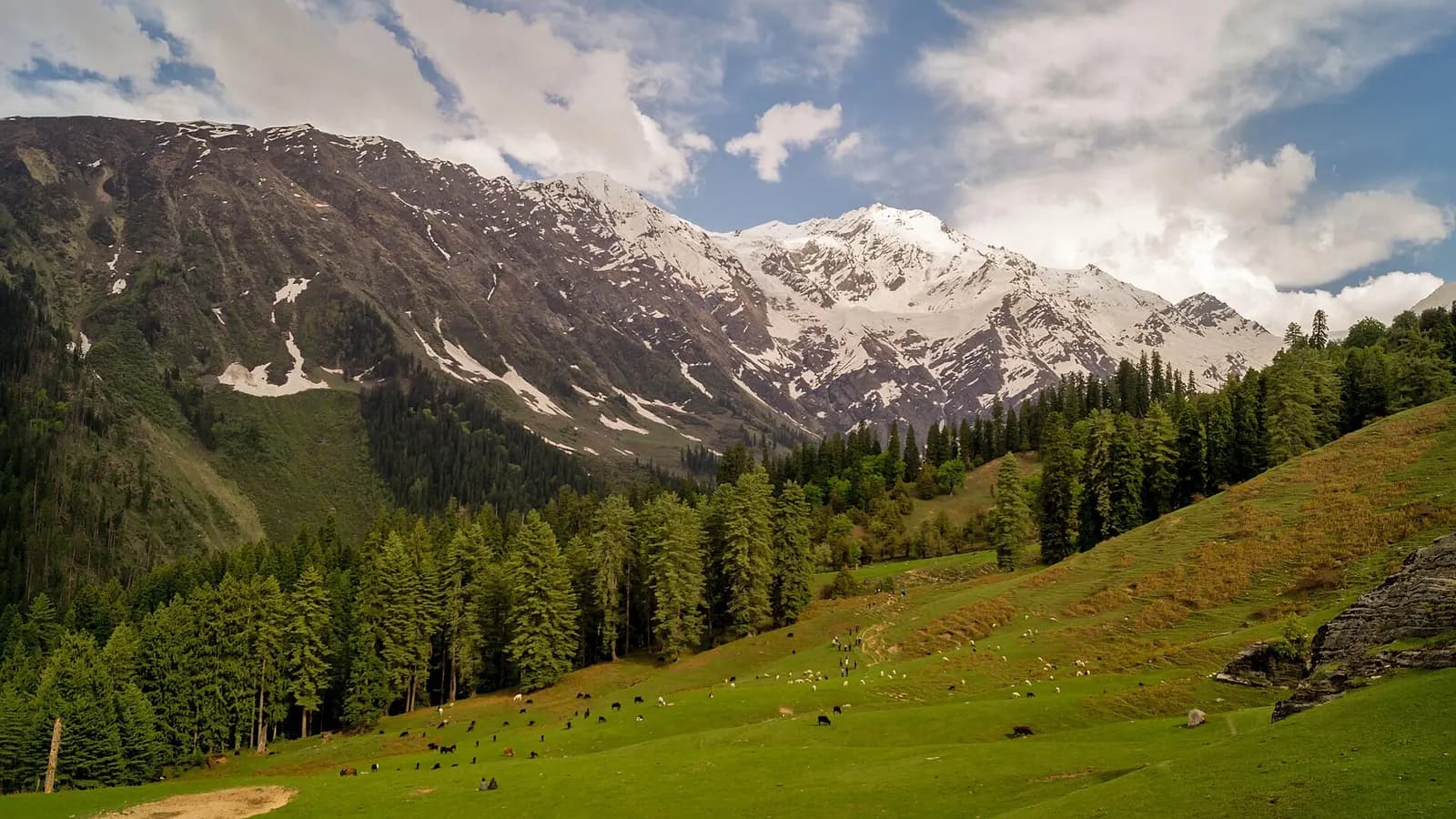
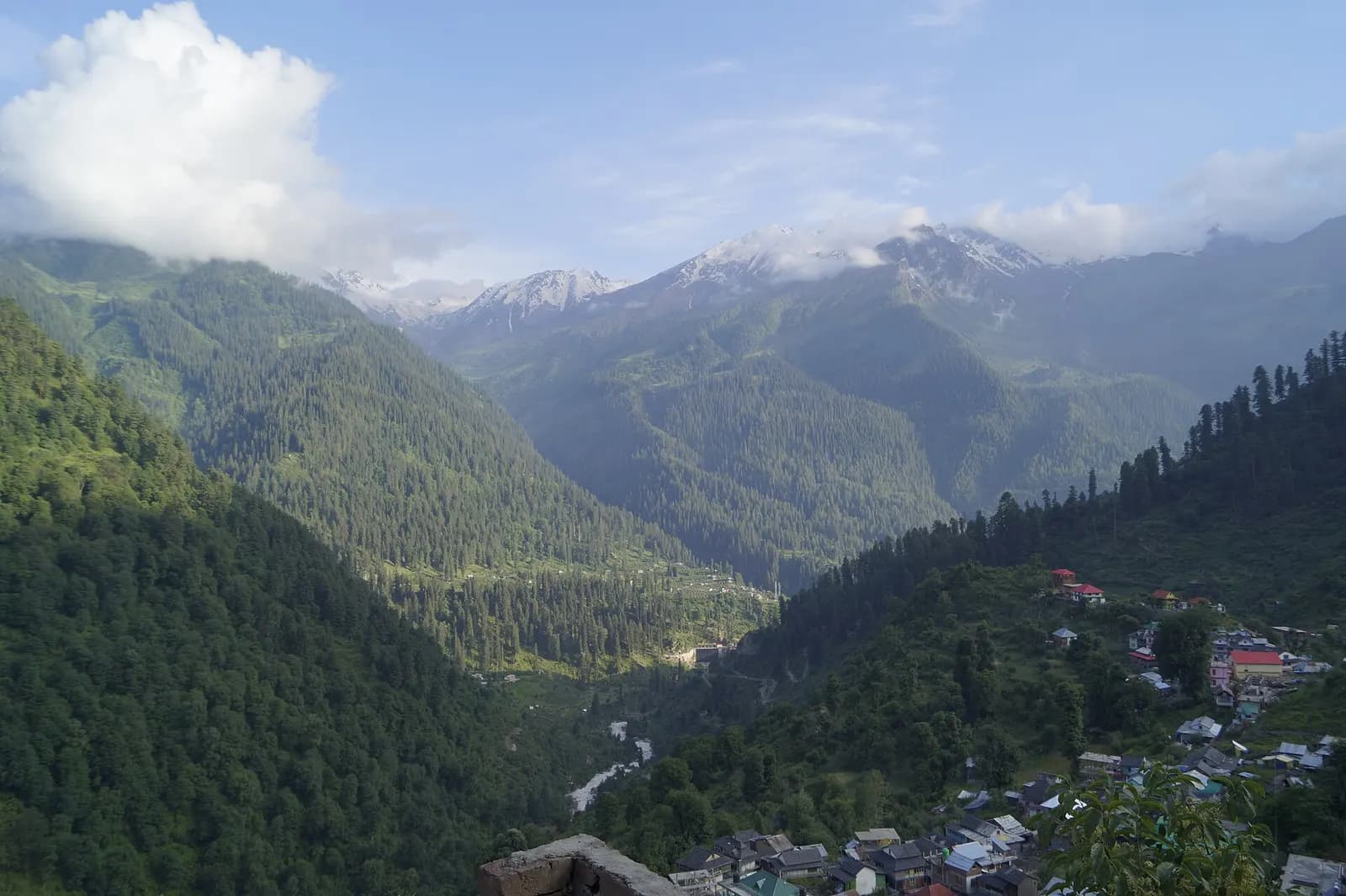
The Parvati valley runs east from Bhuntar for sixty kilometres, hemmed by pine slopes so steep that villages sit on ledges. Kasol at 1,580 m is its social centre, a strip of guesthouses, German bakeries and Israeli cafes along the river where the smell of shakshuka and woodsmoke mixes with the sound of white water. Four kilometres upstream is Manikaran, where geysers heat the rock to boiling; Gurudwara Manikaran Sahib cooks its langar rice in cloth bags lowered into the spring, and the Shiva temple beside it steams all winter.
Beyond Barshaini the road ends and the valley becomes walking country. Tosh, Kalga and Pulga are wooden hamlets above the confluence with the Tosh nala, and the nine-kilometre climb to Kheerganga at 2,960 m ends at a hot pool in a meadow where you soak beneath snow peaks. Chalal, half an hour across the river, and Grahan, a three-hour climb through forest, are the quiet alternatives.
Malana, high on a side valley, is a village that worships Jamlu Devta, speaks its own language, Kanashi, and forbids outsiders from touching its houses and temple walls; it is a place to visit respectfully or not at all. Serious trekkers use the valley for the Pin Parvati Pass at 5,319 m into Spiti. A day here is slow: river-side breakfast, a bridge crossing, a hot spring, a night by a bonfire while the Parvati runs on.
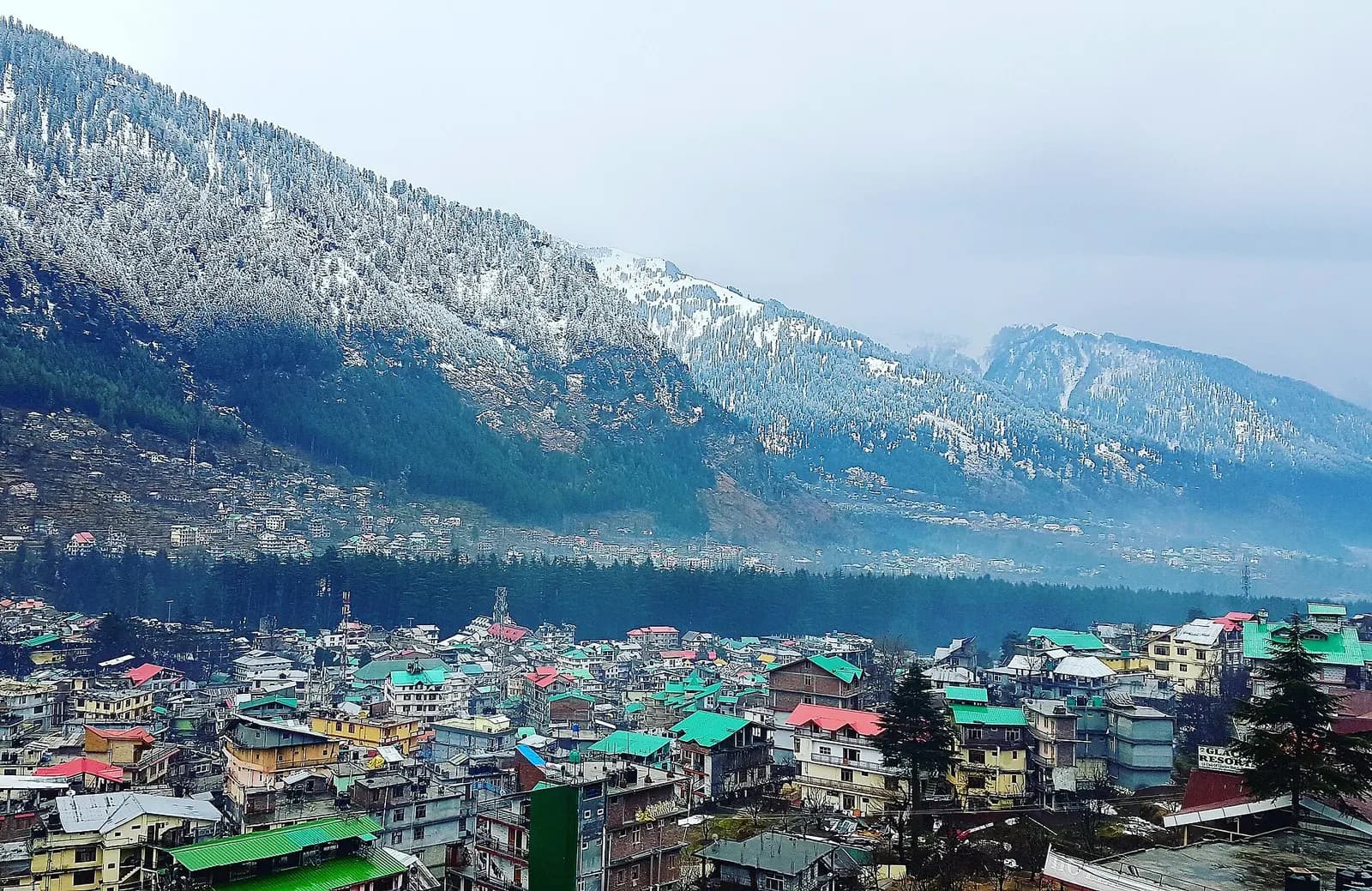 Hill station