The first surprise about the Kerala backwaters is how quiet they are. Once your boat leaves the Alappuzha jetty and turns off the main channel into a canal barely wider than its own hull, the engine drops to a murmur and other sounds arrive: a school bell in Kainakary, coir fibre being beaten on a doorstep, a duck herder whistling two thousand birds across the water like a slow grey tide. This is a practical guide to arranging that well.
What a kettuvallam actually is
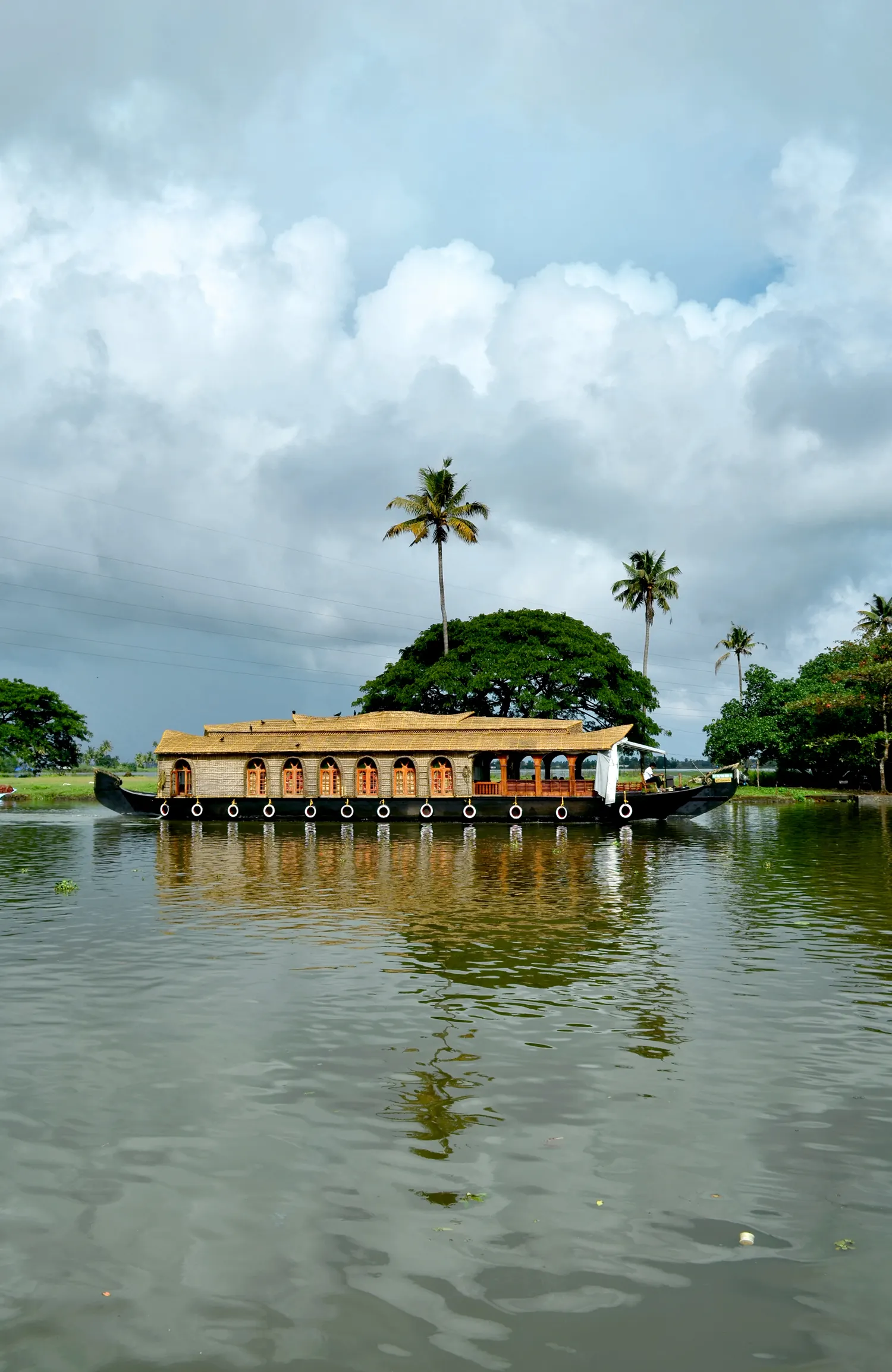
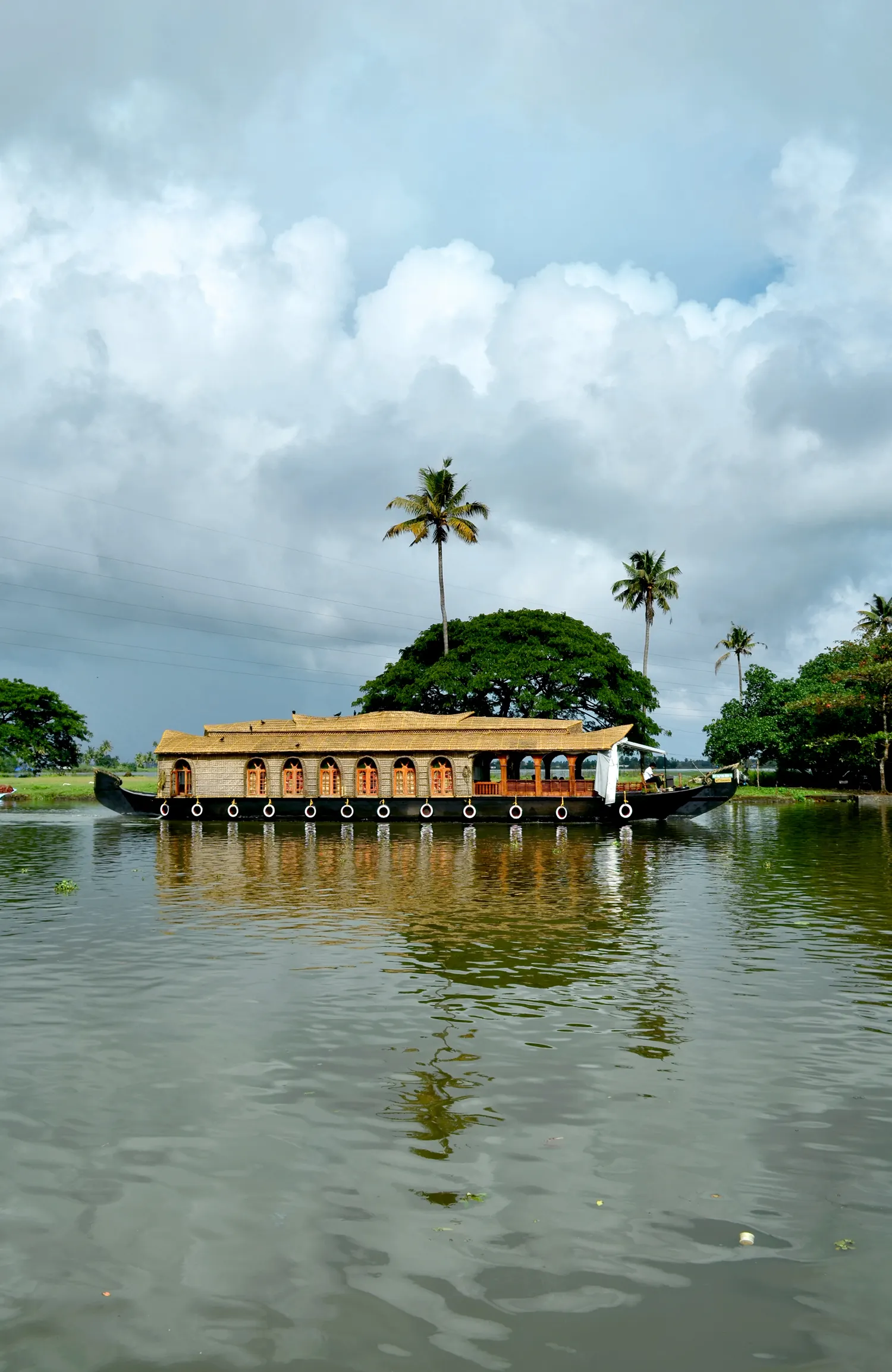
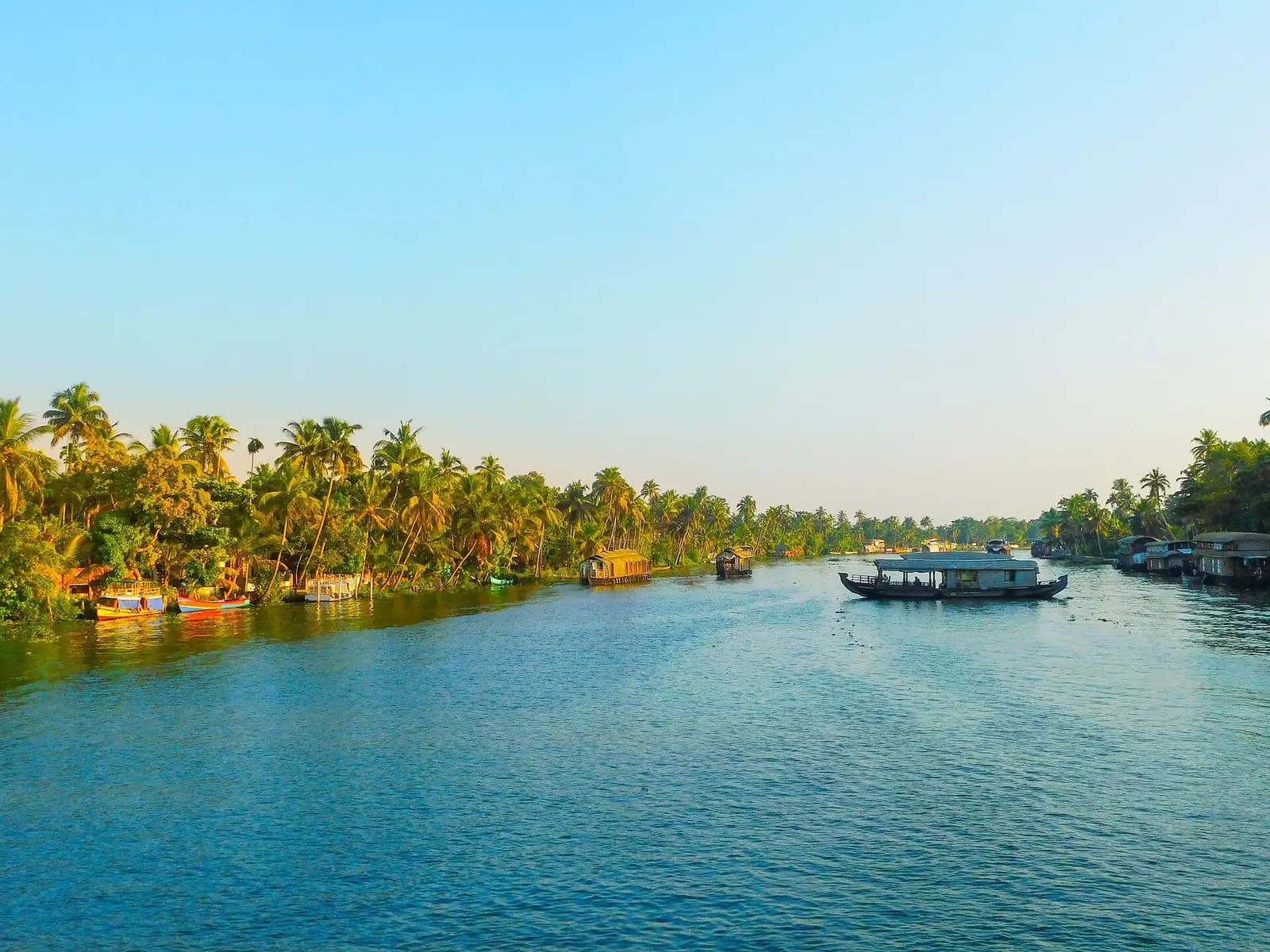
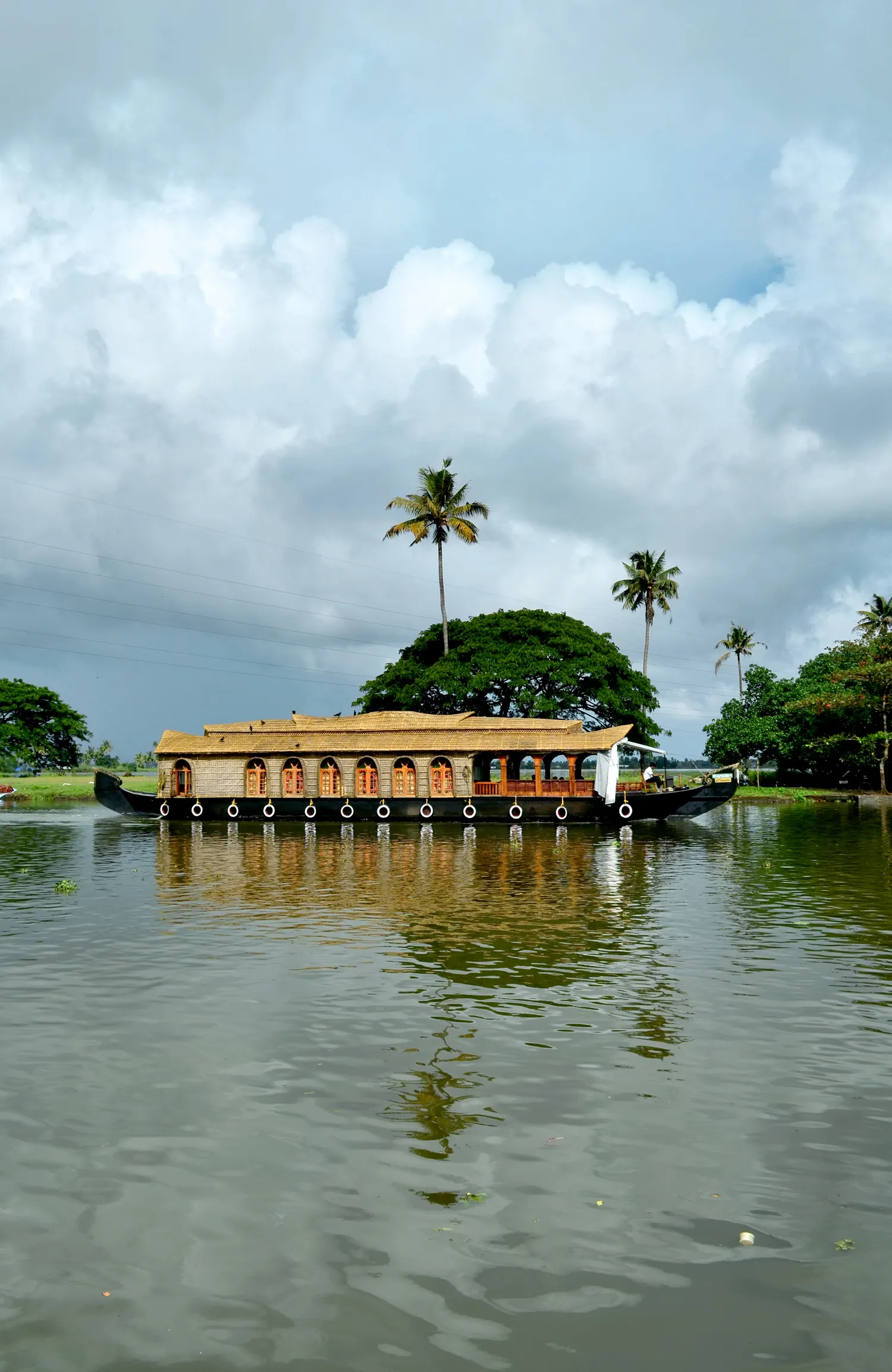
Kettu means tied and vallam means boat, and the name is literal. The hull is built from jackfruit-wood planks stitched together with coir rope and sealed with a resin and cashew-nut oil paste, traditionally without a single nail. For most of a century these barges hauled rice, coconut and spices from the Kuttanad paddy country down to the port at Kochi, until lorries made them redundant in the 1970s. Conversions into floating bedrooms began in the early 1990s, and today more than a thousand licensed houseboats work out of Alappuzha alone.
The bamboo-and-palm-thatch canopy is still made the old way. Under it you now get a bedroom with an attached bathroom, an air-conditioner that runs off a generator, and a crew of two or three, one of whom cooks.
Where to start: Alappuzha, Kumarakom or Kollam
Alappuzha, still called Alleppey by everyone including the railways, is the busiest launch point. Boats leave from Finishing Point and the Punnamada jetties and slip within twenty minutes into the canals of Kuttanad, where paddy is farmed in polders roughly a metre below sea level behind earthen bunds. It has the most choice and the most crowding.
Kumarakom sits on the eastern shore of Vembanad in Kottayam district, and is calmer. Its bird sanctuary, a small patch of former rubber plantation on the lake edge, is good for egrets, darters and cormorants, with waders and teal arriving from November.
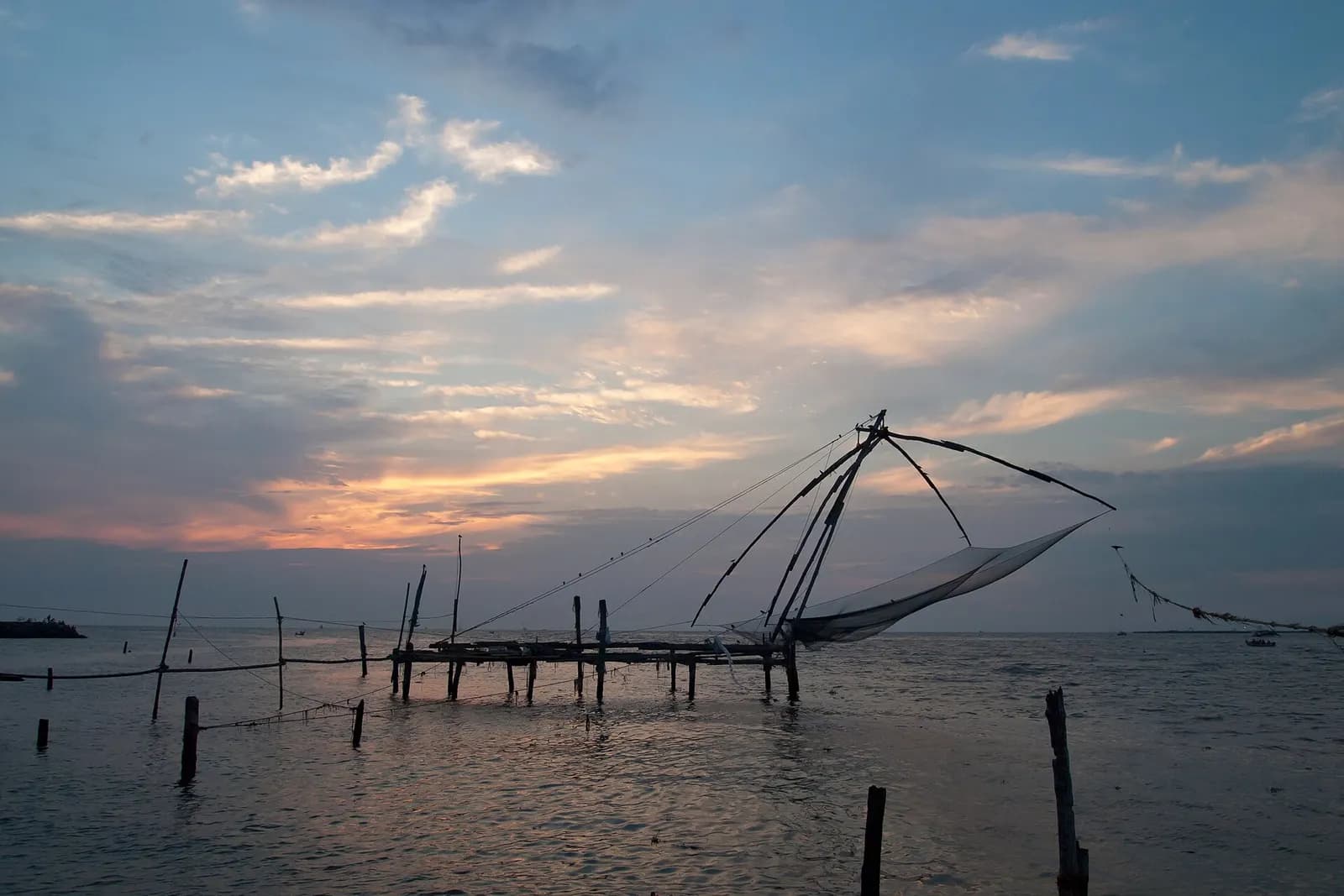
Kollam, at the southern end on the eight-armed Ashtamudi Lake, has the fewest boats and the most Chinese dip nets. The state tourism ferry from Kollam to Alappuzha takes about eight hours through Ashtamudi, the Kayamkulam lake and the canals for a few hundred rupees, and is the best-value water journey in India.
Vembanad itself is about 96 kilometres long, India's longest lake and a Ramsar wetland.
What it costs, and what to ask
Rates are quoted per boat per night with all meals, and drop thirty to forty per cent from April to September.
- One-bedroom deluxe, INR 8,000 to 12,000
- Two-bedroom, INR 13,000 to 18,000
- Premium upper-deck boats with all-night generator, INR 20,000 to 35,000
- Day cruise without an overnight, INR 3,500 to 6,000
- Shikara, the small covered canoe, INR 700 to 1,200 an hour
Four questions separate a good booking from a bad one. Does the air-conditioner run all night or only from nine to six. Is the boat classified by Kerala Tourism, and can they show the certificate. Is the upper deck shaded. And are you talking to the owner or to a broker at the jetty, because the same boat is often sold at three different prices within fifty metres.
Timings are fixed by convention and by safety rules. Check-in is between half past eleven and noon, boats must anchor by around half past five in the evening because night cruising is not permitted, and check-out is at nine. A one-night booking is therefore about twenty-one hours with roughly five of actual cruising.
The canals worth asking for
Say these names to your captain and the trip changes. Kainakary, a village strung along both banks where the boat passes within two metres of front doors. Champakulam, where the Kalloorkkad church, traditionally dated to the fifth century, stands above the water. Chennamkary and Nedumudy, where the narrow cuts force the big boats to take turns. The R Block polders, reclaimed from the lake bed in the 1940s and still pumped dry every season.
Ask also to tie up for twenty minutes at a kallu shappu, a toddy shop, where fermented palm sap is served in a steel tumbler with fiery karimeen curry. And if you are here on the second Saturday of August, the Nehru Trophy Boat Race on Punnamada pits chundan vallam snake boats over thirty metres long, each with more than ninety rowers, against each other in front of a hundred thousand people.
What gets cooked on the stern
Kitchens on board are tiny and the food is better than it has any right to be. Expect karimeen pollichathu, pearl spot rubbed with chilli and shallot masala, wrapped in banana leaf and pan-roasted; kappa, boiled tapioca mashed with coconut and green chilli, eaten with meen curry sharpened by kudampuli; konju roast if the prawns are running; avial, thoran, red rice and a mountain of pappadam. Tea at four comes with pazham pori, banana fritters in a lentil batter.
Most crews will stop at a village market so you can buy the evening's fish yourself. Karimeen or tiger prawns add roughly INR 500 to 1,200 to the bill and are worth every rupee.
When to go
November to February is the driest stretch, with days around 30 degrees and cool water-borne evenings. September and October are greener, cheaper and carry Onam, when villages lay flower carpets and the snake boats train in the evenings. June to August is the southwest monsoon: dramatic, humid, half price, and the water is opaque brown. March to May is hot, above 35 degrees with high humidity, and best avoided unless price is the priority.
Getting there
Cochin International Airport at Nedumbassery is about 85 kilometres from Alappuzha, two and a half hours by road, and around 70 kilometres from Kumarakom. Thiruvananthapuram airport is 155 kilometres from Alappuzha. Alappuzha railway station is four kilometres from the Finishing Point jetty; Kottayam is the railhead for Kumarakom, 16 kilometres away.
FAQs
Is one night on a houseboat enough?
For most travellers, yes. You get an afternoon cruise, a sunset at anchor, dinner, a night on the water and a two-hour morning run back. Two nights only make sense on a premium boat that is licensed to move further into the Kuttanad interior, or if you genuinely want to do nothing for a full day.
Alleppey or Kumarakom?
Alleppey for the canal network, village life and the widest range of boats. Kumarakom for quiet water, birdlife and better lakeside hotels if you are pairing the boat with a resort stay.
Are the backwaters worth visiting during the monsoon?
Yes, with adjusted expectations. Rain falls in long grey sheets rather than all day, the paddy is luminous green, and rates halve. Take a boat with a properly enclosed lower deck and carry mosquito repellent, which you should carry in any season.
Can I combine the backwaters with the hills?
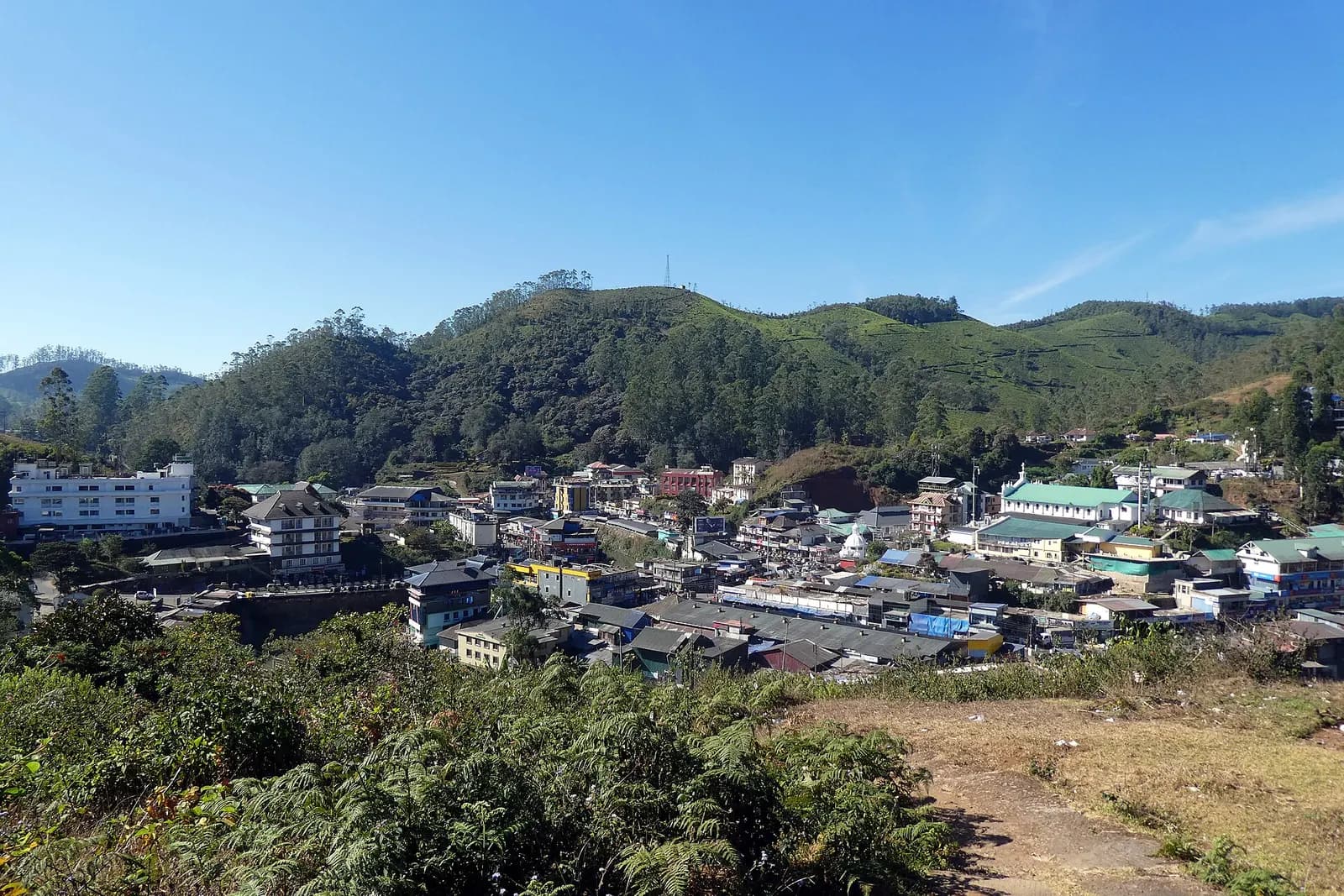
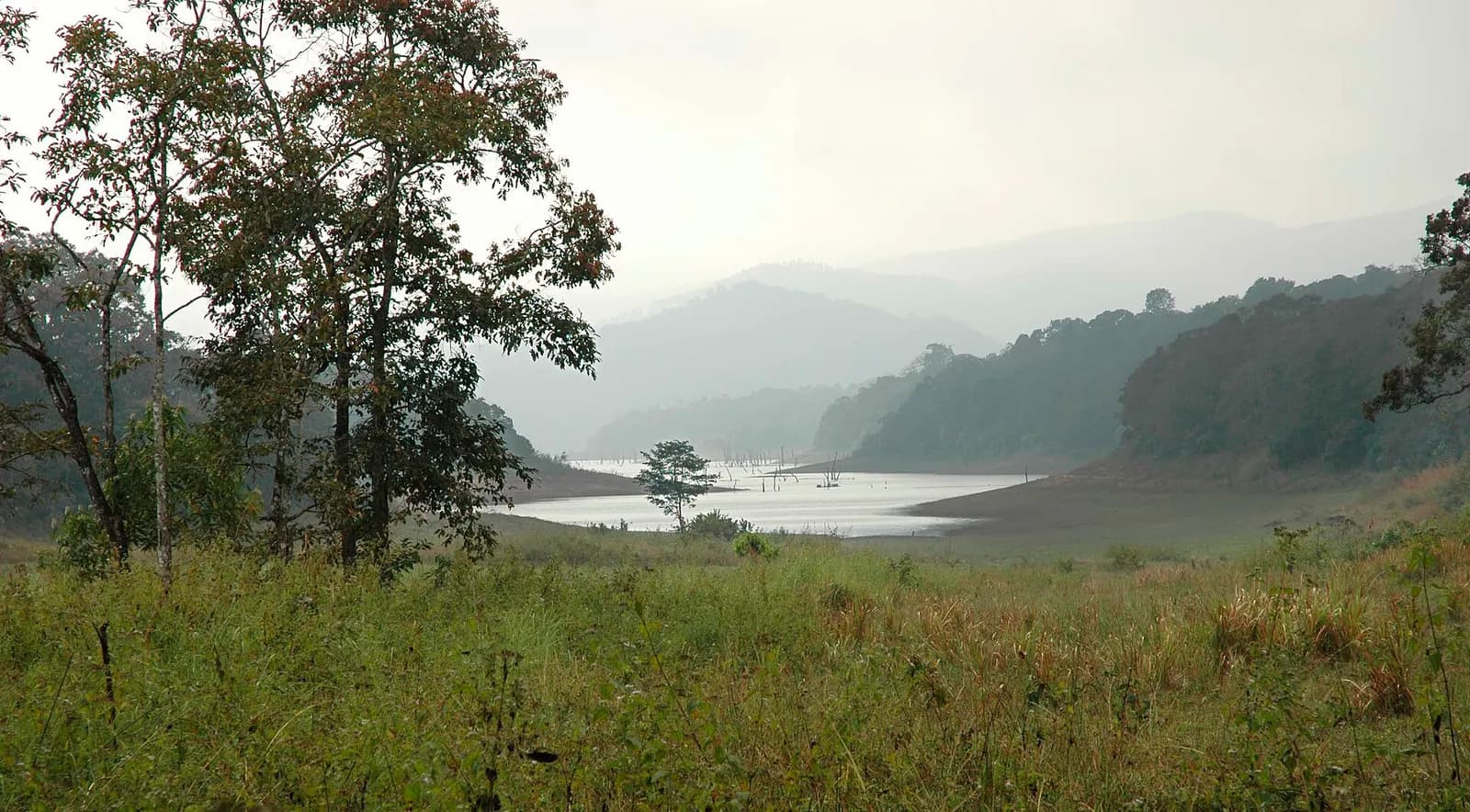
Easily. Munnar is about four hours from Alappuzha and Thekkady around five, so a common seven-day loop runs Kochi, Munnar, Thekkady, Alappuzha and Varkala or Kovalam for the sea.
Tell us how you like to travel and we will match you to a specific boat and a specific set of canals rather than a category, and build the days around it. Message DEVGAMAN on WhatsApp with your dates and we will send back a plan you can actually picture.
Places in this story
Plan this trip
 8 days · 7 nights
Themes:NatureWellnessFood
Easy · Best Sep–Mar
Kerala Backwaters and Tea Hills
Fort Kochi to a Vembanad houseboat, by way of the high tea country
Route: Kochi → Munnar → Thekkady & Periyar → Alleppey (Alappuzha) +1 more
- Group
- 2–12 (private)
- From
- ₹68,000 pp
Tagskerala · backwaters · houseboat · alleppey · kumarakom · slow travel