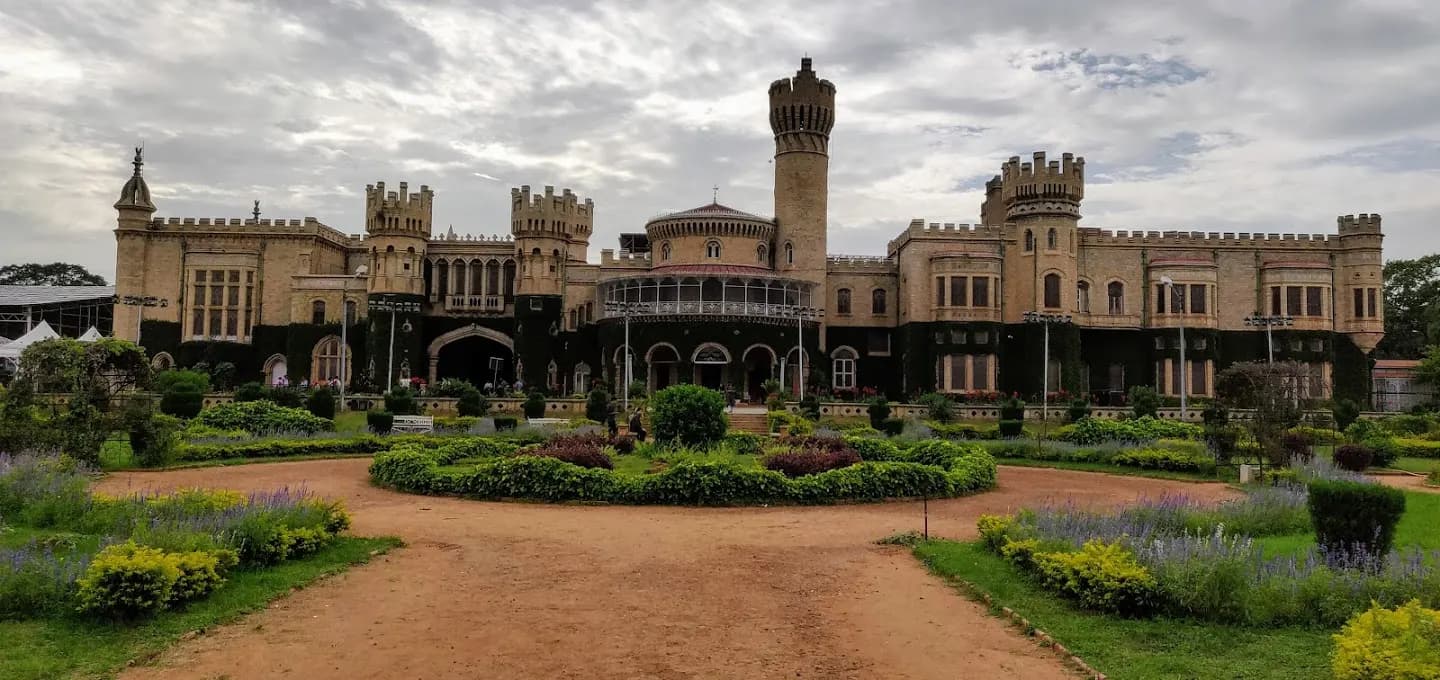
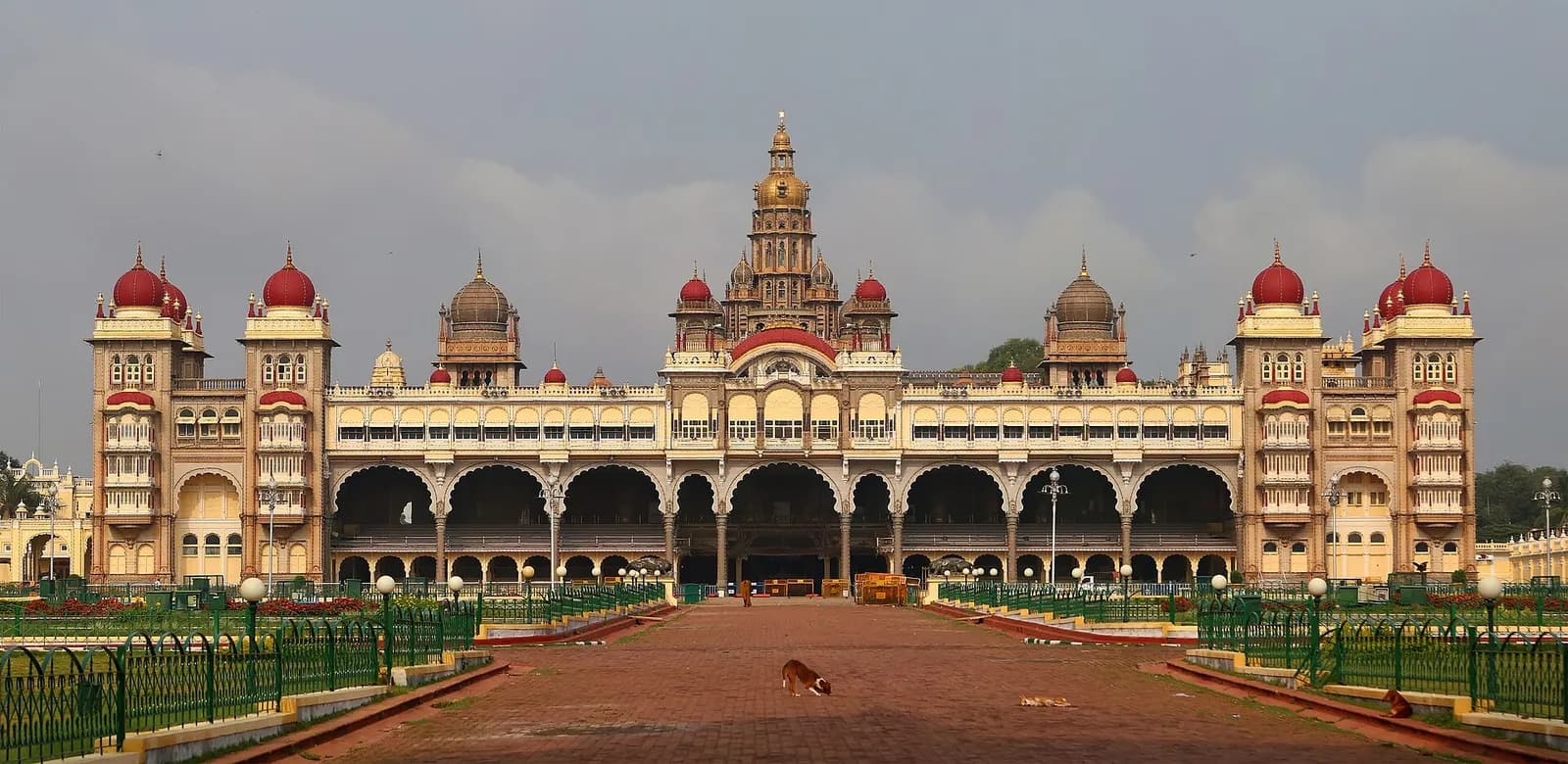
The Wodeyars ruled here from 1399, with an interruption under Hyder Ali and Tipu Sultan, and their city is unusually legible: broad avenues, a public zoo from 1892, an art gallery in Jaganmohan Palace and, at the centre, Amba Vilas. The old wooden palace burned during a wedding in 1897, and Krishnaraja Wodeyar IV commissioned the British architect Henry Irwin to rebuild it in stone; it was finished in 1912, and the Kalyana Mantapa still glows under a Glasgow-made stained-glass peacock dome. On Sunday evenings and public holidays close to a hundred thousand bulbs outline every arch for forty-five minutes, and the crowd on the lawns gasps on cue.
Mornings suit Chamundi Hill, 1,062 metres up, where 1,008 steps climb past a monolithic Nandi carved in 1659 to the Chamundeshwari temple and a view across the whole plateau. Devaraja Market, trading since the eighteenth century, sells jasmine by the arm's length, kumkum in bright cones and sandal soap from the state factory. Evenings go to Brindavan Gardens at the Krishnaraja Sagara dam, twenty-one kilometres north, or to a slab of ghee-heavy Mysore pak.
Srirangapatna, sixteen kilometres away, holds Tipu Sultan's summer palace, his tomb at the Gumbaz and the ramparts where he fell in 1799.
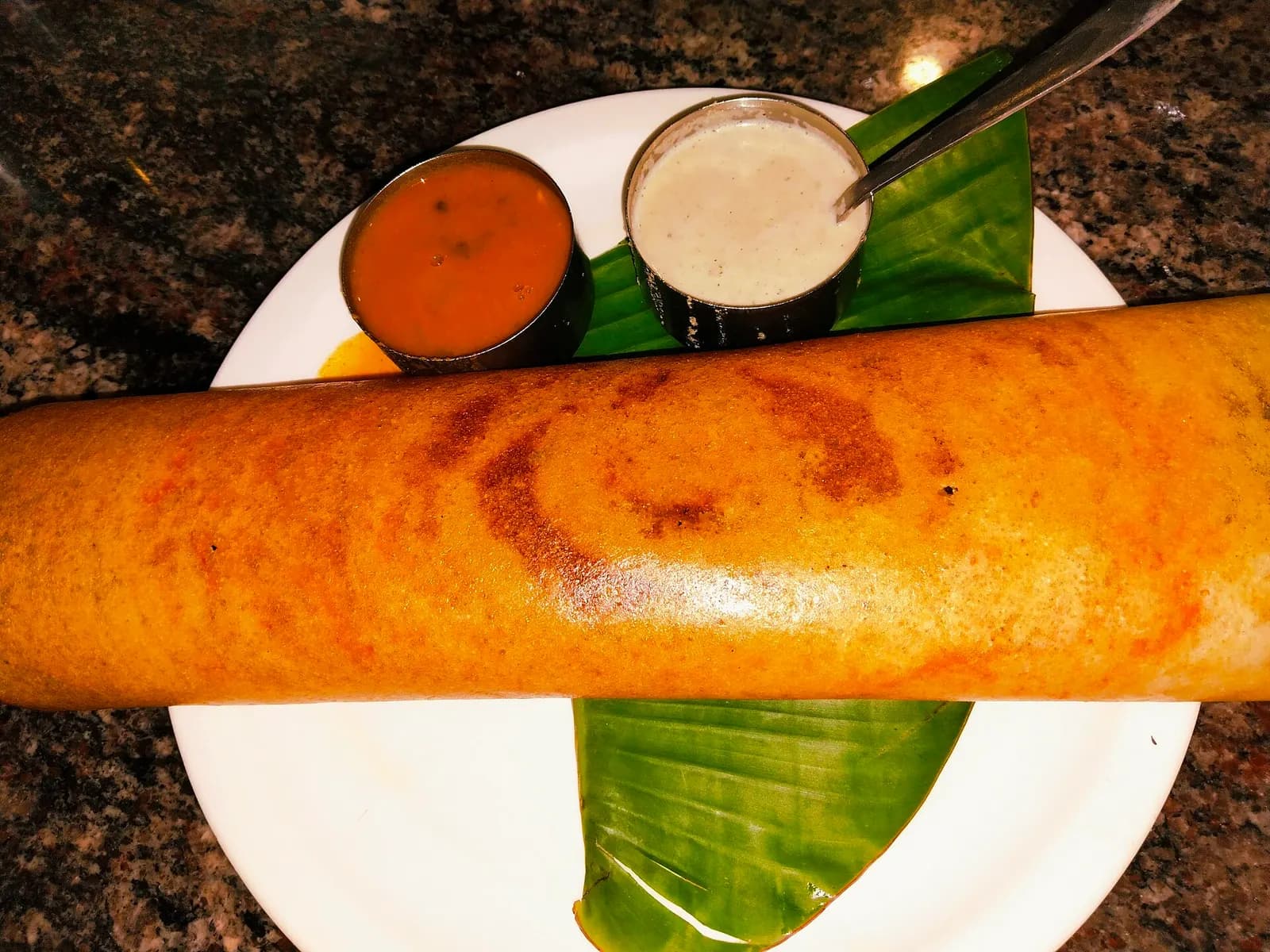 Vegetarian