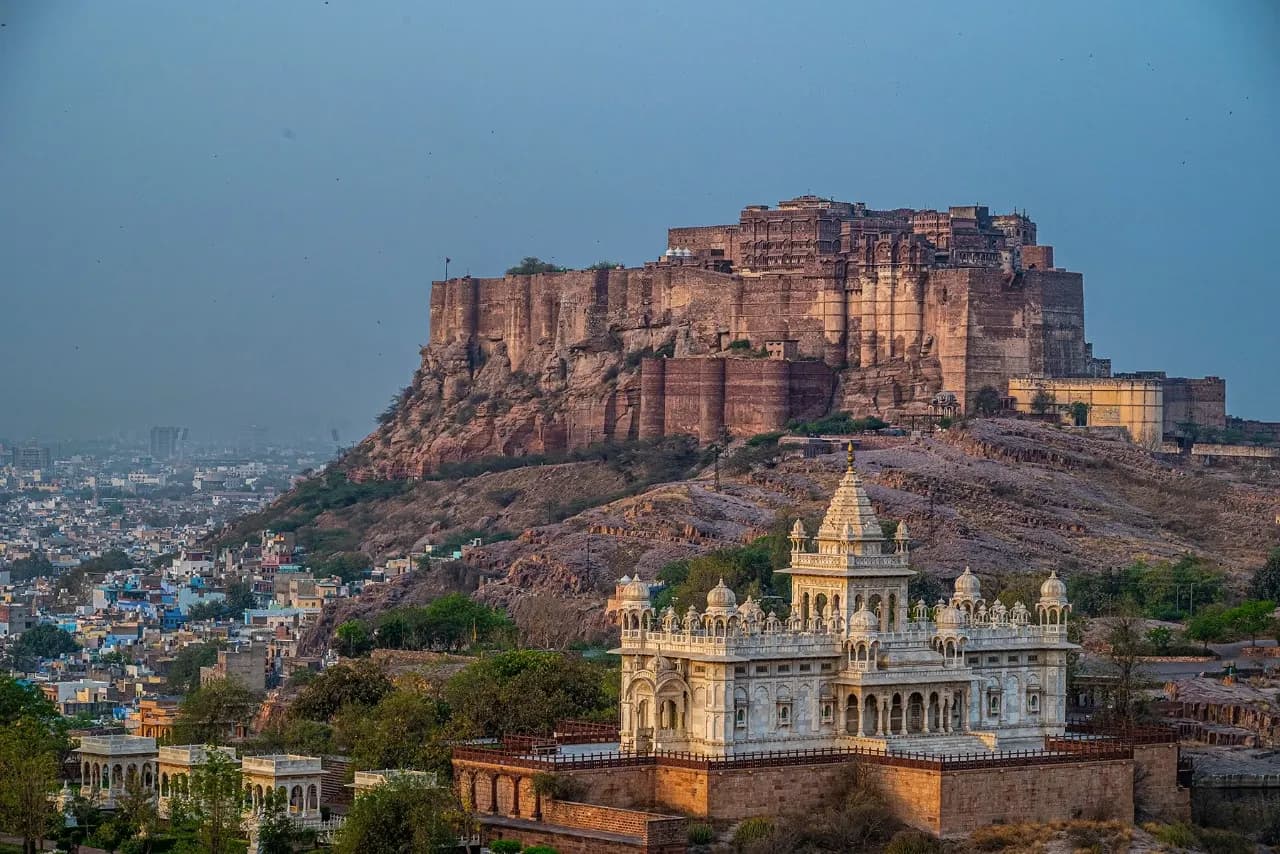
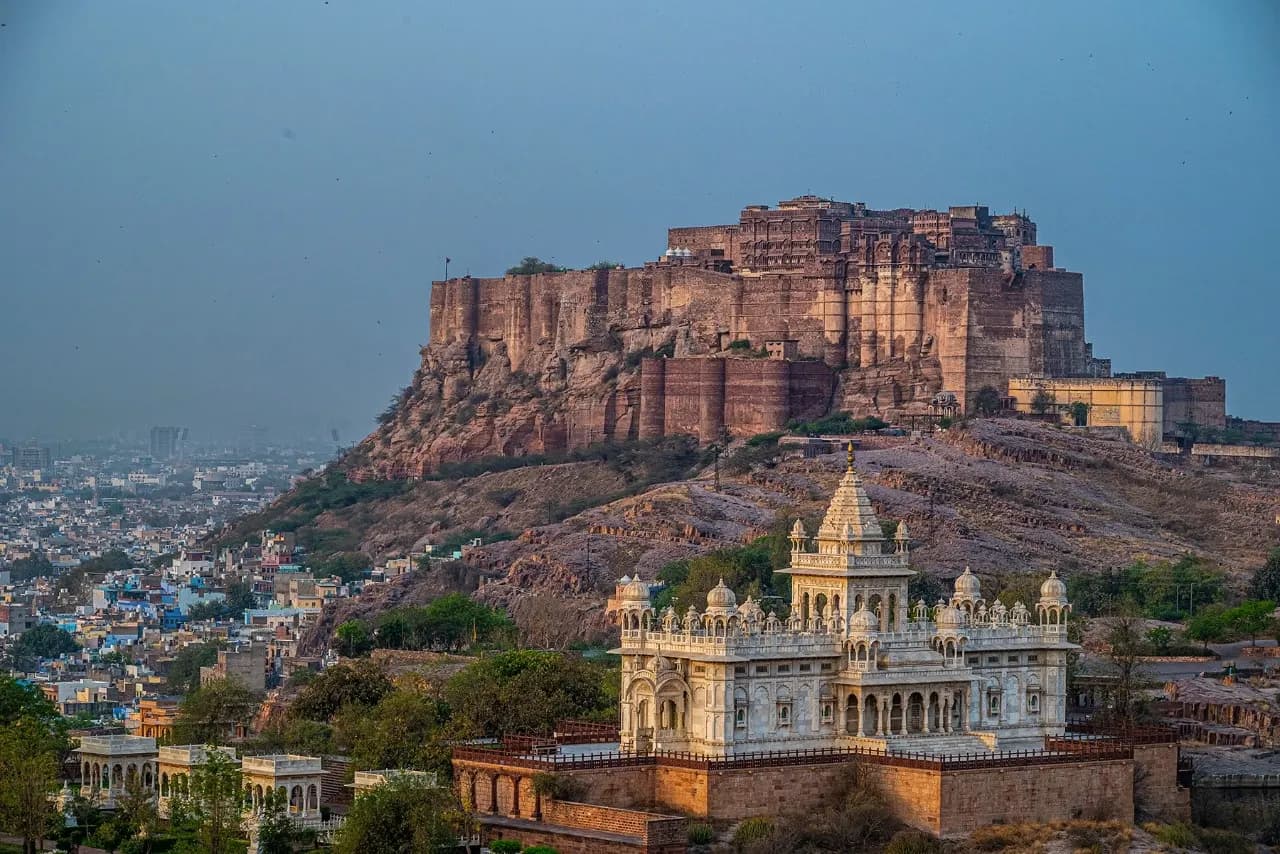
Jodhpur is the gateway to the Thar, the last big city before the sand, and its old quarter still runs on the rhythms of a caravan town. Mehrangarh, begun by Rao Jodha in 1459, rises 122 metres above the streets on a sheer sandstone cliff; inside, Moti Mahal, Phool Mahal and Sheesh Mahal hold Marwar's palanquins, howdahs and miniature paintings, and the museum audio guide is among the best in India. From the ramparts you see why Jodhpur is called the Blue City: the indigo-washed houses of Brahmpuri and Navchokiya, originally painted by Brahmin families and now by everyone, spread to the walls.
Walk down through Rao Jodha Desert Rock Park's restored scrub to Jaswant Thada, the white marble cenotaph of 1899, then into the market around the Clock Tower, where Sardar Market sells spices, bandhani and mojris. Toorji ka Jhalra, the stepwell Rani Tanwarji had cut around 1740, was dug out of centuries of silt in the 2010s and is now ringed by cafes. Across town, Umaid Bhawan, finished in 1943 and one of the last great palaces built in India, is part hotel, part royal home, part museum.
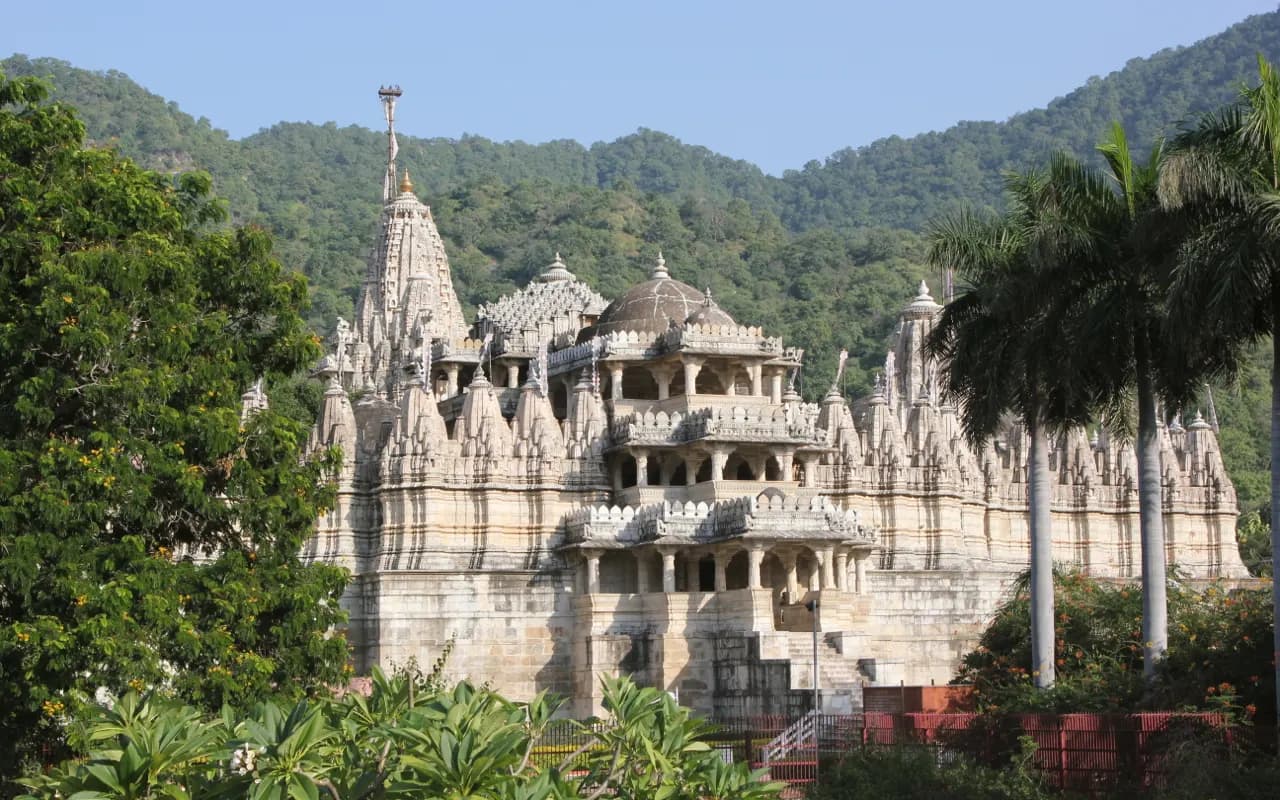
Day trips reach Mandore's cenotaphs, Osian's eighth-century temples 65 km north and the Bishnoi villages, where blackbuck graze beside the huts. In October, RIFF fills the fort with folk musicians under the full moon.
 Vegetarian