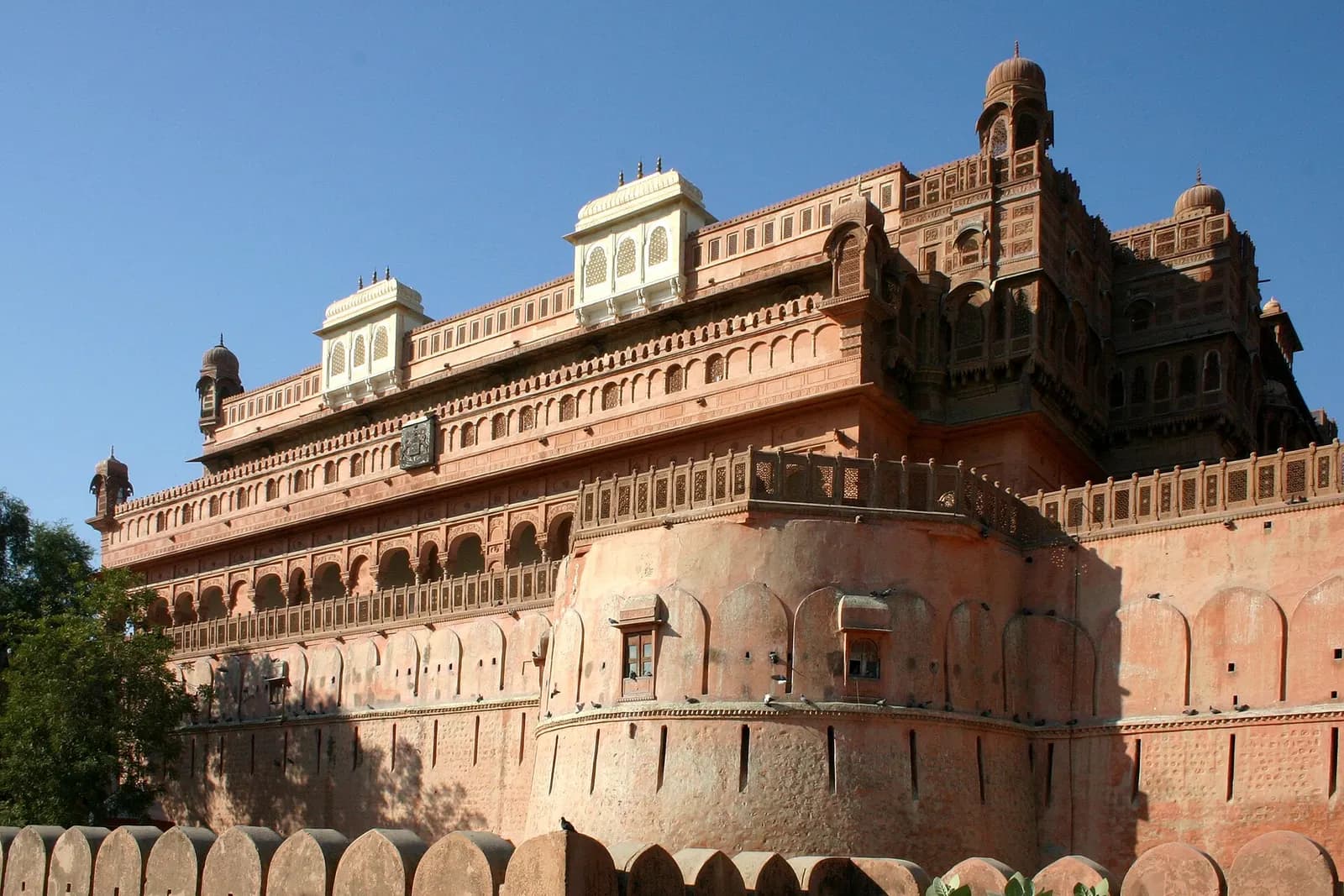
Bikaner is the least visited of Rajasthan's four desert cities and the least changed. Junagarh Fort, built between 1589 and 1594 by Raja Rai Singh, a general in Akbar's army, stands on the flat rather than a hill and was never taken; inside, Anup Mahal's gold-leaf walls, Badal Mahal's painted clouds and Phool Mahal's mirrorwork are as fine as anything in Jaipur, and the museum keeps a First World War biplane. The old city beyond Kote Gate is a maze of havelis in carved red sandstone from the Dulmera quarries, the Rampuria group the grandest, and of the fifteenth-century Bhandasar Jain Temple, whose foundations were reputedly laid in ghee.
Lalgarh Palace, designed by Samuel Swinton Jacob in 1902, is now a hotel and museum. At Deshnoke, thirty kilometres south, the Karni Mata temple houses some 25,000 rats regarded as the reincarnated kin of the goddess's followers; devotees eat prasad the rats have nibbled and spotting a white one is lucky. The National Research Centre on Camel outside town sells camel-milk ice cream and lets you watch the herd come in at dusk.
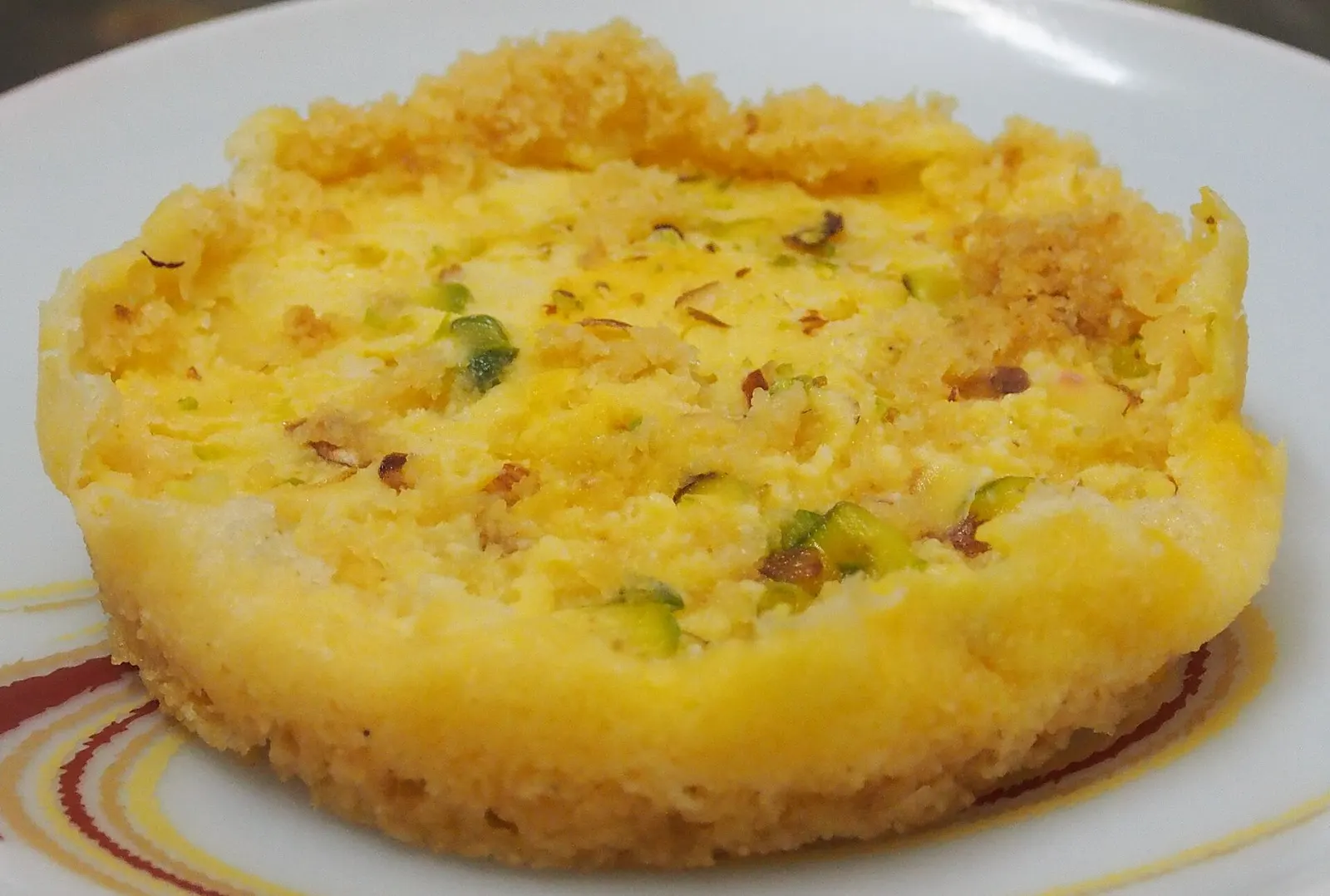
Bikaner gave India bhujia and Haldiram's, and its rasgulla, ghevar and papad are as serious as its namkeen. Each January the Camel Festival brings decorated animals, races and fur-cutting contests to the Ladera dunes and the Dr Karni Singh Stadium.
 Sweet
Sweet