Patna is one of the world's oldest continuously inhabited cities. As Pataliputra it was the capital of the Nandas, the Mauryas and the Guptas, and the Greek ambassador Megasthenes described its timber palisade and 570 towers in the fourth century BCE. Much of that lies under the modern city, but at Kumhrar you can stand over the excavated remains of an eighty-pillared Mauryan hall, its polished sandstone columns still carrying the mirror-bright Mauryan finish.
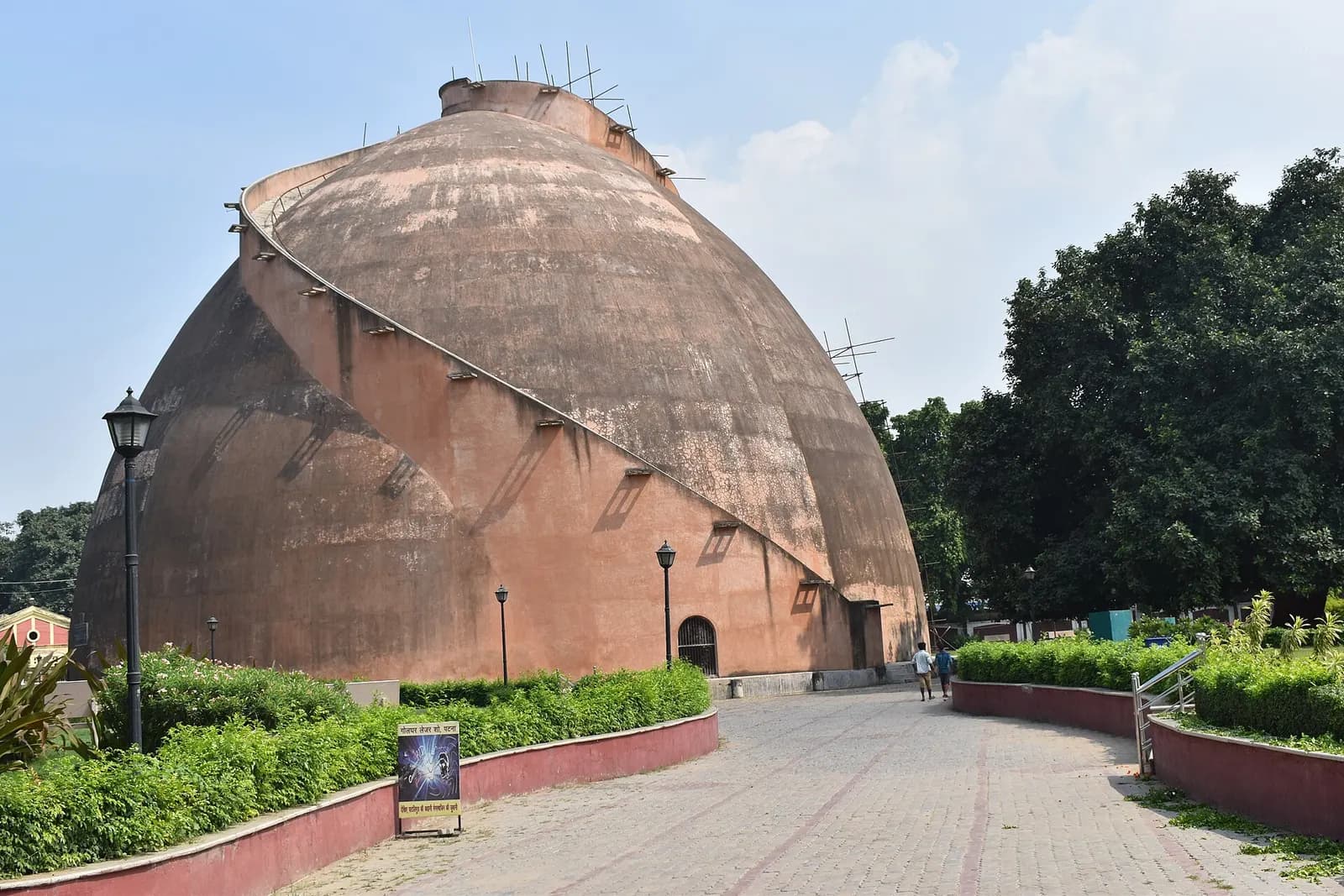
The Bihar Museum, opened in stages from 2015, is the best place to see what came out of this ground, above all the Didarganj Yakshi, a life-size Mauryan-era figure in Chunar sandstone whose polish and poise remain astonishing. Colonial Patna left the Golghar, a 29-metre beehive of brick raised in 1786 by Captain John Garstin as a famine granary; its spiral outer stairs give the best view of the Ganga, here nearly five kilometres wide in flood. At Takht Sri Patna Sahib, one of the five supreme seats of Sikhism, marble halls mark the birthplace of Guru Gobind Singh in 1666 and the langar runs all day.
Evenings belong to the ghats, where boats cross to Sonepur and, at Chhath in November, hundreds of thousands stand waist-deep facing the setting sun. Eat litti chokha smoked over cow-dung embers and finish with Maner's laddus.
 Vegetarian