DEVGAMAN

South India · Cave

Badami, Aihole & Pattadakal

Chalukyan sandstone where South Indian temple building was invented

15.92° N · 75.68° E

Best months to be here

  • January — a best month
  • February — a best month
  • March
  • April
  • May
  • June
  • July
  • August
  • September
  • October
  • November — a best month
  • December — a best month

Best: Nov–Feb

At a glance

Region
South India
Kind of place
Cave · Ancient
Ideal stay
2 days
Altitude
590 m
Coordinates
15.92° N, 75.68° E

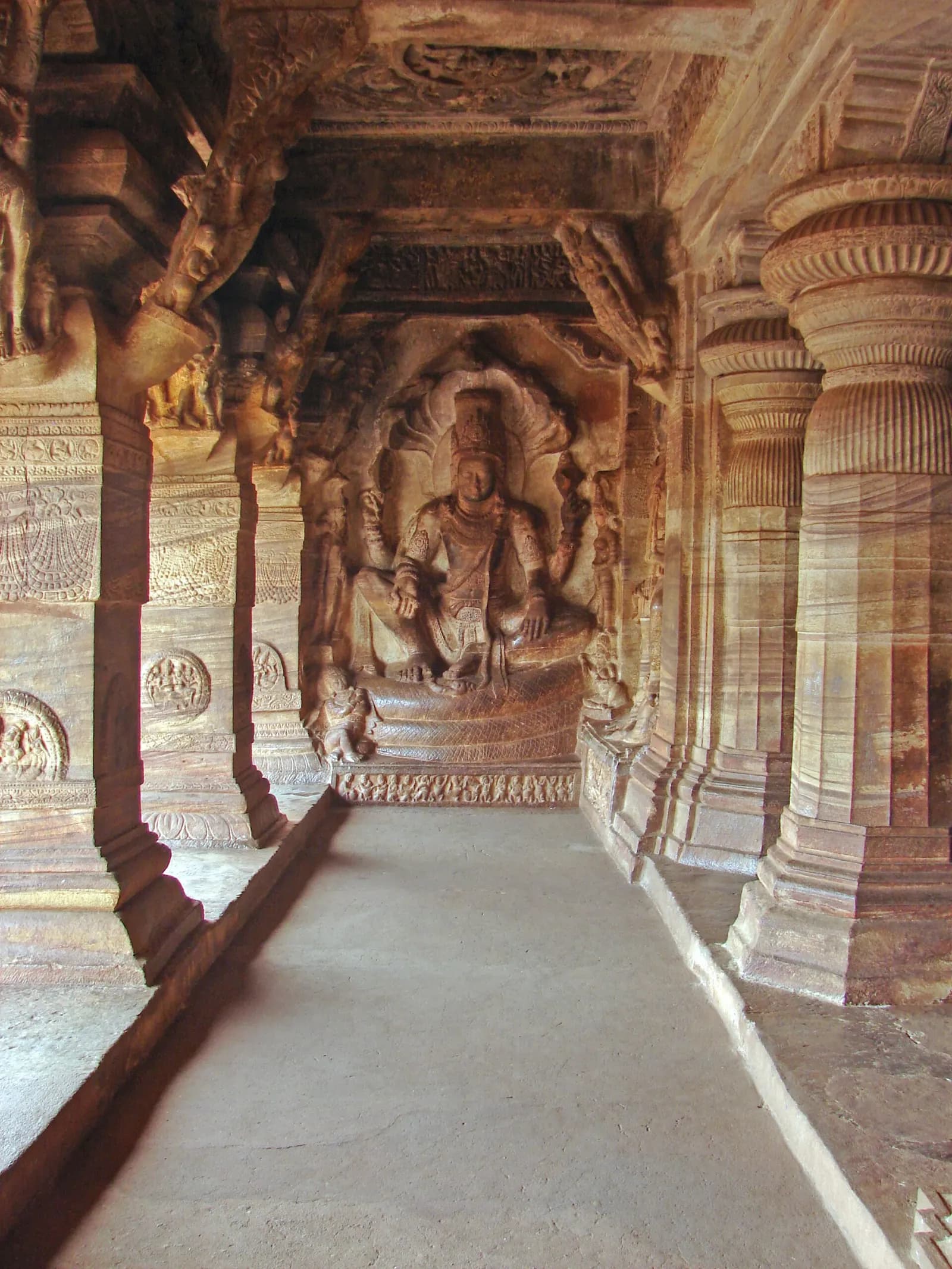
These three villages on the Malaprabha river are where South Indian temple architecture was worked out. The Chalukyas of Vatapi, from Pulakeshin I in 543 CE, made Badami their capital, Aihole their workshop and Pattadakal their coronation ground, and the experiments they ran fed both the northern nagara and southern dravida traditions. Badami's four cave temples are cut into a red sandstone cliff above the Agastya lake and reached by a stair: Cave 1 for Shiva, with an eighteen-armed Nataraja whose arms combine into eighty-one dance poses, Caves 2 and 3 for Vishnu, the third dated by inscription to 578 CE, and a small Jain cave above.

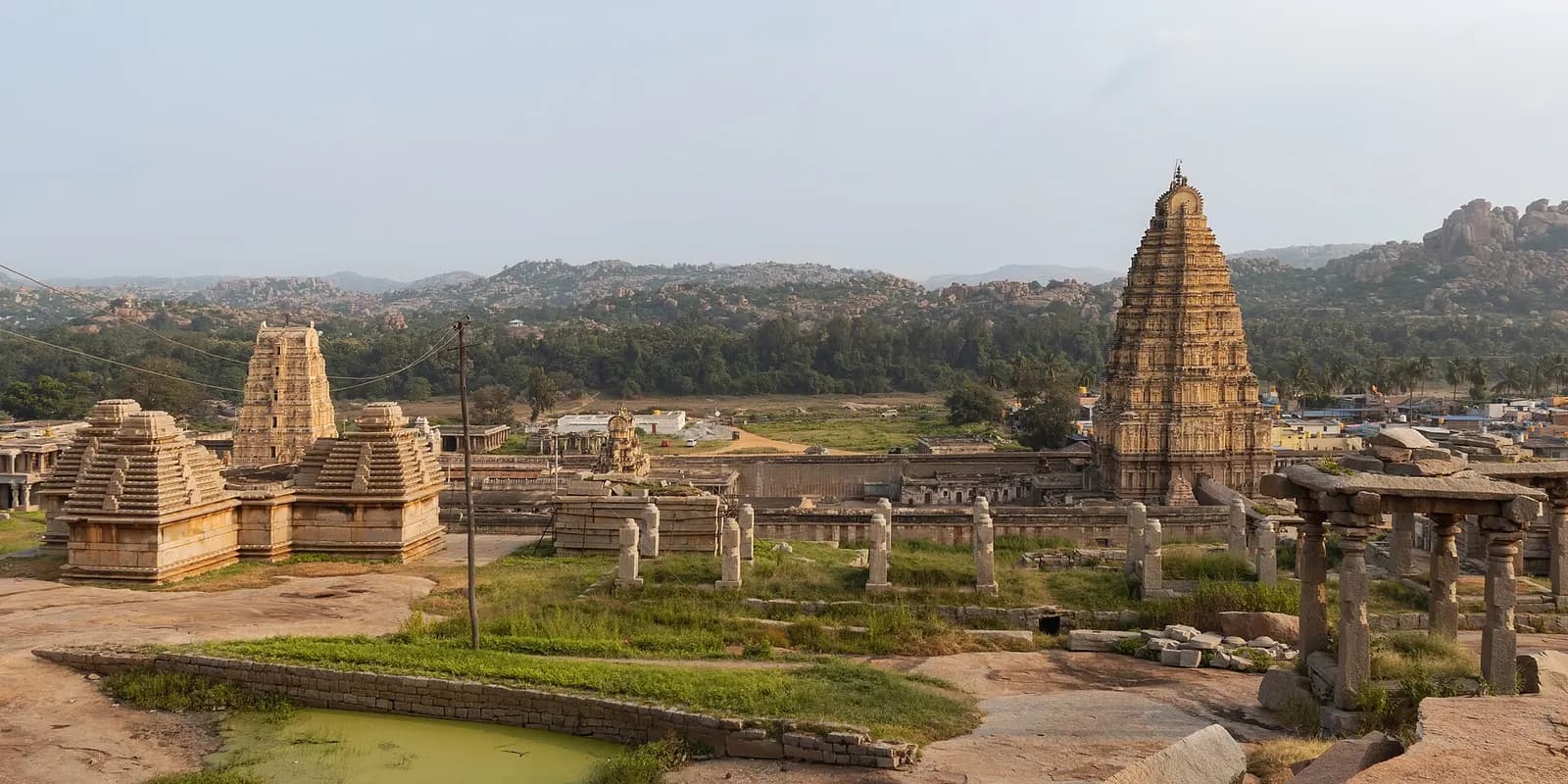
Across the water the Bhutanatha temples stand with their feet in the tank, and the cliffs are now one of India's finest sport-climbing crags. Aihole, thirty-four kilometres on, scatters more than a hundred temples through fields and courtyards, including the apsidal Durga temple with its colonnaded ambulatory and the Meguti hill temple, whose 634 CE inscription by the poet Ravikirti records Pulakeshin II's victory over Harsha. Pattadakal, a UNESCO site since 1987, gathers ten temples in a single enclosure; the Virupaksha, built around 740 by Queen Lokamahadevi to mark her husband's defeat of the Pallavas, borrowed its plan from the Kailasanatha at Kanchipuram and became in turn the model for the Kailasa temple at Ellora.
What not to miss in Badami, Aihole & Pattadakal

  1. Cave 3 at Badami, with its 578 CE inscription and Vishnu panels
  2. Bhutanatha temples standing in the Agastya lake
  3. The Virupaksha Temple at Pattadakal, a UNESCO World Heritage Site
  4. Durga Temple at Aihole and its apsidal plan
  5. Ravana Phadi cave and the Meguti hill inscription of 634 CE
  6. Banashankari temple and its stepped tank, 5 km from Badami

Best Nov–Feb

Best time to visit Badami, Aihole & Pattadakal

November to February; the sandstone radiates heat from March onwards.

Give Badami, Aihole & Pattadakal 2 days and it repays the time; with fewer you are choosing between Cave 3 at Badami, with its 578 CE inscription and Vishnu panels and Bhutanatha temples standing in the Agastya lake. We build the hours around the weather — early starts when it is hot, long afternoons when it is not.

  • Ideal stay — 2 days
  • Season — Nov–Feb
Plan a trip here

On the ground

Things to do in Badami, Aihole & Pattadakal

The days we would actually plan for you, in the order that suits the light.

  • Sunrise climb to Badami's upper fort for the view over the tank
  • Sport climbing on the Badami sandstone with a local guide
  • Slow walk through Aihole's field temples with an ASI guidebook
  • Compare nagara and dravida towers side by side at Pattadakal
  • Village drive along the Malaprabha between the three sites

At the table

What to eat in Badami, Aihole & Pattadakal

  • Jolada rotti with ennegayi and shenga chutney pudi
  • Jhunka bhakri, the everyday North Karnataka plate
  • Girmit and mirchi bhajji from a Badami roadside stall
  • Dharwad peda, brought down from Dharwad 130 km away
  • Kardantu, a jaggery and dry-fruit sweet from Gokak

Getting there

How to reach Badami, Aihole & Pattadakal

Hubballi (HBX) is 105 km and Belagavi (IXG) 150 km; Badami station is 5 km from the caves, with Hampi 140 km east and Bengaluru 450 km southeast.

Airport pickups, station transfers and the driver for the days here are all part of what we arrange — including the hour you should leave, which is usually earlier than you think.

Travel tips from our trips

  • Hire an ASI-approved guide at Badami; the iconography is the whole point and there is little signage
  • The three sites are 13 to 34 km apart on narrow roads, so take a car for the day rather than buses
  • Monkeys around the Badami caves and Agastya tank will grab bags and bottles
  • Sites open sunrise to sunset with no cafes inside; carry water, a hat and cash for tickets
  • Badami town has basic hotels; Hubballi or Bagalkot make more comfortable bases for a two-night trip

Next door

Near Badami, Aihole & Pattadakal

Places that join Badami, Aihole & Pattadakal without a long drive — the way a real week is built.

The stone chariot of the Vittala temple among the boulders of HampiHeritage
Themes:HeritagePhotographySpiritualOffbeat

Karnataka

Hampi

Vijayanagara in ruins among boulders, banana groves and one river

Ideal stay
3 days
Best time
November to February; the Deccan sun from March onwards is punishing by nine in the morning
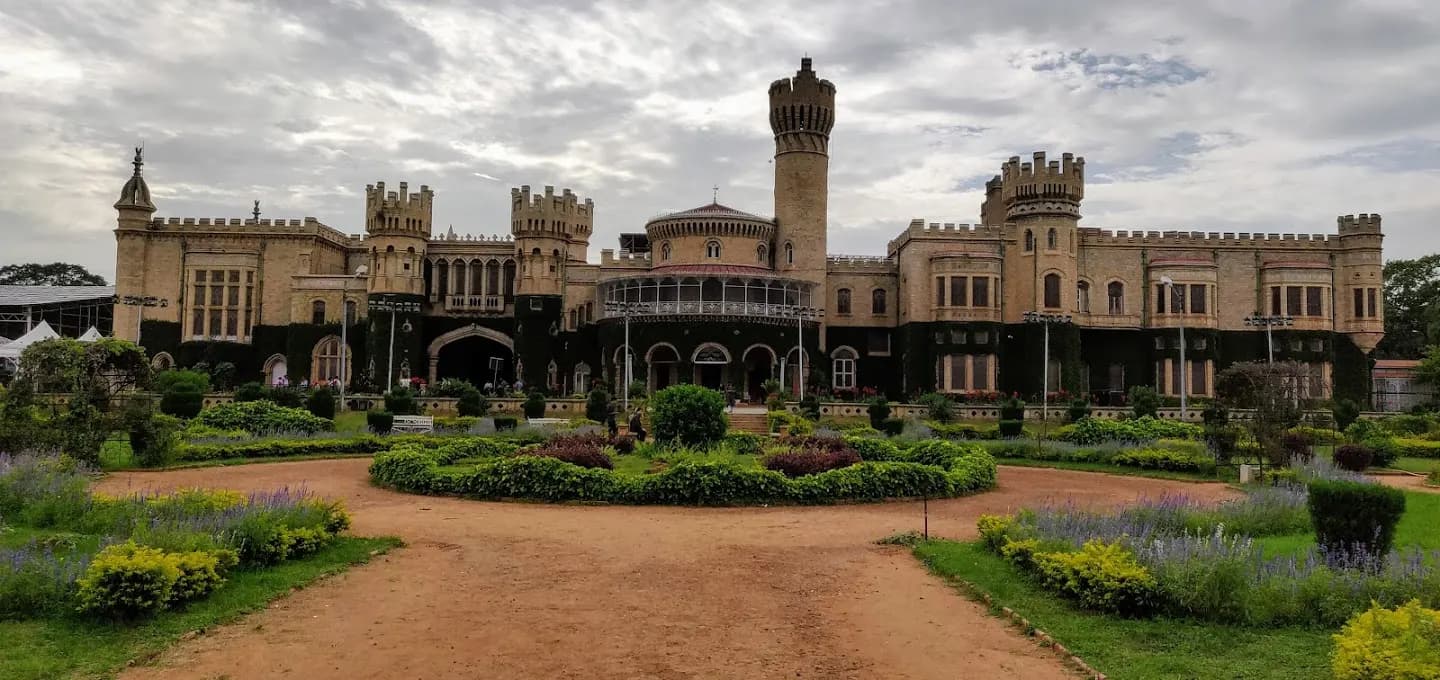
Bangalore Palace, the Tudor-revival residence of the Wodeyars in BengaluruCity
Themes:FoodCultureHeritageFamily

Karnataka

Bengaluru

Garden city of rock outcrops, filter coffee and cool plateau evenings

Ideal stay
2 days
Best time
October to February
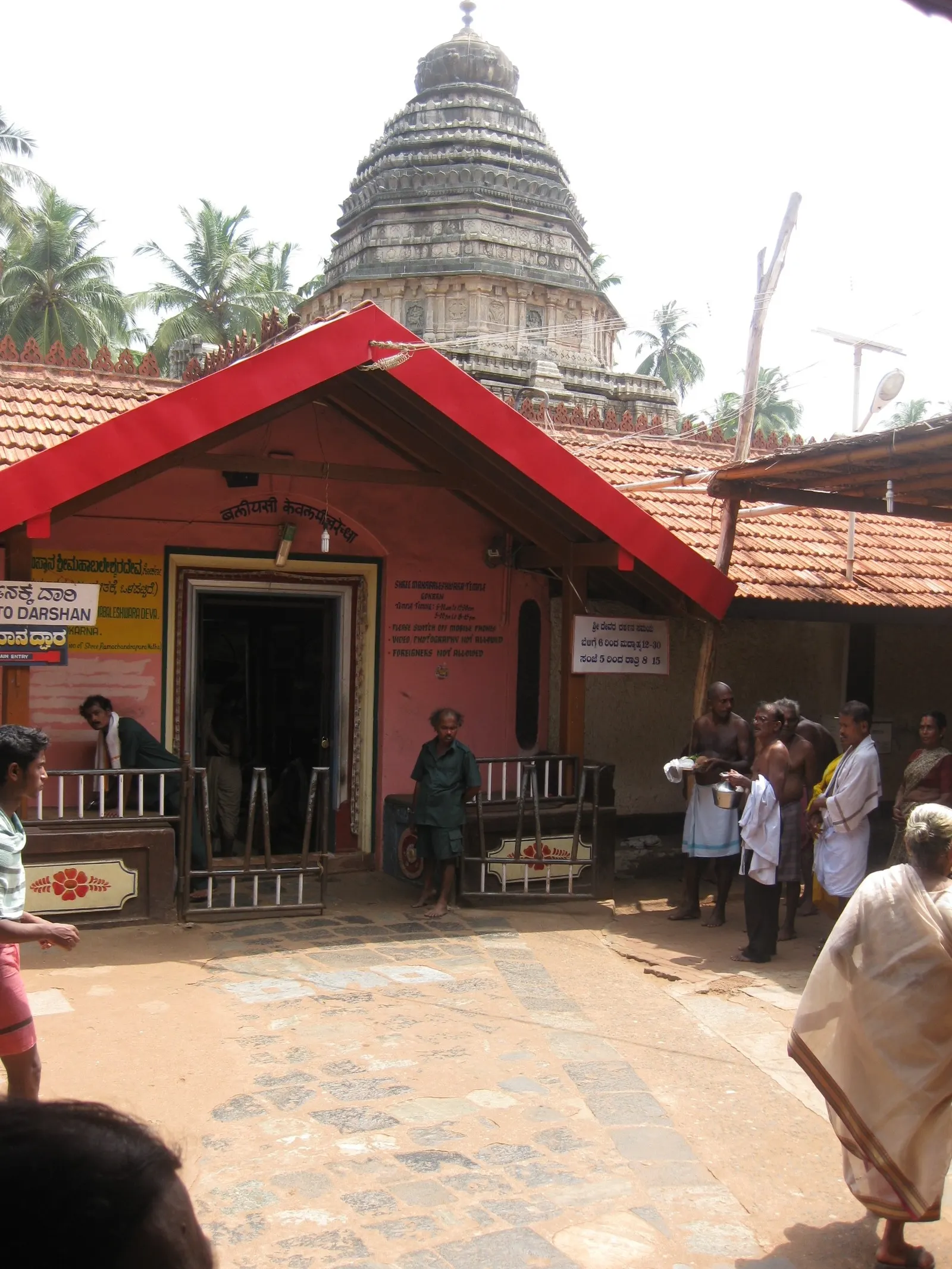
The entrance to the Mahabaleshwara temple in the pilgrim town of Gokarna, KarnatakaBeach
Themes:SpiritualNatureOffbeatAdventure

Karnataka

Gokarna

Pilgrim town and cliff-walk beaches on the Karwar coast

Ideal stay
3 days
Best time
October to March; the sea is rough and most shacks close from June to September

Before you ask

Questions we are asked about Badami, Aihole & Pattadakal

When is the best time to visit Badami, Aihole & Pattadakal?
November to February; the sandstone radiates heat from March onwards. On the calendar that is Nov–Feb. We build Badami, Aihole & Pattadakal into a journey inside that window wherever we can; when your dates are fixed outside it, we re-plan the hours of the day around the weather rather than talk you out of the trip.
How many days do you need in Badami, Aihole & Pattadakal?
We plan 2 days in Badami, Aihole & Pattadakal. That is enough for Cave 3 at Badami, with its 578 CE inscription and Vishnu panels, Bhutanatha temples standing in the Agastya lake and The Virupaksha Temple at Pattadakal, a UNESCO World Heritage Site, at a pace that still leaves room for a long lunch. Add a day if you are continuing to Hampi and Bengaluru.
How do you reach Badami, Aihole & Pattadakal?
Hubballi (HBX) is 105 km and Belagavi (IXG) 150 km; Badami station is 5 km from the caves, with Hampi 140 km east and Bengaluru 450 km southeast. We arrange the transfer and the driver as part of the journey, so you are met on arrival instead of negotiating a taxi at the gate, and the timings are set around when Badami, Aihole & Pattadakal is at its best rather than around the clock.
What is Badami, Aihole & Pattadakal famous for?
Badami, Aihole & Pattadakal is a cave site in Karnataka, South India, best known for Cave 3 at Badami, with its 578 CE inscription and Vishnu panels, Bhutanatha temples standing in the Agastya lake and The Virupaksha Temple at Pattadakal, a UNESCO World Heritage Site. Travellers come for heritage, photography, offbeat and adventure, and most give it 2 days.
Is Badami, Aihole & Pattadakal good for families?
Badami, Aihole & Pattadakal is planned more often for heritage, photography, offbeat and adventure than as a family stop, but it works well at a slower pace. 2 days, an early start and one unhurried afternoon is the shape we would suggest, inside the Nov–Feb window. Tell us who is travelling and we will pace it around them.

Badami, Aihole & Pattadakal, planned by hand

Shall we begin?

चलिए, शुरू करते हैं

Tell us how many days you have. We will build Badami, Aihole & Pattadakal into a journey that suits them.